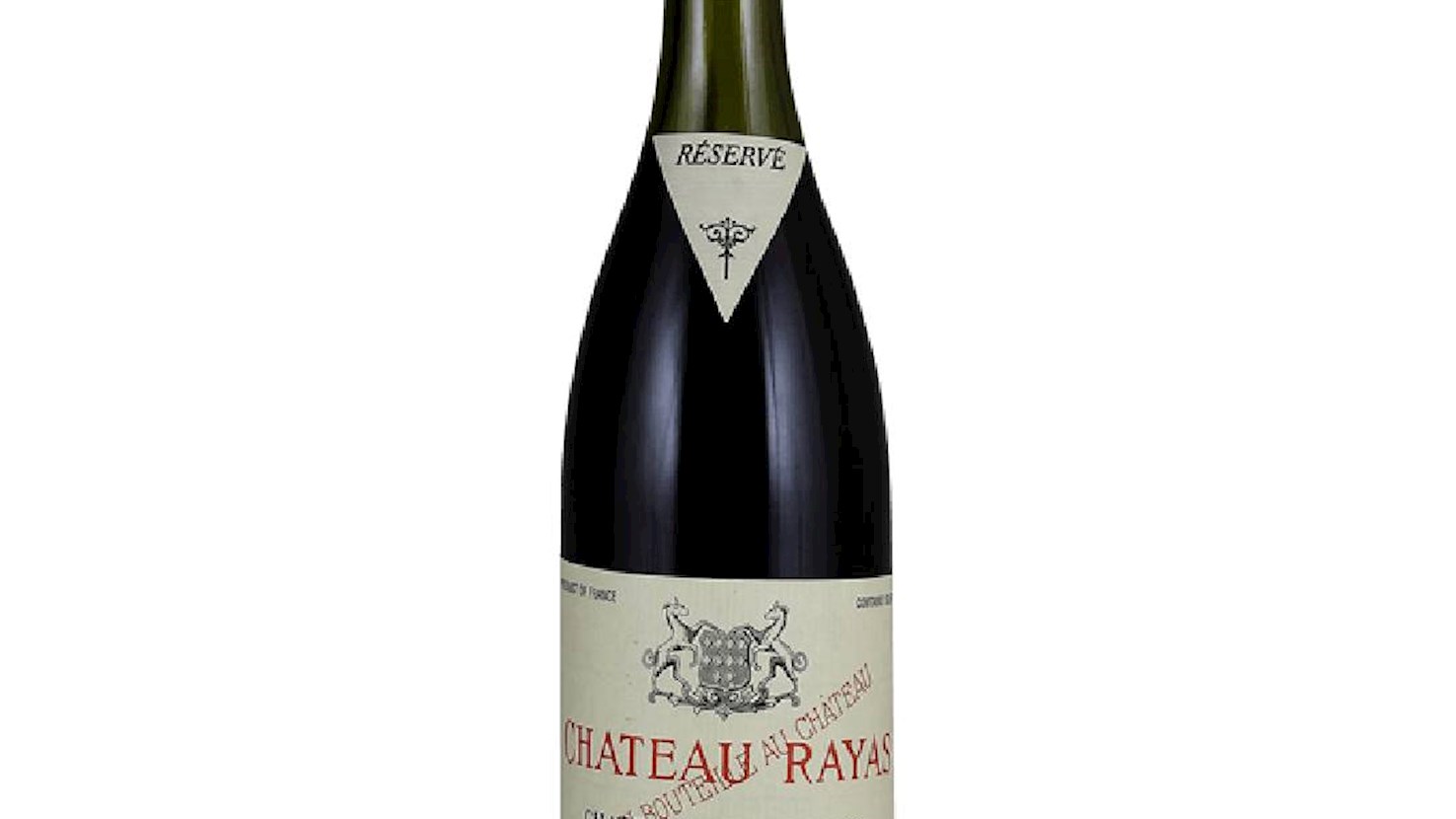
Château Rayas is a legendary estate in the heart of the Châteauneuf-du-Pape appellation, renowned for its unique style and unwavering commitment to tradition. Owned by the Reynaud family since the late 19th century, the estate has remained devoted to meticulous vineyard work and minimal intervention in the cellar. Surrounded by forest and planted on rare, sandy soils, its vineyards give the grapes an elegance and freshness that set them apart from the typical weight of southern Rhône wines. Red wines are crafted almost exclusively from Grenache, while the whites are made from Grenache Blanc and Clairette. The result is wines of remarkable finesse, silky tannins, and aromatic depth, often compared to the finest Burgundian expressions. Today, Château Rayas stands as a symbol of rarity, authenticity, and timeless elegance.
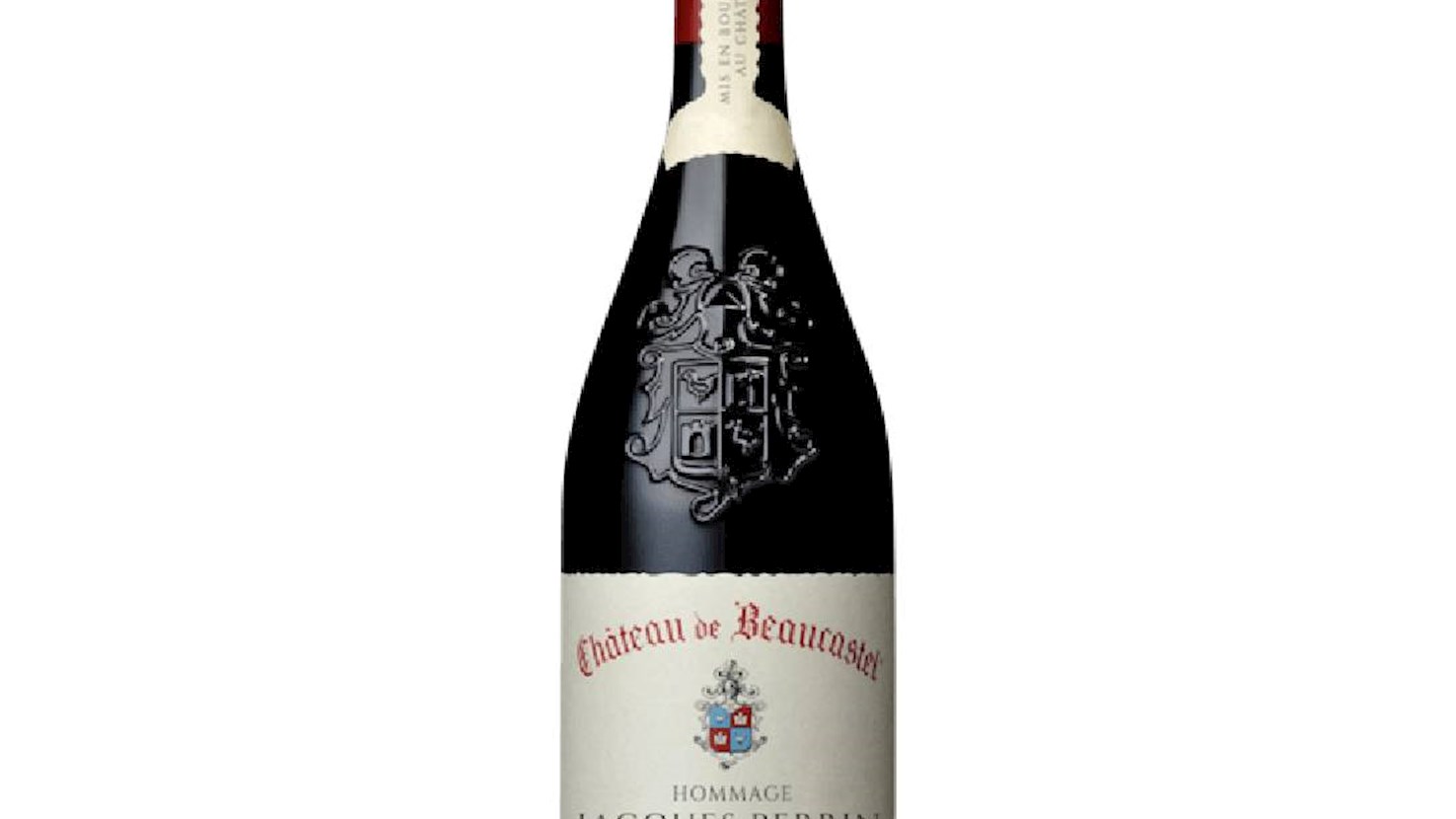
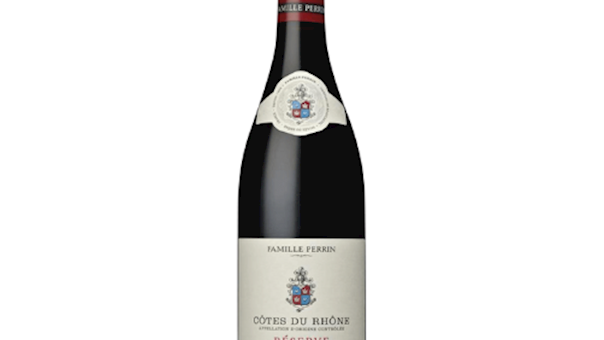
Château de Beaucastel is one of the most renowned and influential estates in southern France, located in the Châteauneuf-du-Pape appellation, where the Perrin family has been producing wine for generations. The vineyards lie on classic, stone-covered soils known as galets roulés, which store heat during the day and release it slowly at night, allowing grapes to reach full ripeness even in challenging vintages. Beaucastel is distinctive for its use of all 13 traditional grape varieties permitted in the appellation, with Mourvèdre playing a particularly important role by providing structure, aromatic depth, and exceptional aging potential. The estate’s style emphasizes a pure expression of terroir, organic vineyard practices, and traditional winemaking, including fermentation in concrete vats and aging in large oak foudres. The aromatic profile typically shows dark berries, black pepper, herbal garrigue notes, and earthy, smoky nuances that are emblematic of Châteauneuf-du-Pape. The texture is rich, concentrated, and layered, with tannins that can be firm in youth but evolve into remarkable elegance over time. As Beaucastel wines mature, they develop complex notes of leather, dried spices, game, tobacco, and a noble earthiness. The Perrin family’s longstanding dedication - blending tradition, precision, and a deep respect for the land - has made Château de Beaucastel one of the most recognizable and respected names in the world of southern Rhône wines.
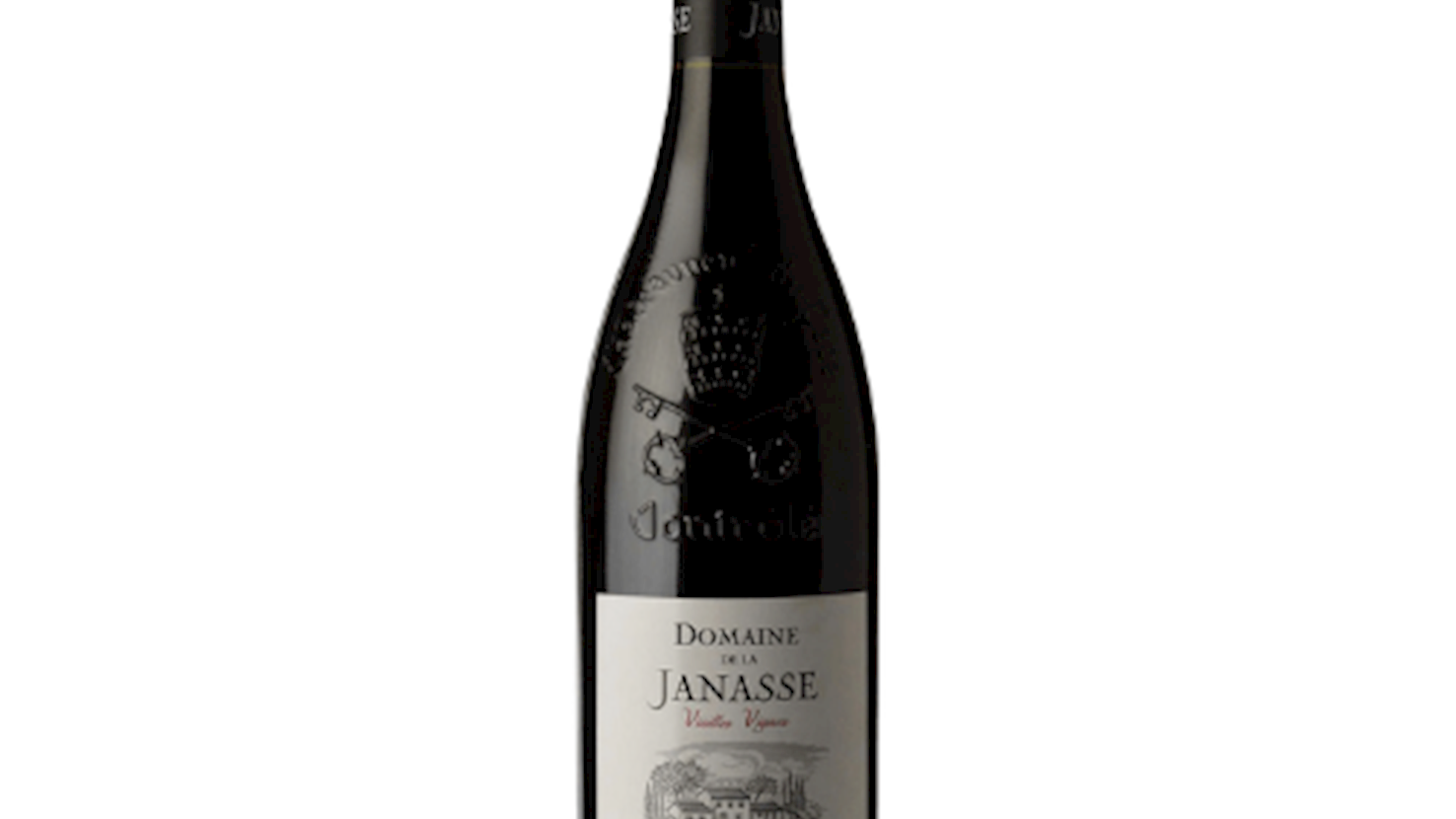
Domaine de la Janasse is a family-owned estate in the southern Rhône Valley, founded in 1973 by Aimé Sabon, who transformed inherited vineyards into a respected independent domaine. Today, it is managed by the second generation, Isabelle and Christophe Sabon, who continue to refine the estate’s style while preserving its traditional foundations. The vineyards are spread across multiple parcels in Châteauneuf-du-Pape, encompassing a range of soil types such as galets roulés, sand, and clay-limestone, each contributing to the complexity of the wines. The estate works with the classic grape varieties of the appellation, led by Grenache and supported by Syrah, Mourvèdre, and other permitted varieties. In the cellar, winemaking combines long macerations and partial destemming with aging in a mix of large foudres and smaller oak barrels, depending on the cuvée. The resulting wines are typically rich and structured, with ripe dark fruit, garrigue herbs, spice, and subtle earthy notes. Despite their concentration, they maintain balance and freshness, reflecting both vineyard diversity and careful vinification. Domaine de la Janasse has built a strong reputation for producing both traditional blends and more powerful cuvées with notable aging potential. The portfolio includes both red and white wines, consistently expressing the character of the southern Rhône terroir.
Domaine de la Solitude is a historic winery located in Châteauneuf-du-Pape, France, owned by the Lançon family for multiple generations. The estate spans 37 hectares, organically farmed, with vines averaging over 100 years in age. Their portfolio includes red and white wines, with notable offerings such as the Réserve Secrète and Cuvée Barberini. The winery emphasizes manual harvesting, stringent sorting standards, and precise winemaking to produce wines rich in structure, color, and aroma.
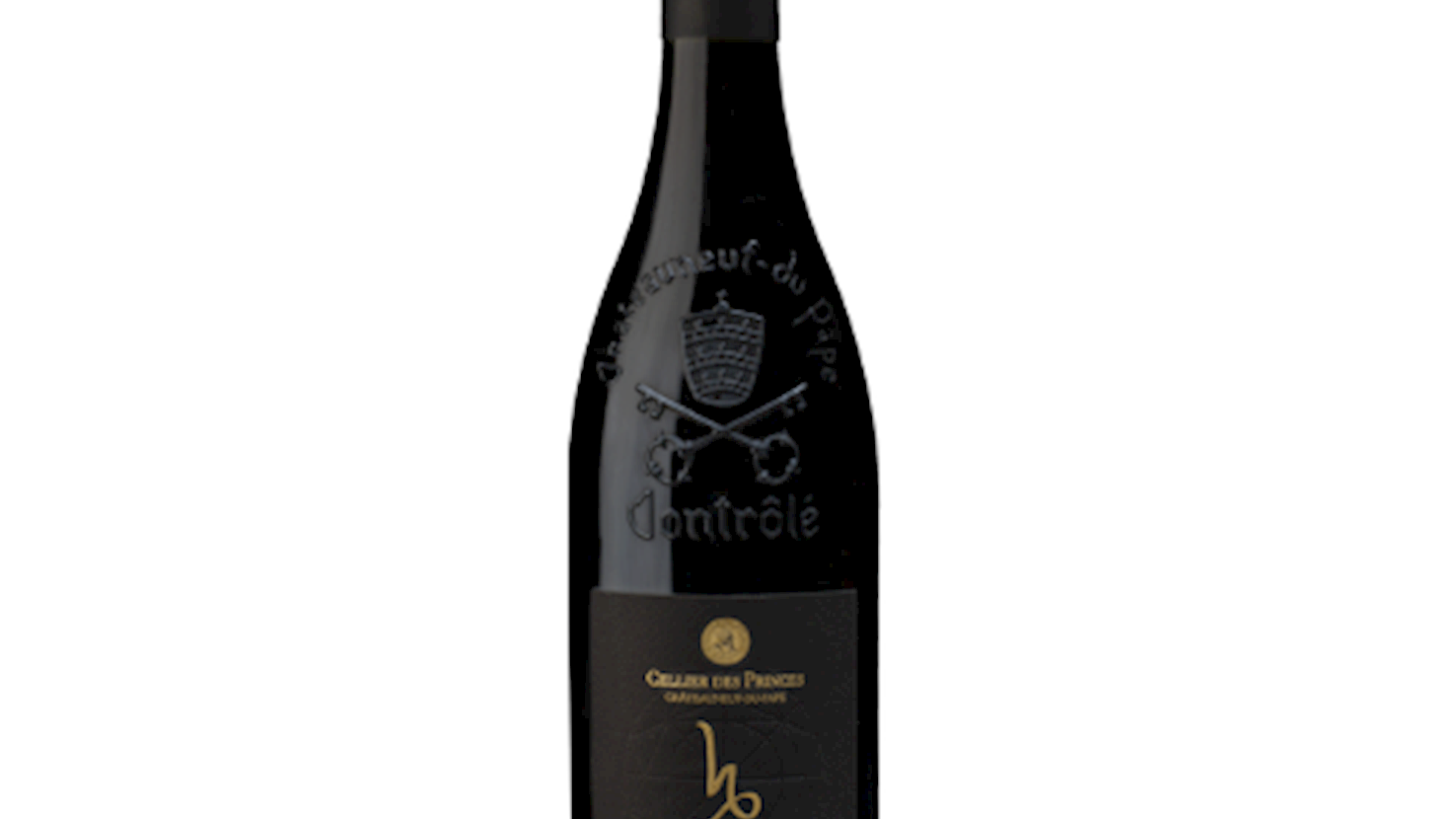
Cellier des Princes is a cooperative winery based in Courthézon in the Southern Rhône Valley, founded in 1925 and today recognized as the only cooperative within the Châteauneuf-du-Pape appellation. It was created by local winegrowers who joined forces to protect quality, origin, and reputation at a time when the foundations of the AOC system were being established. The cooperative now brings together around two hundred growers cultivating more than 600 hectares of vineyards spread across diverse terroirs, including the iconic galets roulés soils typical of the appellation. Production is primarily focused on red wines, built around Grenache and complemented by Syrah and Mourvèdre, resulting in wines of depth, structure, and a distinctly Mediterranean profile. The portfolio includes Châteauneuf-du-Pape as well as other Southern Rhône appellations such as Côtes-du-Rhône, Gigondas, and Vacqueyras. Cellier des Princes combines traditional vineyard practices with modern winemaking, emphasizing careful grape selection and parcel-based vinification. The wines are known for their clarity of style, balance between power and elegance, and consistent quality across vintages. The winery has a strong international presence, with a significant share of its production exported to global markets. Its tasting room and wine shop in Courthézon offer direct insight into both the wines and the cooperative’s philosophy. Today, Cellier des Princes stands as a strong example of how a cooperative model can successfully preserve terroir identity while remaining professionally structured and commercially relevant.
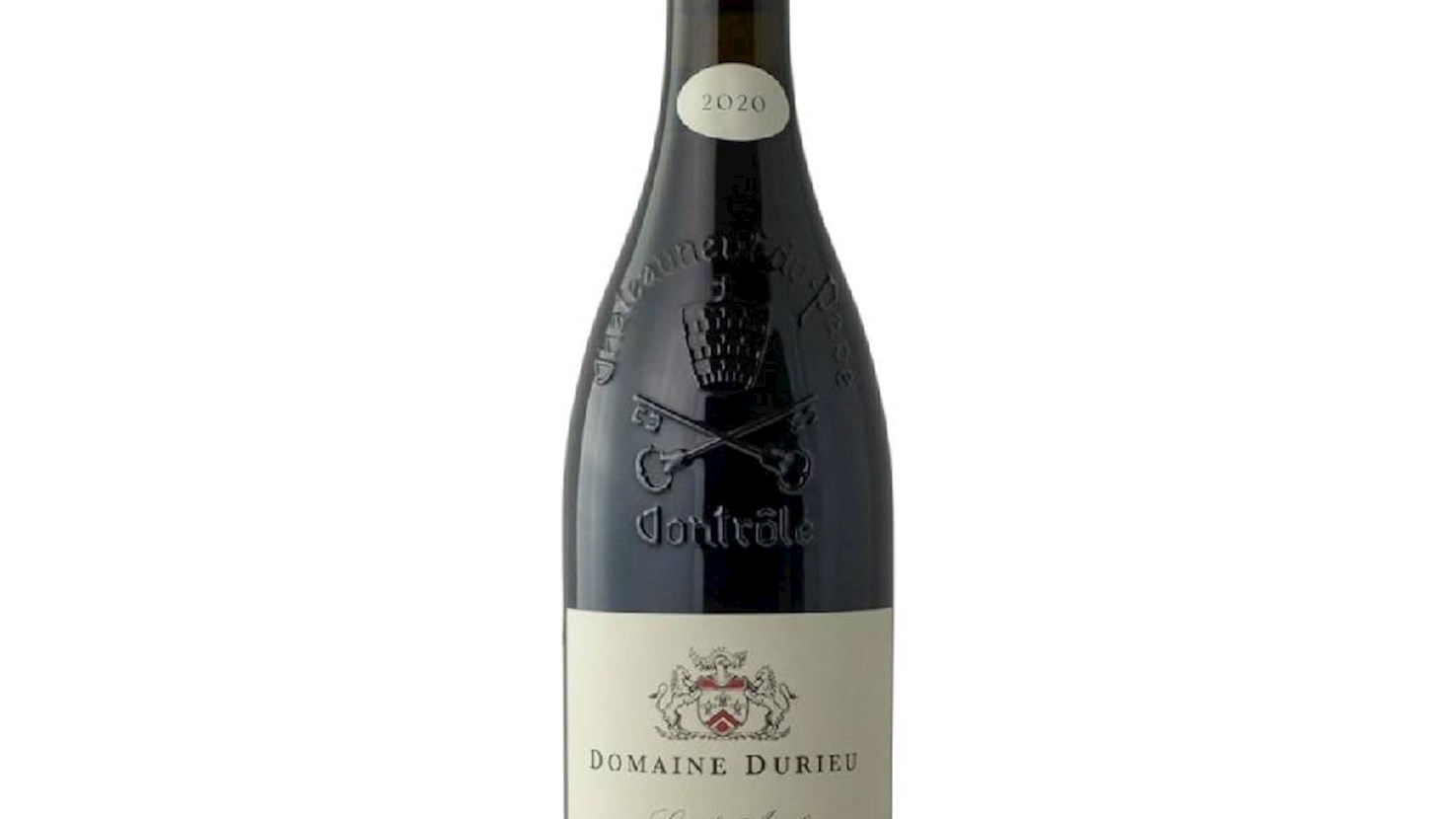
Founded in 1976 by Paul Durieu, the winery was taken over in the early 2000s by his sons, Vincent and François, who brought modernity and elegance to the winemaking process. The winery practices sustainable agriculture, focusing on preserving the terroir and expressing the authentic characteristics of each wine. Visitors are welcome year-round to the tasting room, housed in a building dating back to 1615, which once served as a barrel-making workshop.
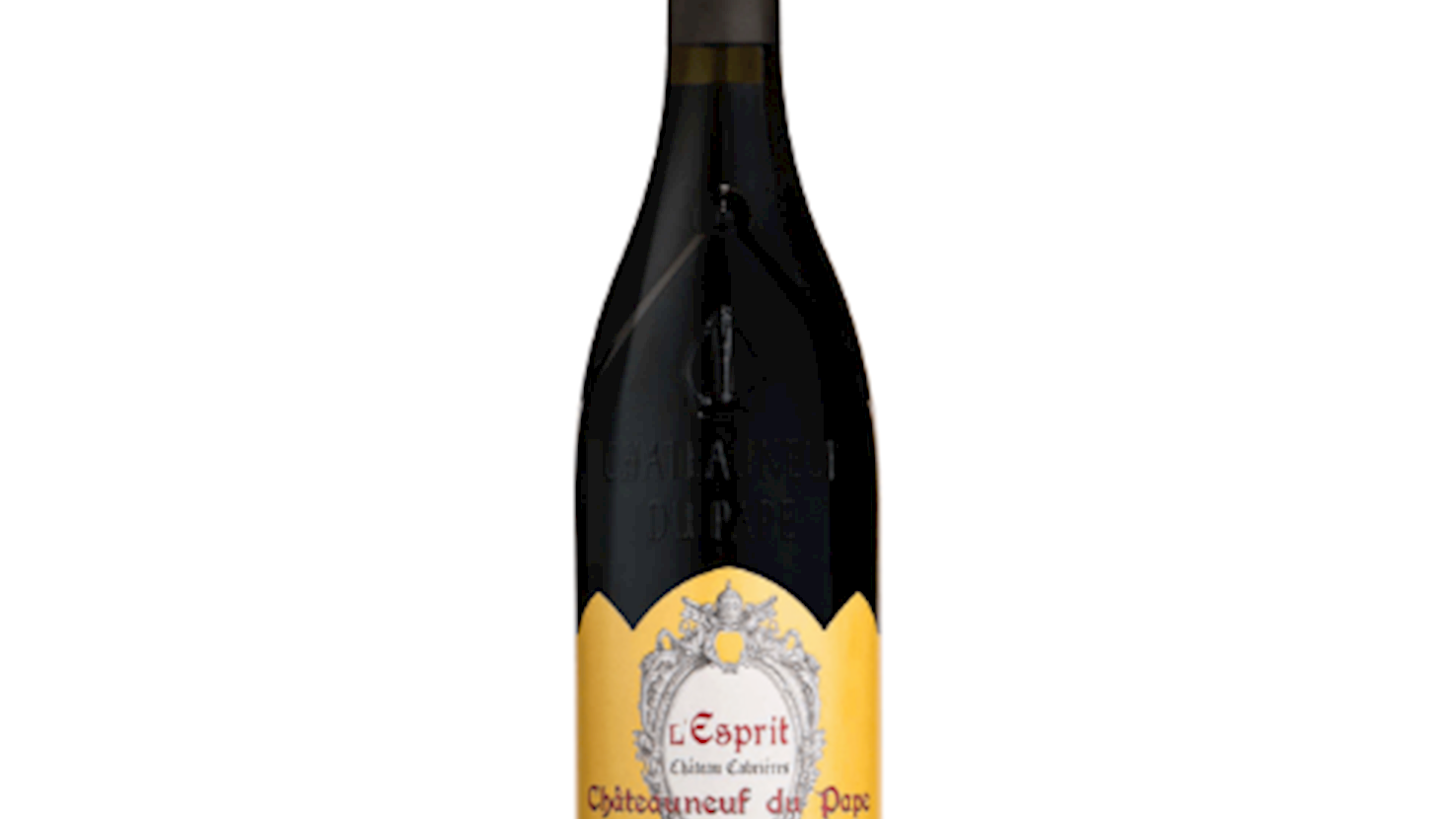
Château Cabrières is a family-owned wine estate located in southern France, in the Languedoc region, with vineyards set on sun-exposed slopes characterized by limestone- and clay-rich Mediterranean soils. The estate has a long local tradition and focuses on producing wines that clearly reflect the terroir and climate of the French South. Vineyards are mainly planted with regional varieties such as Grenache, Syrah, and Carignan, complemented by smaller plantings of international grapes. Vineyard management follows sustainable practices, with careful yield control and selective hand harvesting in key parcels. Winemaking emphasizes fruit expression and natural structure, with restrained use of oak to avoid masking varietal character. The wines of Château Cabrières typically show ripe red and dark fruit aromas, herbal and spicy notes, and a distinctly Mediterranean profile. On the palate they are warm yet balanced, with supple tannins and refreshing acidity. The house style favors authenticity and drinkability over heavy extraction or technical manipulation. Château Cabrières is positioned as a reliable representative of classic, terroir-driven Languedoc wines.
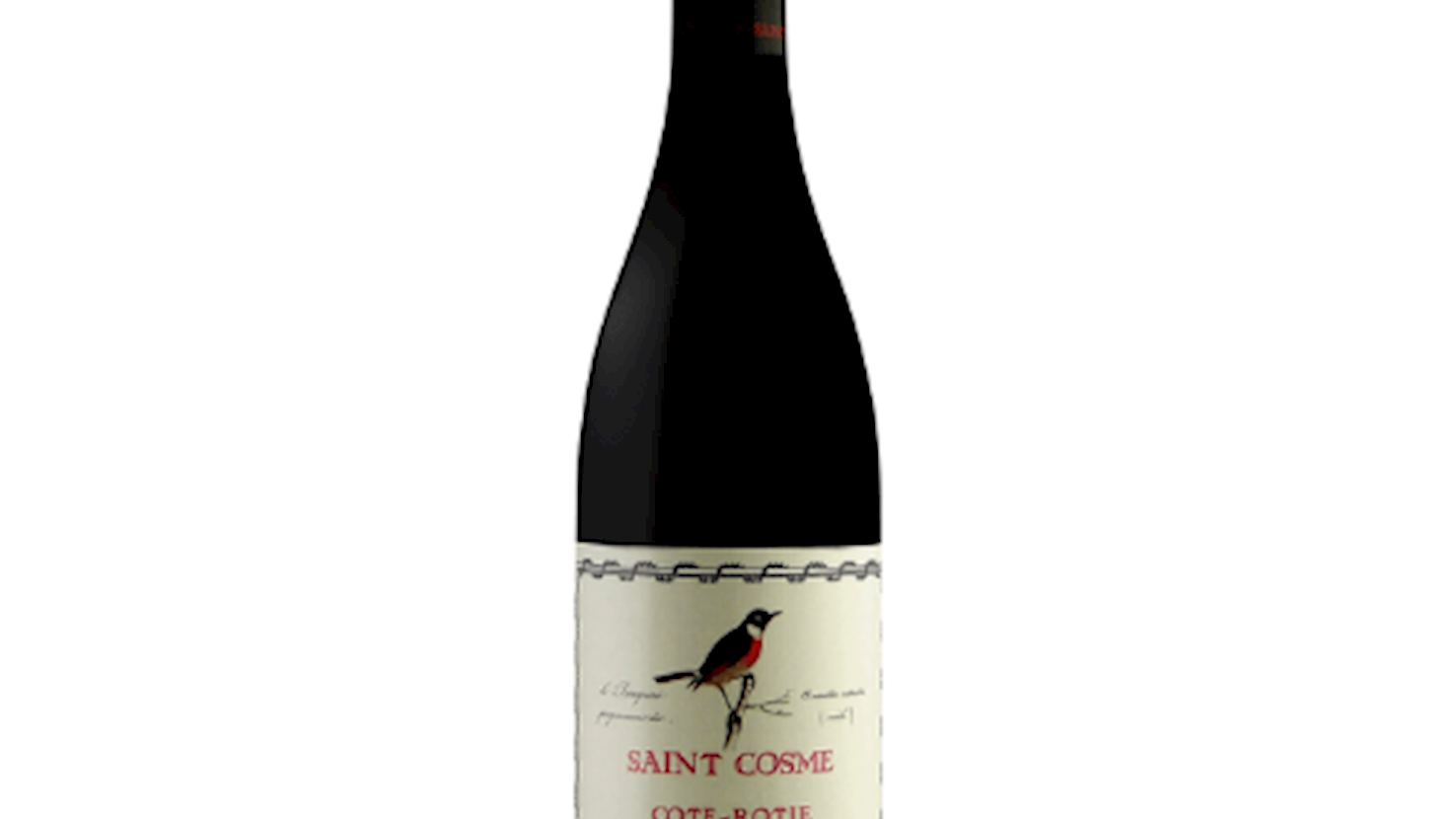
Château de Saint Cosme is a historic wine estate located in the Gigondas appellation of the southern Rhône Valley and is widely regarded as one of the region’s benchmark producers. The estate’s history dates back over 2,000 years, with ancient Gallo-Roman fermentation vats still visible in the cellar, underscoring its deep-rooted viticultural heritage. Today, Château de Saint Cosme is led by Louis Barruol, who combines traditional Rhône practices with a precise, terroir-driven approach to winemaking. The vineyards are planted primarily to Grenache, complemented by Mourvèdre, Syrah, and Cinsault, on limestone-rich soils that bring freshness and structure to the wines. Farming is carried out with strong respect for nature, emphasizing low yields and sustainable practices. Vinification relies on native yeasts, minimal intervention, and careful extraction to preserve balance and authenticity. The wines of Château de Saint Cosme are known for their depth, aromatic complexity, and sense of place, offering powerful yet refined expressions of Gigondas and other Rhône appellations, with excellent ageing potential.
Maison Ogier is a historic Rhône wine house based in Châteauneuf-du-Pape, founded in 1859 and deeply rooted in the traditions of the southern Rhône Valley. Positioned in the heart of the village, the house operates from centuries-old cellars where wines are vinified and aged with a strong focus on terroir expression. Maison Ogier works as both a producer and négociant, sourcing grapes from a wide range of Rhône appellations, including Châteauneuf-du-Pape, Côtes du Rhône, Ventoux, Gigondas, Vacqueyras, and other recognized crus of both the northern and southern Rhône. Its philosophy centers on highlighting the diversity of Rhône soils, climates, and grape varieties, with an emphasis on balance, precision, and drinkability. Winemaking is adapted to each cuvée, using a thoughtful combination of stainless steel, concrete, and oak depending on the desired style. The portfolio spans from fresh, fruit-driven wines intended for early enjoyment to more structured expressions with aging potential. Maison Ogier is also an established destination for tastings and wine tourism, offering a broad and representative overview of Rhône Valley wine styles through a contemporary yet tradition-respecting approach.
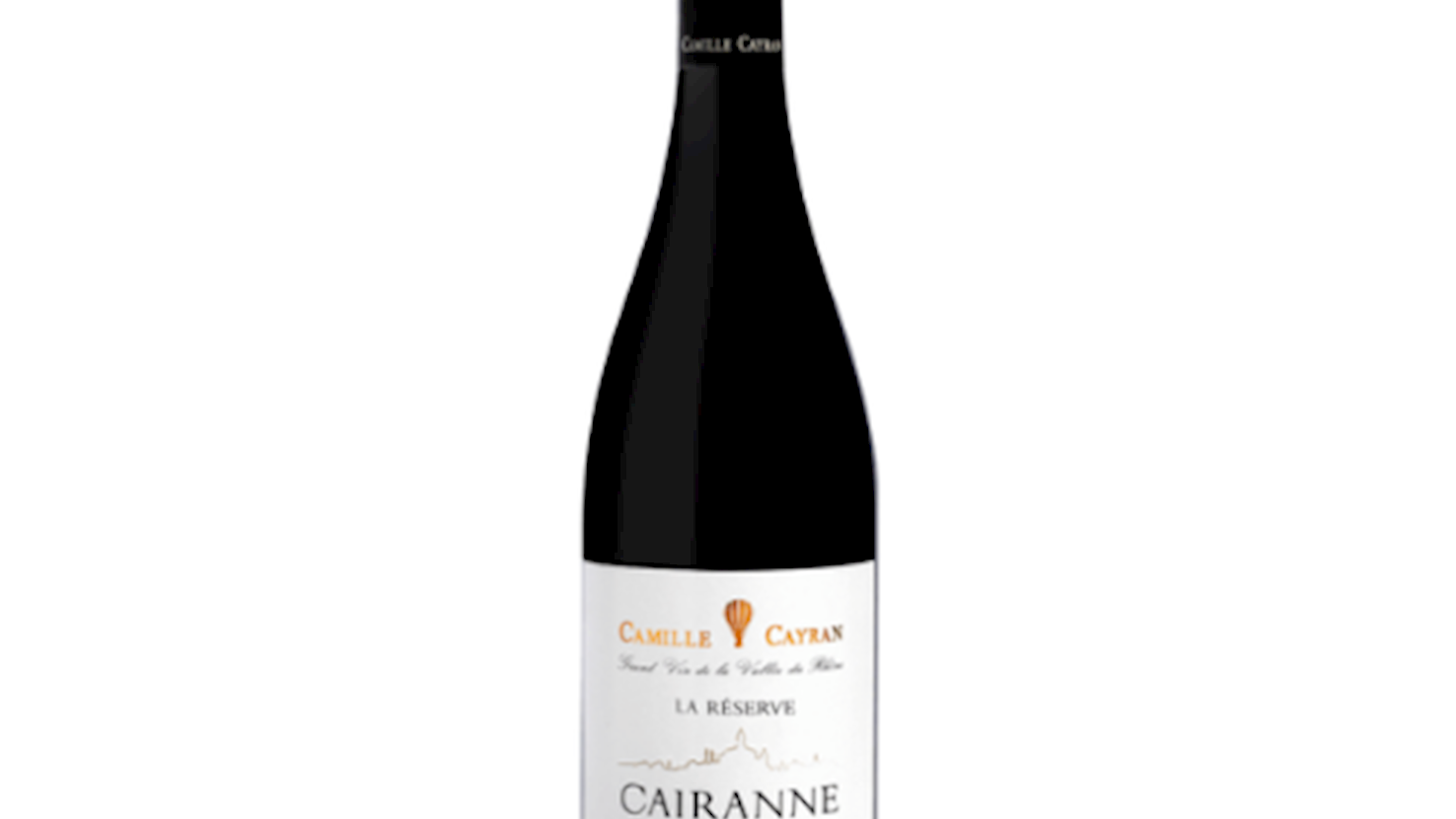
Cave de Cairanne is a cooperative winery located in the village of Cairanne in the southern Rhône Valley, within the Cairanne AOC appellation in France. Founded in 1929, it was established as a collective of local growers aiming to unify production and enhance the quality and recognition of wines from the area. Today, it brings together numerous winegrowers who cultivate vineyards across diverse plots characterized by clay-limestone and stony soils typical of the southern Rhône. The winery focuses primarily on red wines made from classic Rhône varieties such as Grenache, Syrah, and Mourvèdre, producing wines with depth, structure, and aromas of red and dark fruit, spices, and Mediterranean herbs. White wines, though produced in smaller quantities, are crafted from varieties like Clairette, Grenache Blanc, and Roussanne, offering freshness and aromatic complexity. The style balances richness with elegance, reflecting both the warm climate and the distinctive terroir of Cairanne. Modern winemaking techniques are combined with traditional practices to preserve the identity of each vineyard parcel.
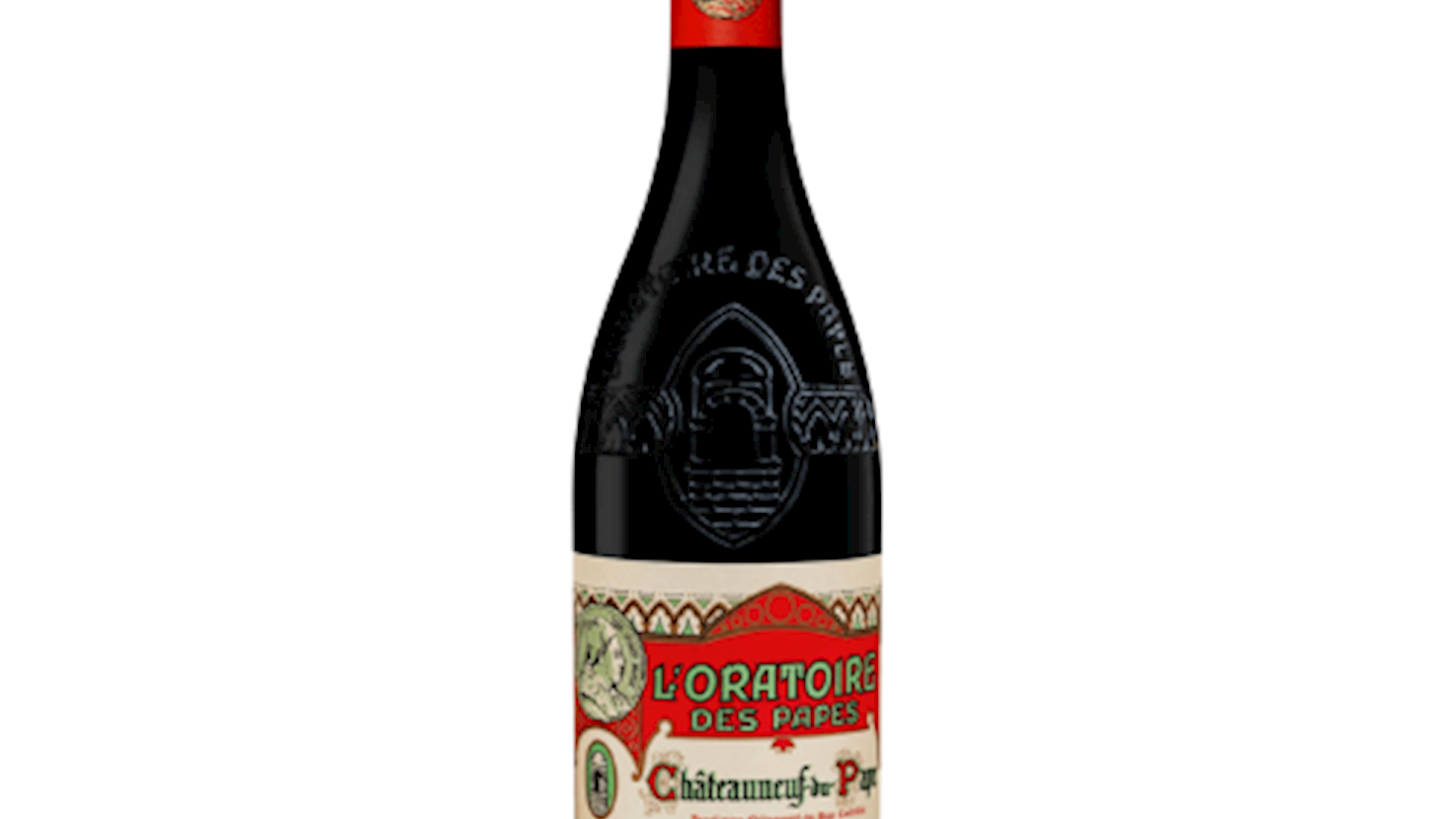
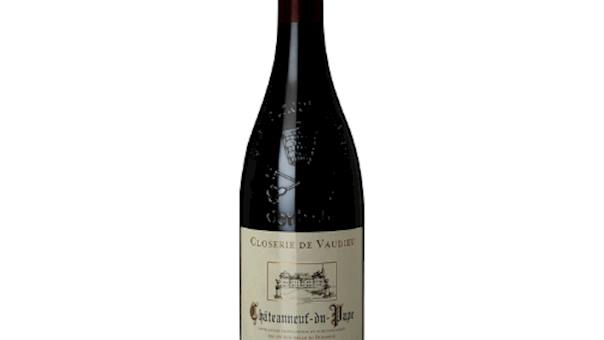
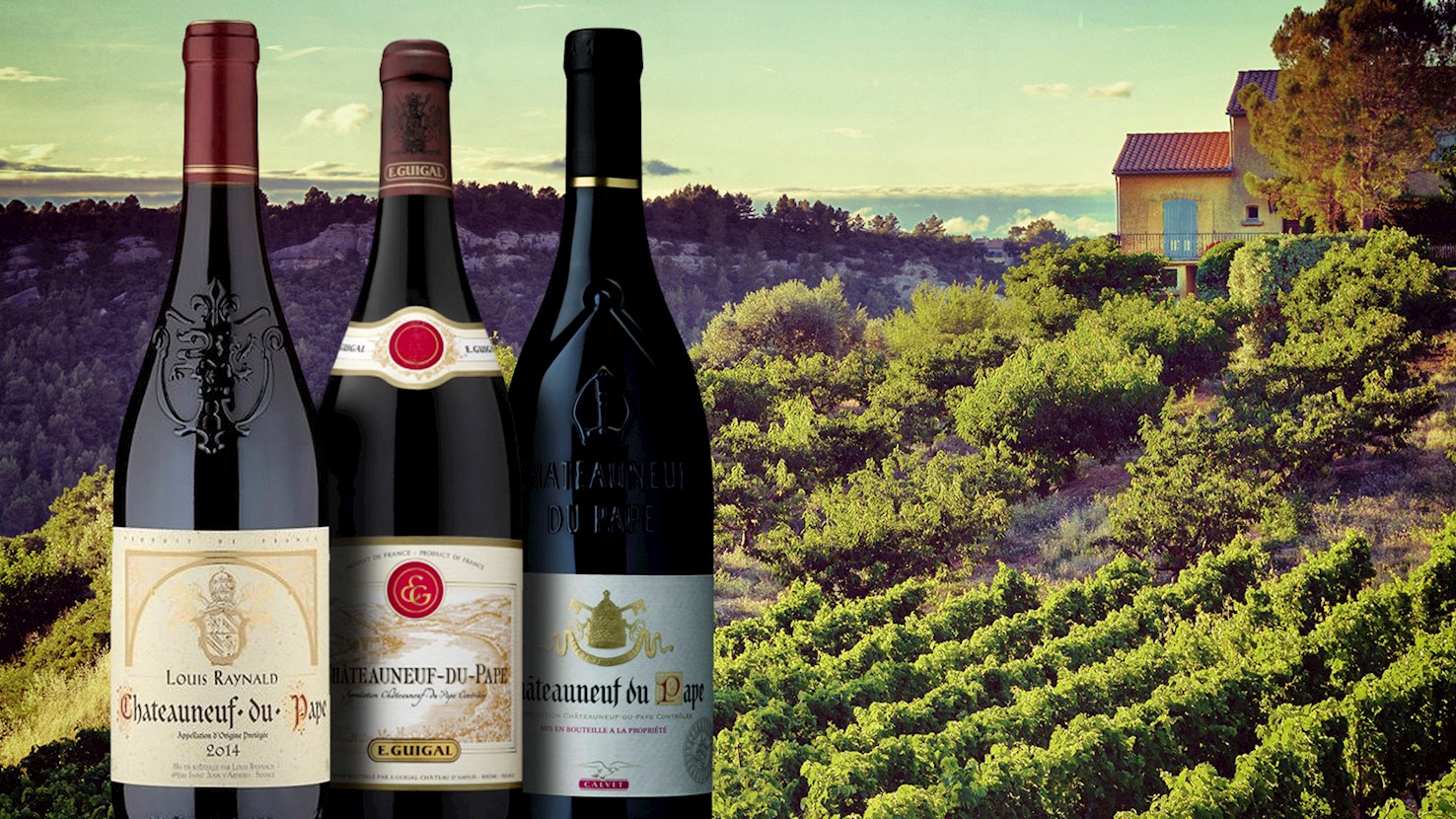
Châteauneuf-du-Pape is the largest and the most important appellation in the southern part of the Rhône Valley that comprises of five communes. Most Châteauneuf-du-Pape wines are predominantly red blends, with a small percentage of whites. Officially eighteen grape varieties are allowed, including different colors of the same grape variety. However, the most common are Grenache, Mourvèdre, Syrah, and Cinsault grapes. These rich wines can greatly differ in style, but they are mainly characterized by the spicy and earthy aromas of red berries, black pepper, tar, and leather. The lighter versions are suitable for relatively early drinking, while some age-worthy blends are cellared before they are enjoyed. Châteauneuf-du-Pape wines are perfect to serve alongside grilled beef, veal, pork, game, sausages, lamb, stews, braised dishes, cassoulets, and rich seafood dishes.
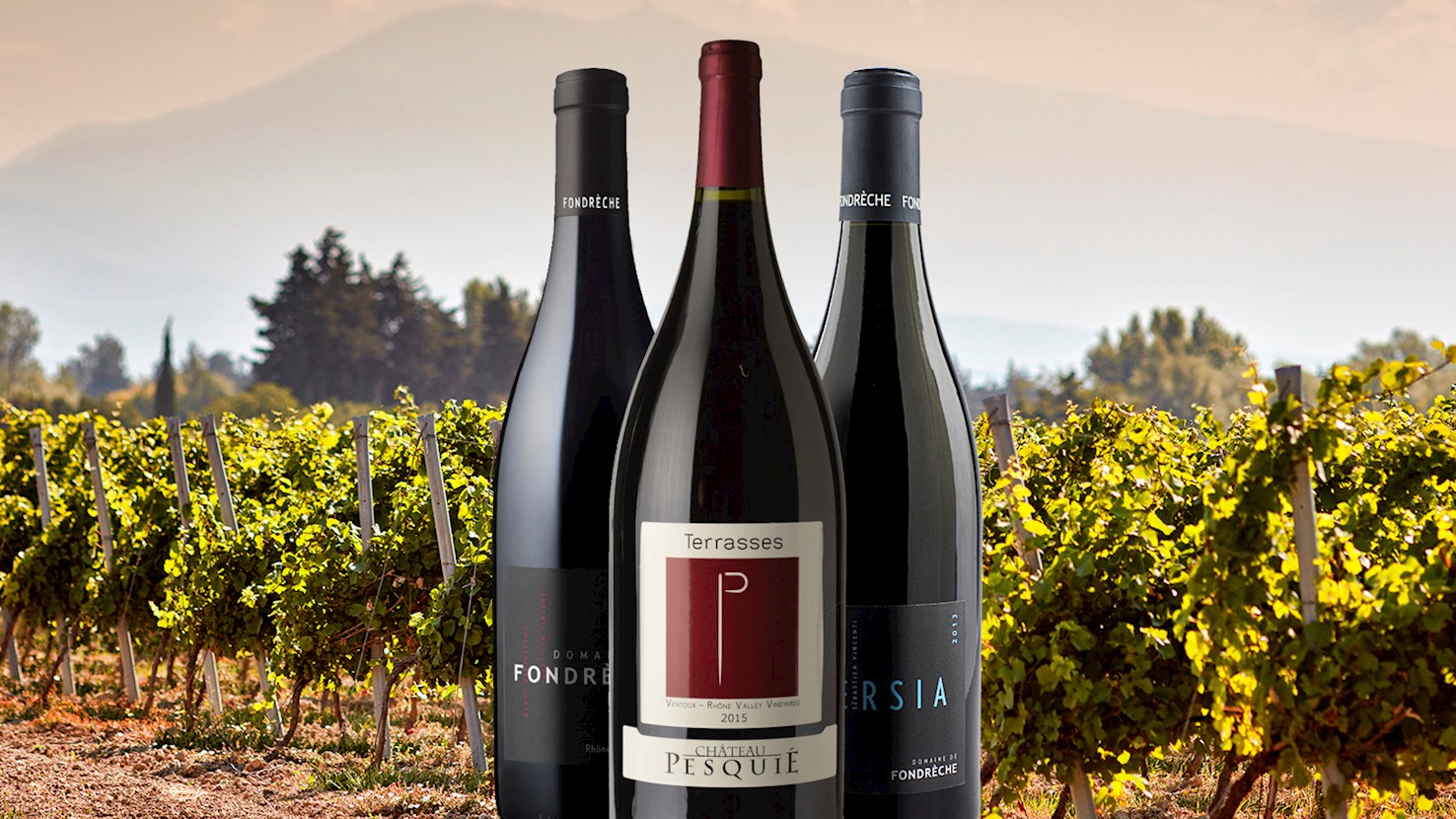
Red wines from the Ventoux appellation are primarily based on Grenache, Carignan, Cinsault, Syrah, and Mourvèdre grapes. These ruby red, fruit-forward wines typically display aromas of ripe red fruit that are occasionally complemented by subtle notes of spices, licorice, or oak. Due to their smooth texture and not-overpowering tannins, they can match a variety of dishes, but they perfectly pair with sausages, stews, and grilled red or white meat.
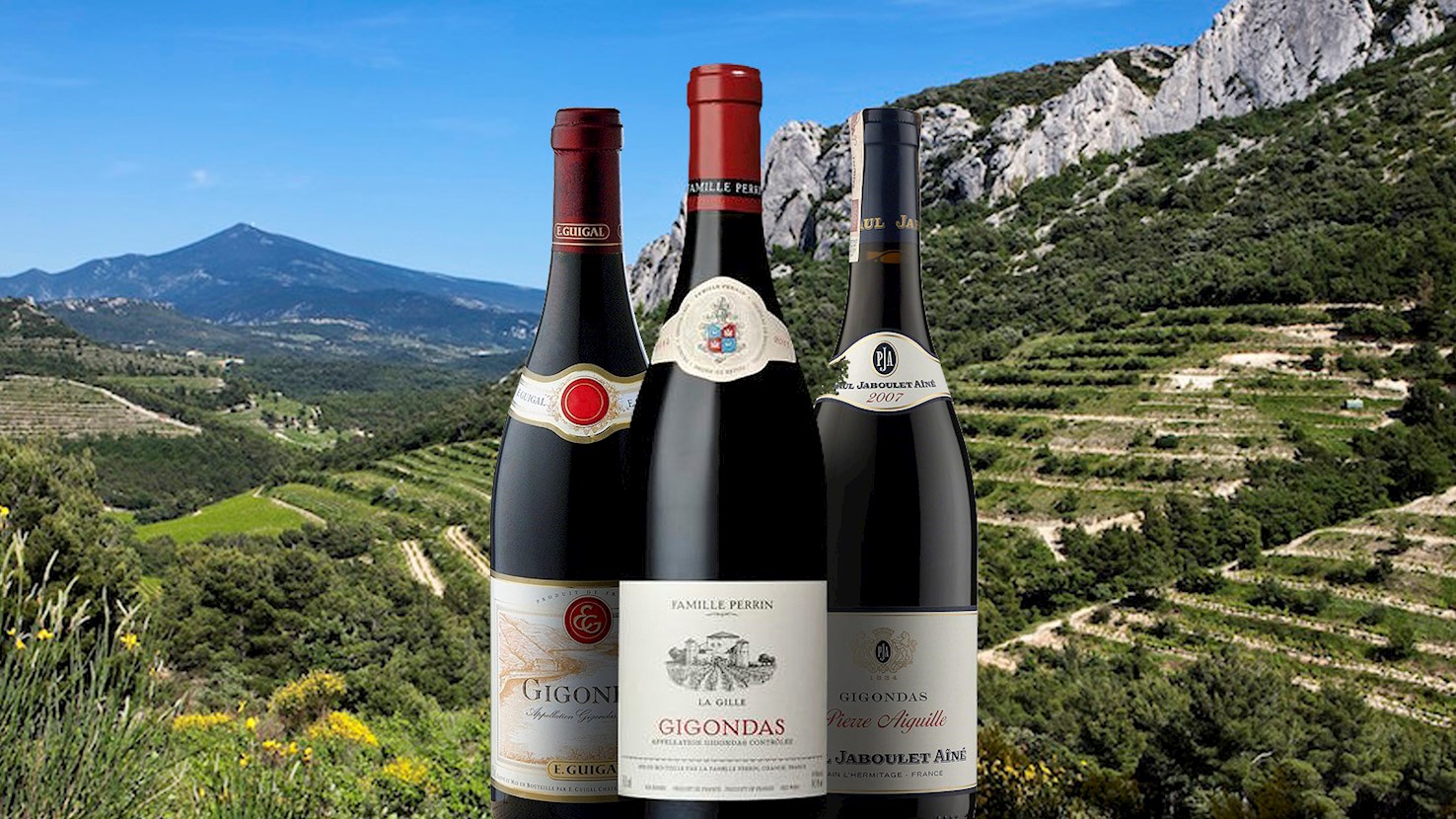
This powerful red wine hails from the southern Rhône, and it is mostly based on Grenache with small proportions of Syrah and Mourvedre. Often compared to the more famous Châteauneuf-du-Pape, these robust wines are characterized by their deep ruby color and complex aromas of ripe red and black fruit that are complemented by spicy and earthy nuances of licorice, cocoa, or chocolate. Gigondas is a full-bodied wine with powerful tannins that tend to mellow with age, resulting in more refined expressions. They are an excellent match to braised dishes, stews, or casseroles.
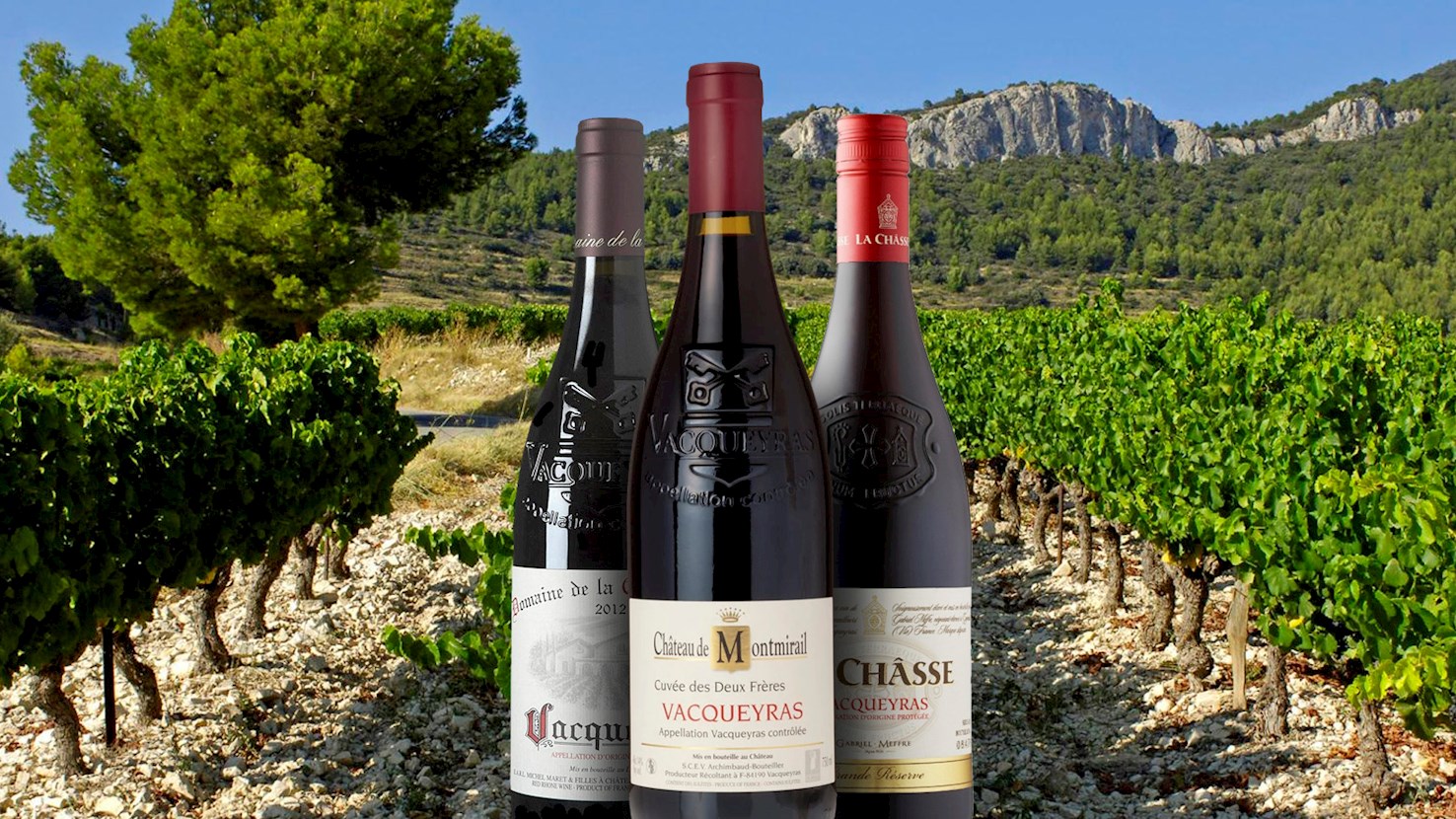
Vacqueyras is a French appellation located in the Rhône. Although white and some amount of rosé wines are produced in Vacqueyras, dry red wines are the hallmark of the region. These garnet-colored and rich wines are based on Grenache, but Syrah and Mourvèdre must make up at least 20 percent of the blend. The primary notes include red and dark berries that are usually complemented by notes of preserved fruit, spices, and violets. Although often described as powerful and slightly robust, these wines will typically have a pleasant finish and unique, somewhat elegant character. Red Vacqueyras pairs well with lamb, beef, duck, hearty stews, and pungent cheese.
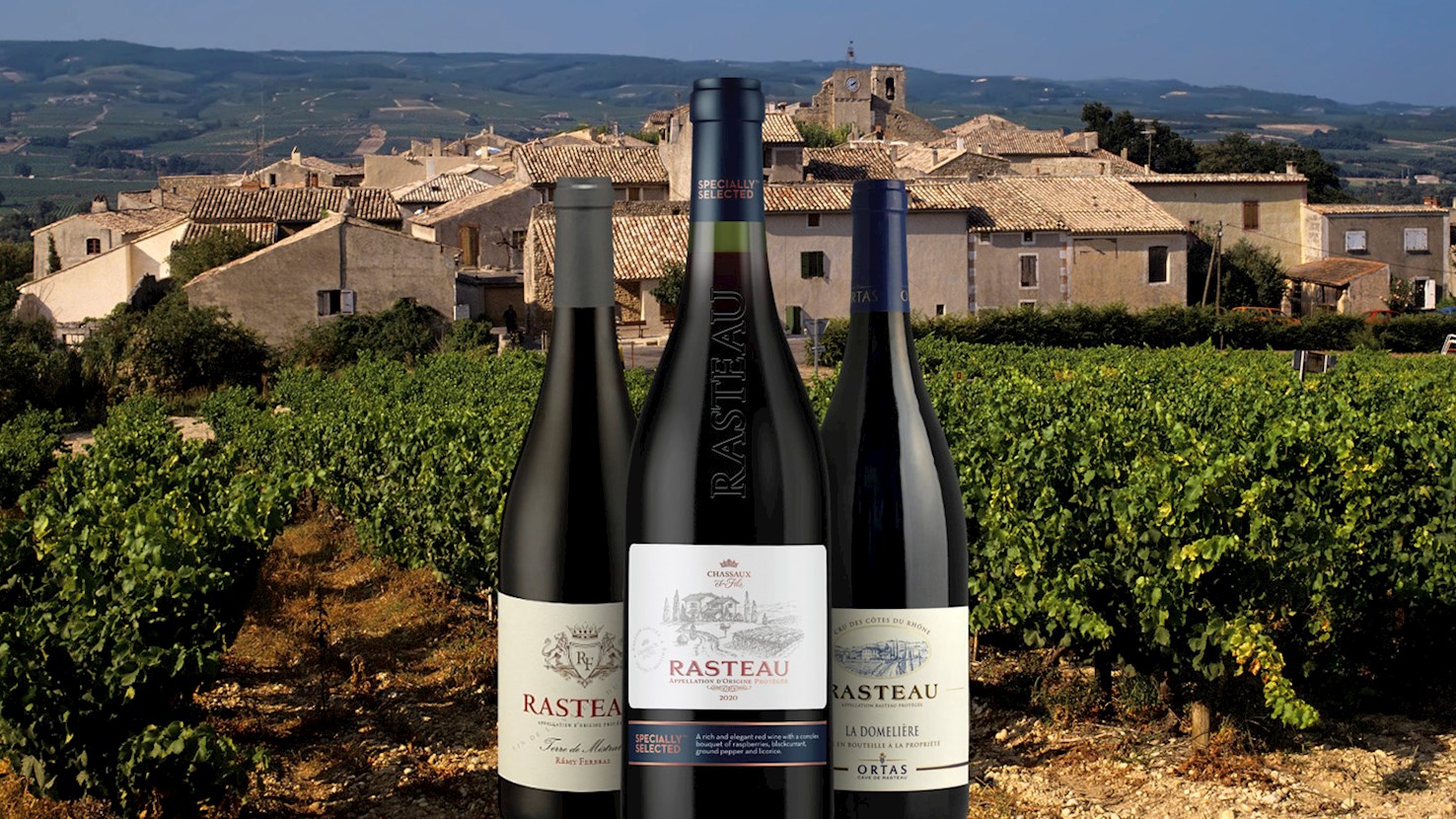
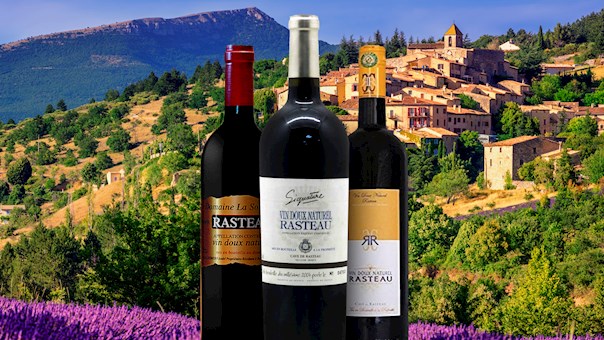
Rasteau is a French wine region that has a status of Côtes du Rhône Villages Cru. It is used for powerful dry red wines made from Grenache, usually with the addition of Mourvèdre and Syrah. Rasteau is also known for naturally sweet wines (vins doux naturel), made by adding pure grape spirit to fermented grape juice. The region is located around the eponymous village in the Vaucluse department. Red Rasteau wines have a deep ruby color and intense aromas reminiscent of raspberries, currants, and blackberries. They will sometimes have hints of cocoa, spice, and coffee. On the palate, the wines are rich and dense with firm and rounded tannins. The wines have excellent aging potential, and they would pair with robust and powerful red meat or game dishes.
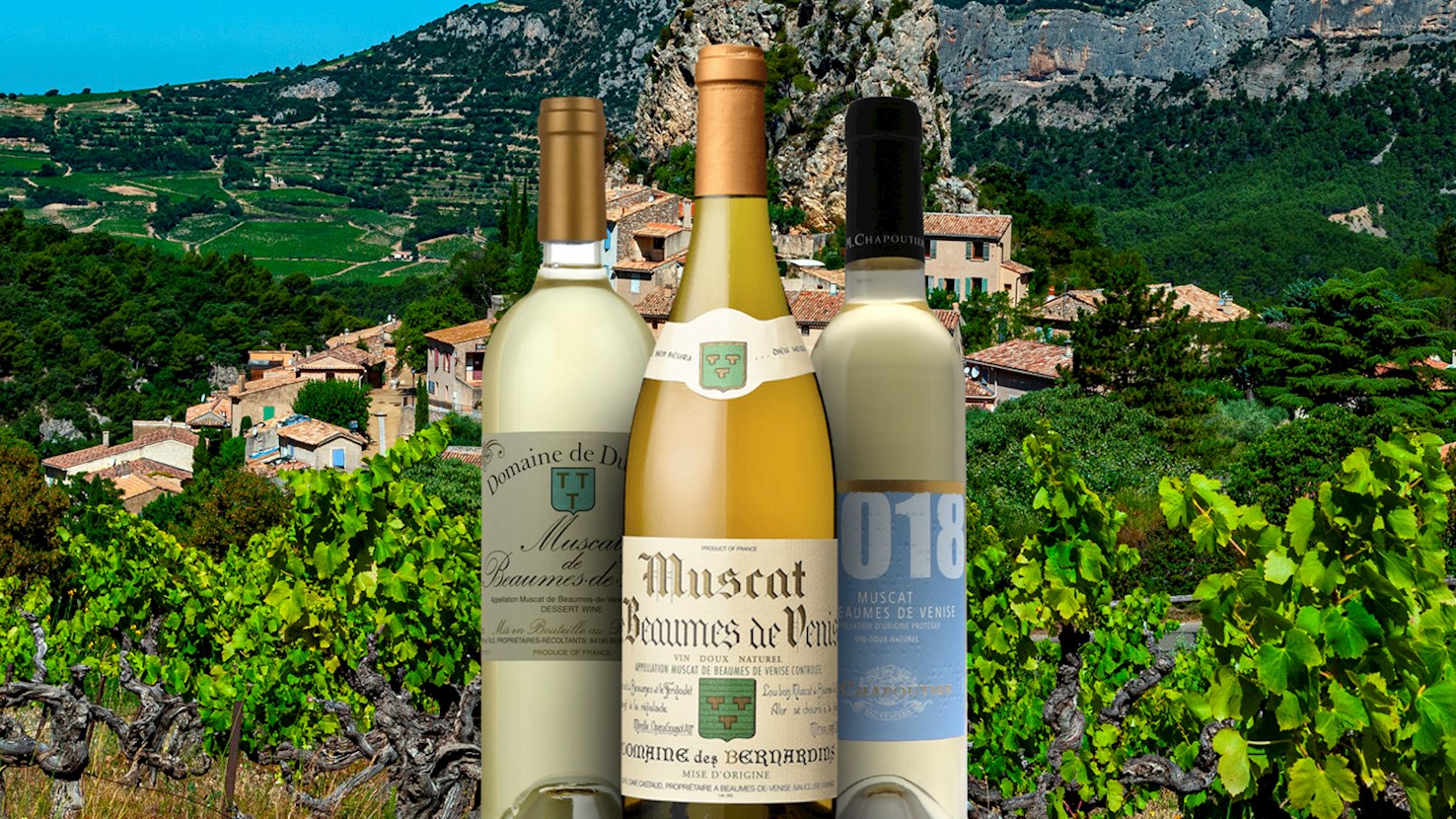
Muscat de Beaumes de Venise is a French appellation for dessert wines. The region is located in Southern Rhône, between Châteauneuf, Gigondas, and Vacqueyras. Initially, the appellation only included white wines, but red and rosé styles are now also permitted. The wines are classified as Vins Doux Naturels, and are made from Muscat à Petits Grains. White wines from Beaumes de Venise wines remain the most popular and the best-selling style. They have a bright yellow color that tends to turn golden with age. The aromas are reminiscent of exotic and white fruit, along with floral and citrusy notes. The wines are concentrated and rich but remain fresh on the palate. They are best served with terrines, foie gras, or desserts.
Beaumes de Venise is a French appellation for red wines and a renowned sweet fortified Muscat produced in and around the commune of Beaumes-de-Venise. The vineyards in this area trace back to the Roman era, and over time growers established vineyards on the footslopes of the Dentelles de Montmirail with orders of monks and later producers refining the vine planting until in 1945 the Muscat de Beaumes-de-Venise earned AOC status and in 2005 the red Beaumes-de-Venise recognized as a cru within the Rhône Valley hierarchy. The terrain is composed of sand, limestone and marl soils interspersed with pebble-rich clay, and the micro-climate is Mediterranean with the influence of the Mistral wind which keeps vines healthy. The sweet Muscat wine is made exclusively from Muscat Blanc à Petits Grains and Muscat Noir, grown on terraces, hand-harvested and then the must is fermented until about 5 % alcohol before neutral grape spirit is added (mutage) to arrest fermentation, producing a fortified wine with around 15 % alcohol and high residual sugar. In parallel, the red wines of the appellation are made from blends of Grenache Noir (minimum 50 %), Syrah (minimum 25 %), Mourvèdre and accessory grapes up to defined percentages; these grapes are harvested, fermented, then matured in vats or barrel as required before bottling under the Beaumes-de-Venise name. The red and sweet styles reflect distinct production methods but share the same defined terroir. Variations in the wines include the fortified sweet Muscat versus the dry red Cru style, differences in ageing regimes—some reds spend more time in oak and gain tertiary aromas, others are bottled early for fruit freshness—and minor differences in Muscat bottlings (white, rosé or rare red versions). One distinguishing element of the appellation is the link between the steep terraces beneath the Dentelles de Montmirail and the capacity to produce both a highly aromatic sweet wine and structured dry reds within the same vineyard framework. Beaumes de Venise wines are served in homes, wine bars and restaurants, with the sweet Muscat often poured as an aperitif or with fruit desserts and blue cheeses, while the reds match well with lamb, game, stews and mature cheeses. The reds also pair with grilled vegetables and rich Mediterranean dishes, and the whites and rosés (though produced in smaller volumes) work with seafood, poultry and fresh cheeses.
Côtes du Rhône Villages Visan is a French appellation for red, white and rosé wines produced in and around the village of Visan. Winegrowing in this area is documented from medieval times, when the village belonged to the Comtat Venaissin and vineyards were cultivated by local estates and religious communities. Over the centuries the terroir developed a reputation for producing balanced and expressive wines, and in 1966 Visan was among the first communes permitted to attach its name to the Côtes du Rhône Villages designation, confirming the distinctiveness of its soils and microclimate. The vineyards are planted on varied terrain composed of limestone, marl, red clay and gravel, with slopes that benefit from open exposure and Mistral winds that help maintain vine health. Red wines form the majority of production and rely on Grenache Noir as the leading variety, supported by Syrah and Mourvèdre; harvesting takes place when grapes reach optimal maturity, followed by fermentation in temperature-controlled vats, with some cuvées aged in oak barrels or large casks for structure while others are refined in concrete or steel to emphasize fruit purity. White wines are made from Clairette, Grenache Blanc, Roussanne, Marsanne and occasionally Viognier, often vinified in neutral vessels to preserve floral and citrus notes, while rosés are produced in smaller quantities using direct pressing or short maceration to retain freshness. Variations occur mainly in blending decisions—higher proportions of Syrah or Mourvèdre create deeper, more structured reds, while Grenache-dominant bottlings tend toward supple, fruit-driven profiles. White wines vary from crisp and aromatic to slightly fuller styles depending on the share of Roussanne or Marsanne. Côtes du Rhône Villages Visan wines are enjoyed in homes, bistros and restaurants, served with dishes such as roast lamb, stews, grilled meats or aged cheeses for the reds, while the whites pair well with seafood, poultry and goat cheese. Rosés accompany summer meals, grilled vegetables and charcuterie, making the appellation versatile across seasonal dining and a wide range of culinary styles.
Côtes du Rhône Villages Valréas is a French appellation for red, white and rosé wines produced in and around the village of Valréas. The vineyard of Valréas dates back to at least the Middle Ages, with the area gaining recognition in 1967 when the commune was authorized to append its name to the Côtes du Rhône Villages designation, reflecting its unique terroir within the Rhône Valley. The vineyards cover the commune of Valréas, an enclave within the Drôme department, planted on red clay and caillouteux (pebble-rich) soils and influenced by the cooling breezes descending from the southern Prealps; the principal grape varieties for the reds are Grenache Noir (minimum 40 %), Syrah and Mourvèdre (combined at least 25 %), with accessory varieties allowed, while the whites rely on Bourboulenc, Clairette, Grenache Blanc, Marsanne, Roussanne and Viognier. The grapes are harvested when they have achieved optimal ripeness, vinified with temperature-controlled fermentations, and aged either in stainless steel, concrete or oak barrels depending on the cuvée, before being bottled under the Valréas name. Variations within the appellation include differences in the proportion of Syrah and Mourvèvre for richer, more structured reds versus those focused on immediate fruit expression, limited production of rosé bottlings with lighter characters, and whites that range from crisp and aromatic to fuller styles depending on the mix of Roussanne or Viognier and the aging vessel. A distinctive aspect of Valréas wines is their northerly location within the Rhône vineyards and the presence of cooler micro-climates and distinct soil deposits that give the wines a finesse and balance unusual among many southern Rhône villages. Côtes du Rhône Villages Valréas wines are enjoyed in homes, wine bars and restaurants throughout France and abroad, typically paired with regional cuisine such as roast lamb, game dishes, Provençal stews or aged cheeses for the reds; the whites match white meats, seafood and goat cheese, while the rosés accompany summer dining, grilled vegetables and charcuterie boards.
Côtes du Rhône Villages Séguret is a French appellation for red, white and rosé wines produced in and around the village of Séguret. The vineyards have human occupation since Roman times and the terroir of Séguret became distinct over centuries, with the commune formally authorised in 1967 to append its name to the Côtes du Rhône Villages category, reflecting the quality of its vineyards and the consistency of its wines. Production takes place on slopes and terraced vineyards composed of red clay and limestone soils under Mediterranean climatic influence with the Mistral wind, the principal red grape varieties being Grenache Noir, Syrah and Mourvèdre and for whites mainly Roussanne and Marsanne; harvest is conducted when grapes reach optimal maturity, vinification of the reds involves temperature-controlled fermentation and often small-cask ageing, while the whites are handled with care to preserve aromatic freshness and then bottled under the appellation name. Variations within Séguret wines include rosé bottlings which show a lighter profile of red fruit and easier drinking, and the red wines differ in their ageing decisions—some producers release young, fruit-forward cuvées while others opt for longer maceration and oak ageing to build complexity. A distinctive feature of the appellation is its elevated vineyards and steep terraced slopes at the foot of the Dentelles de Montmirail, giving the wines a balance of ripe fruit, spice and mineral character derived from the site. Séguret wines are served in homes, restaurants and wine bars, typically matched with dishes such as duck, venison, Provençal lamb or mature cheeses for the reds, and with fish, shellfish or mild goats’ cheese for the whites; they pair well with hearty fare or refined rustic cuisine and reward both immediate consumption and modest ageing.
TasteAtlas food rankings are based on the ratings of the TasteAtlas audience, with a series of mechanisms that recognize real users and that ignore bot,
nationalist or local patriotic ratings, and give additional value to the ratings of users that the system recognizes as knowledgeable.
For the “Top 17 Local Wine Appellations in Vaucluse” list until June 15, 2026, 89 ratings were recorded, of which 75 were recognized by the system as legitimate.
TasteAtlas Rankings should not be seen as the final global conclusion about food. Their purpose is to promote excellent local foods,
instill pride in traditional dishes, and arouse curiosity about dishes you haven’t tried.
The initial list of top producers was compiled based on available reviews, awards, local recommendations, media and blog coverage, and consumer reviews.
The list will be updated with ratings from TasteAtlas local ambassadors and TasteAtlas users.