Top 16 Local Beverages
in Wallonia

Last updated on June 15, 2026

Best Wallonia Beverages
01

Brasserie d'Orval

5 ·
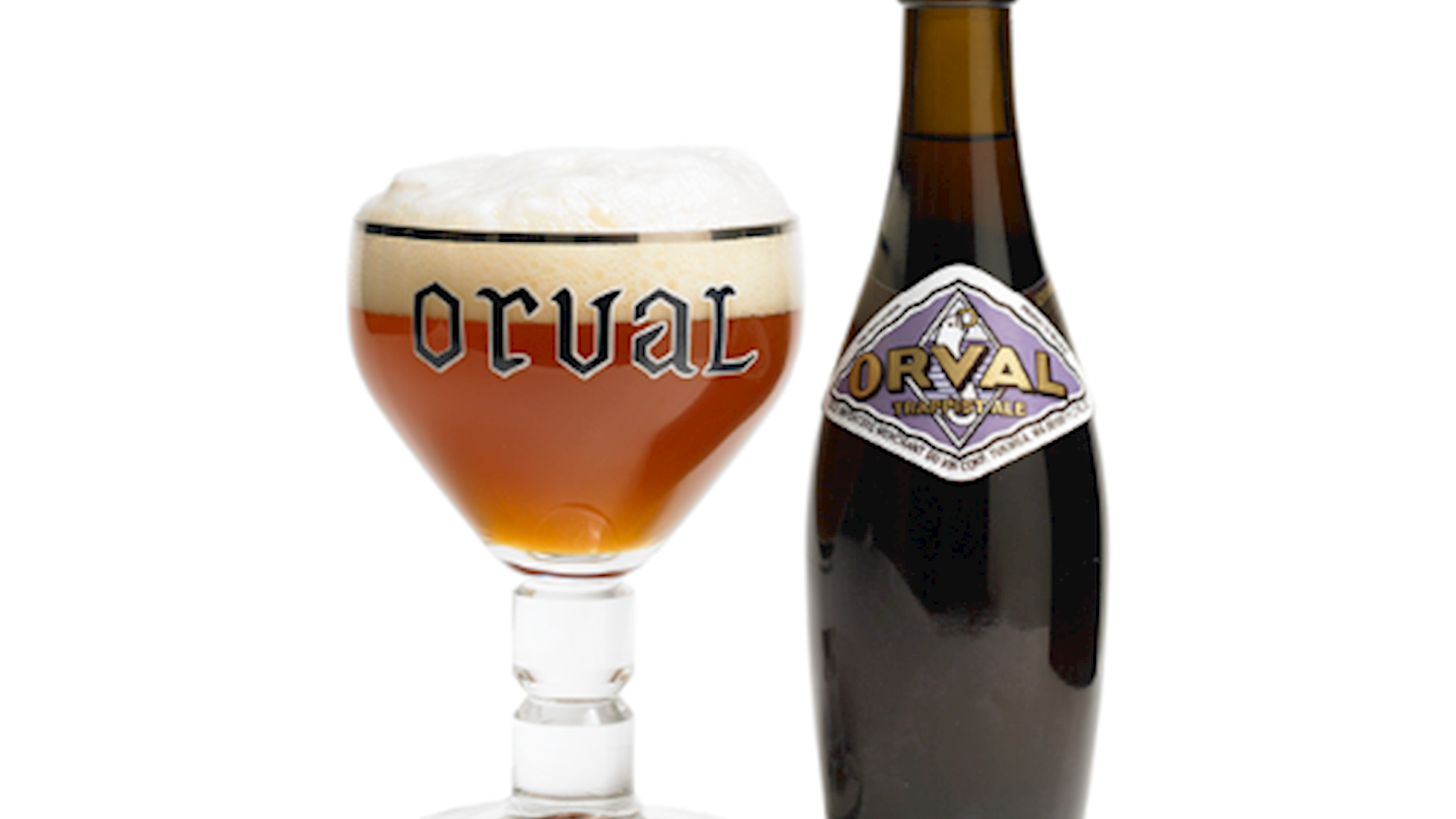
Brasserie d'Orval is an authentic Trappist brewery located within the Abbey of Notre-Dame d'Orval, Belgium. The brewery is part of a monastic community of Cistercian monks following the Rule of St. Benedict and holds the prestigious Authentic Trappist Product label. This means the beer is brewed within the monastery walls, under the supervision of the monks, and the proceeds are used to support the community and charitable works. Brasserie d'Orval was founded in 1931, though the abbey itself has medieval origins dating back to the 12th century. Unlike other Trappist breweries that offer multiple beer styles, Brasserie d'Orval produces only one beer for the general market - but that beer has become legendary in the world of brewing. Orval Trappist Ale is a unique brew, falling into the Belgian Pale Ale, with an alcohol content of around 6.2%. What makes it truly distinctive is the use of wild Brettanomyces yeast, added at the bottling stage, which allows the beer to mature over time in the bottle, developing complex earthy and dry-fruity aromas. Brasserie d'Orval is known for its copper-orange color, rich foamy head, and remarkably complex aroma profile, where notes of yeast, dried fruit, hoppy spice, leather, hay, and a touch of noble acidity intertwine. It also stands out for its dryness and elegant bitterness, achieved through dry hopping, and for the way its character changes with age - young Orval is brighter, fruitier, and more refreshing, while older bottles develop funkier, earthier, and more layered flavors. Brasserie d'Orval is not just a brewery but a part of Belgium’s rich spiritual and cultural heritage, admired by beer enthusiasts worldwide for its unconventional character and unwavering authenticity.
Awards
Untappd - 3.8
Beer Advocate - 93 Outstanding
02

Brasserie Dupont

4.9 ·
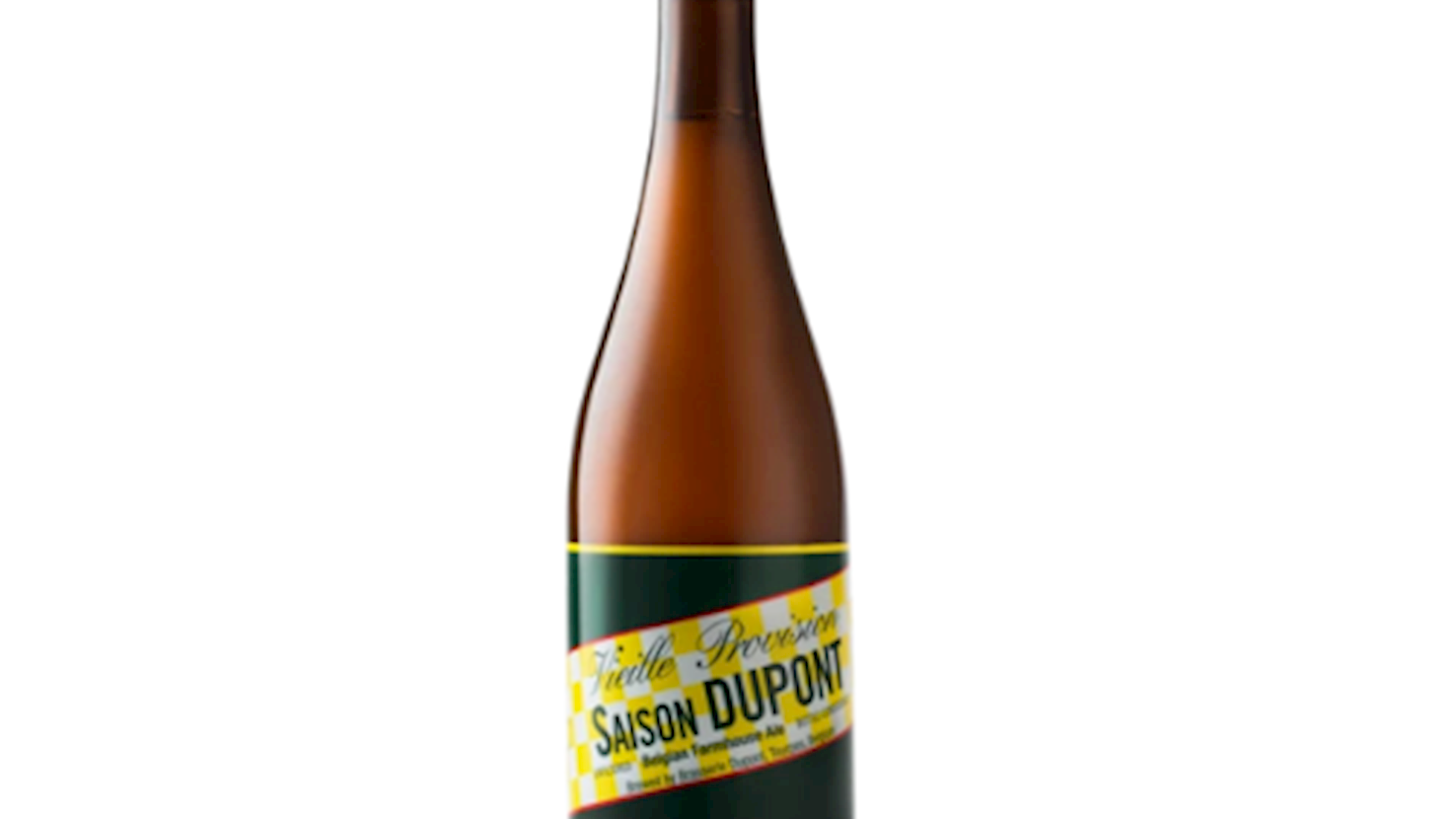
Brasserie Dupont is a historic Belgian brewery located in the village of Tourpes, part of the municipality of Leuze-en-Hainaut in the province of Hainaut, within the Walloon Region. Its origins date back to 1759, when it operated as a farm, and in 1844 it was transformed into a brewery producing seasonal and honey beers for agricultural workers. The modern history of the brewery began in 1920, when Alfred Dupont purchased the estate and launched the now-famous Saison Dupont. Today, the brewery is led by the fourth generation of the same family, successfully combining traditional methods with modern approaches. Annual production reaches around 30,000 hectoliters, and the beers are still brewed using the brewery’s own yeast strain, through a multi-stage fermentation process in open fermenters. A distinctive feature of their production is the natural bottle conditioning applied to all beers, which results in characteristic carbonation and depth of flavor. Brasserie Dupont remains faithful to its artisanal roots and local brewing heritage, while its products are recognized and appreciated around the world.
Awards
Untappd - 3.9
Untappd - 3.8
03

Brasserie de Rochefort

4.9 ·
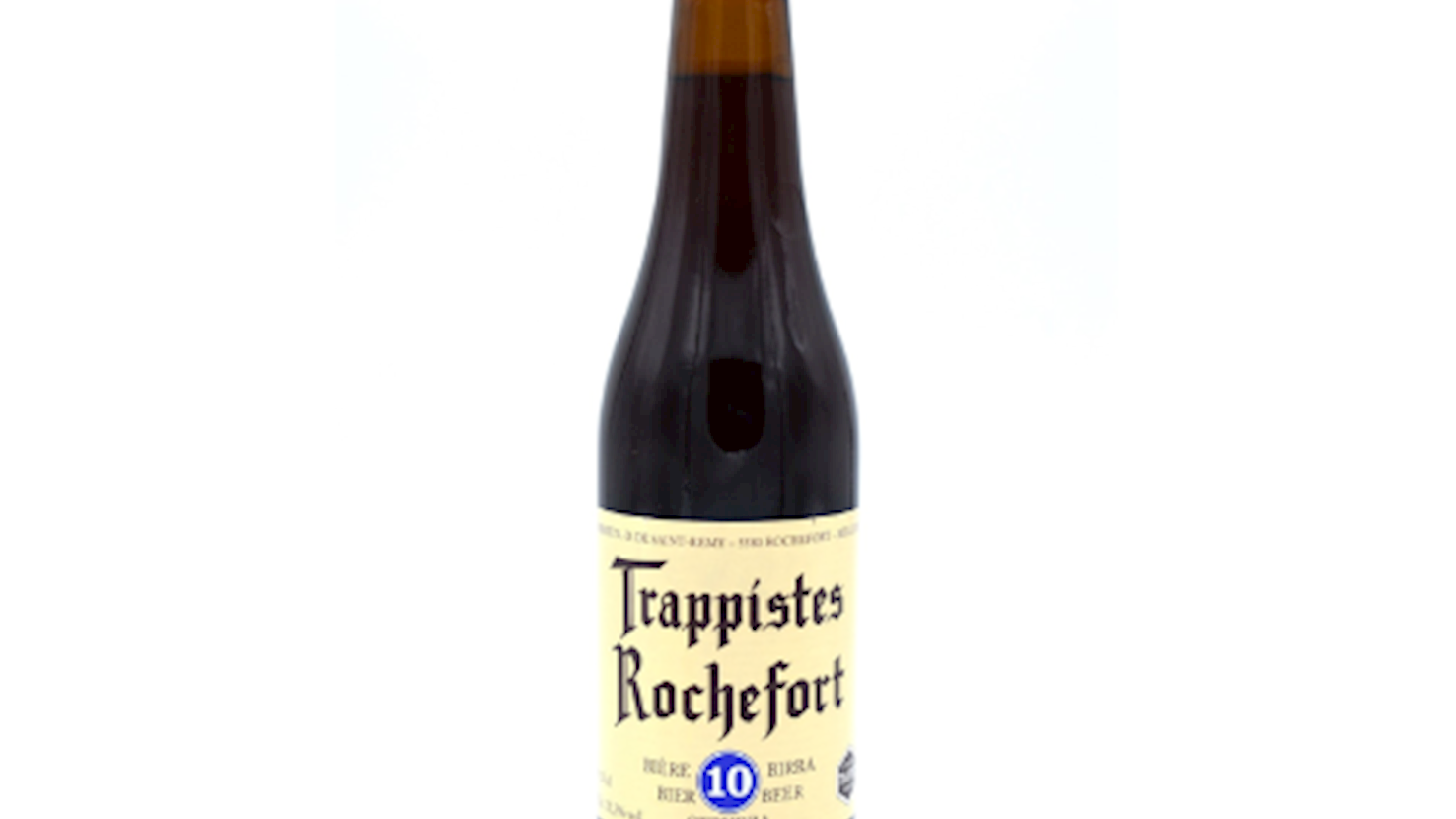
The monastic brewery Brasserie de Rochefort, also known as Trappistes Rochefort, is part of the Abbey of Notre-Dame de Saint-Rémy, located in Rochefort, in the Walloon region of Belgium. This brewery is deeply rooted in the Trappist tradition, as the monks themselves oversee production and use part of the profits for charitable purposes and maintaining their community - this is why the beer bears the Authentic Trappist Product label. Beer has been brewed at the abbey since the 16th century, though the modern Trappist brewing style we know today was developed in the mid-20th century. Brasserie de Rochefort is renowned for its beers of deep complexity, rich aromas, and multi-layered flavor profiles. Their most famous brews are Rochefort 8 and Rochefort 10, with the numbers indicating the approximate specific gravity and alcohol strength of the beer. These are strong, dark ales, full of dried fruit, caramel, and spicy notes, fermented with the brewery’s own yeast strain, which imparts a distinctive character. The brewery produces relatively small quantities, but it is precisely this dedication to quality and traditional, hands-on methods that makes Trappistes Rochefort one of the most respected beer producers in the world. The beers are unfiltered, unpasteurized, and undergo bottle conditioning, allowing them to mature and develop complexity over time.
Awards
Beer Advocate - 99 World-Class
Beer Advocate - 96 World-Class
04

Chimay

4.8 ·
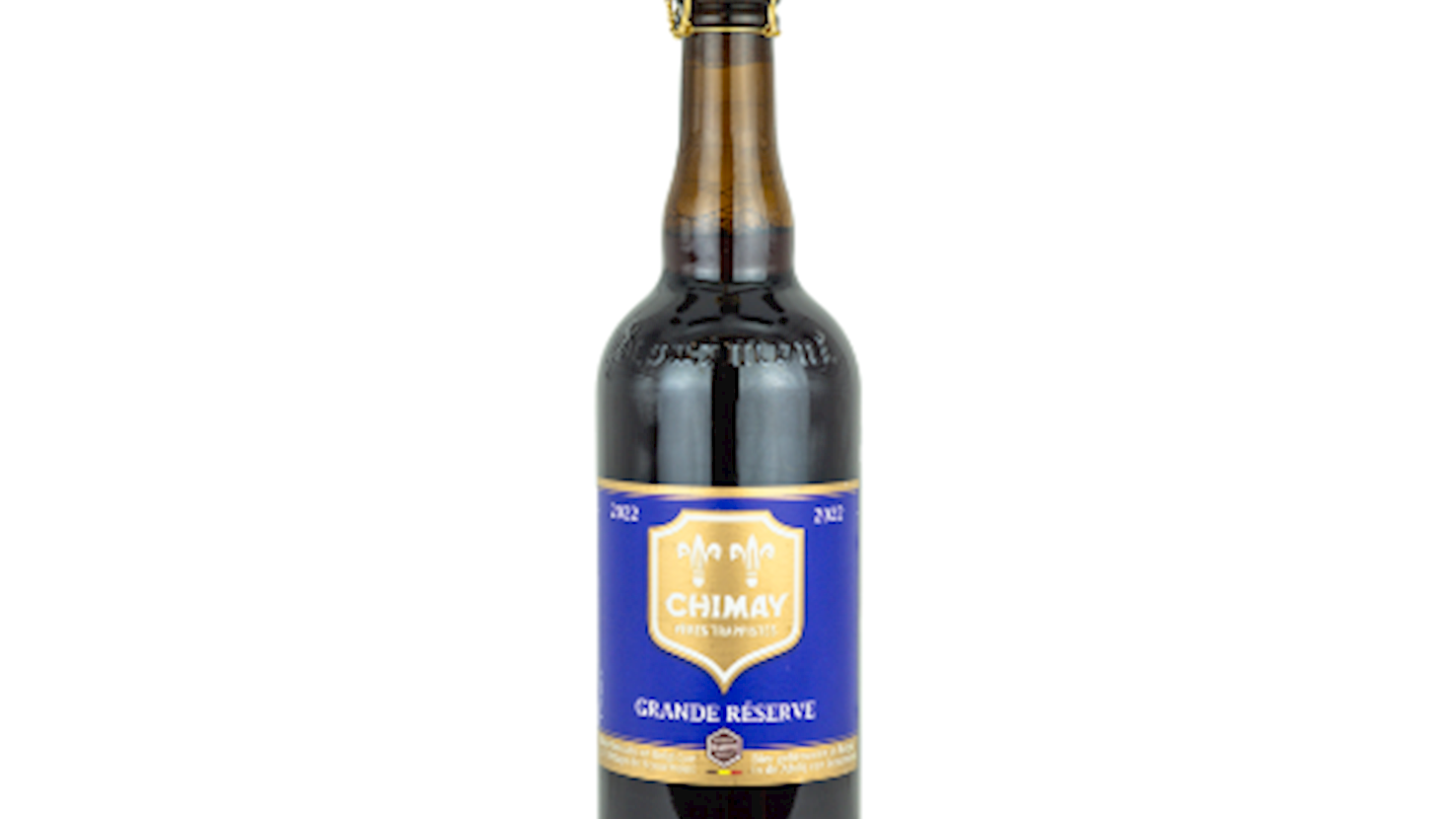
Chimay is one of the most renowned and respected Trappist breweries in the world, located within the Abbey of Notre-Dame de Scourmont, in the village of Scourmont near Chimay, in Wallonia, Belgium. Founded in 1862, the brewery operates according to strict Trappist principles: the beer is brewed within the monastery walls, under the supervision of the monks, and part of the revenue is used to support the community and charitable causes. For this reason, all of their products bear the prestigious Authentic Trappist Product label. Their beers are lightly filtered and unpasteurized, naturally bottle-fermented, and characterized by complex aromas, full body, and a balanced interplay of sweetness, bitterness, and fruity notes. In addition to beer, Chimay also produces Trappist cheese made from cow’s milk, traditionally paired with their beers to create a perfect gastronomic harmony. The entire production process is aligned with sustainable principles, and both the brewery and the cheesery are part of a larger complex open to visitors, which includes a tasting center, a restaurant, and a shop at the nearby Chimay Experience center.
Awards
Beer Advocate - 95 World-Class
Untappd - 3.7
05

Gueuzerie Tilquin

4.8 ·
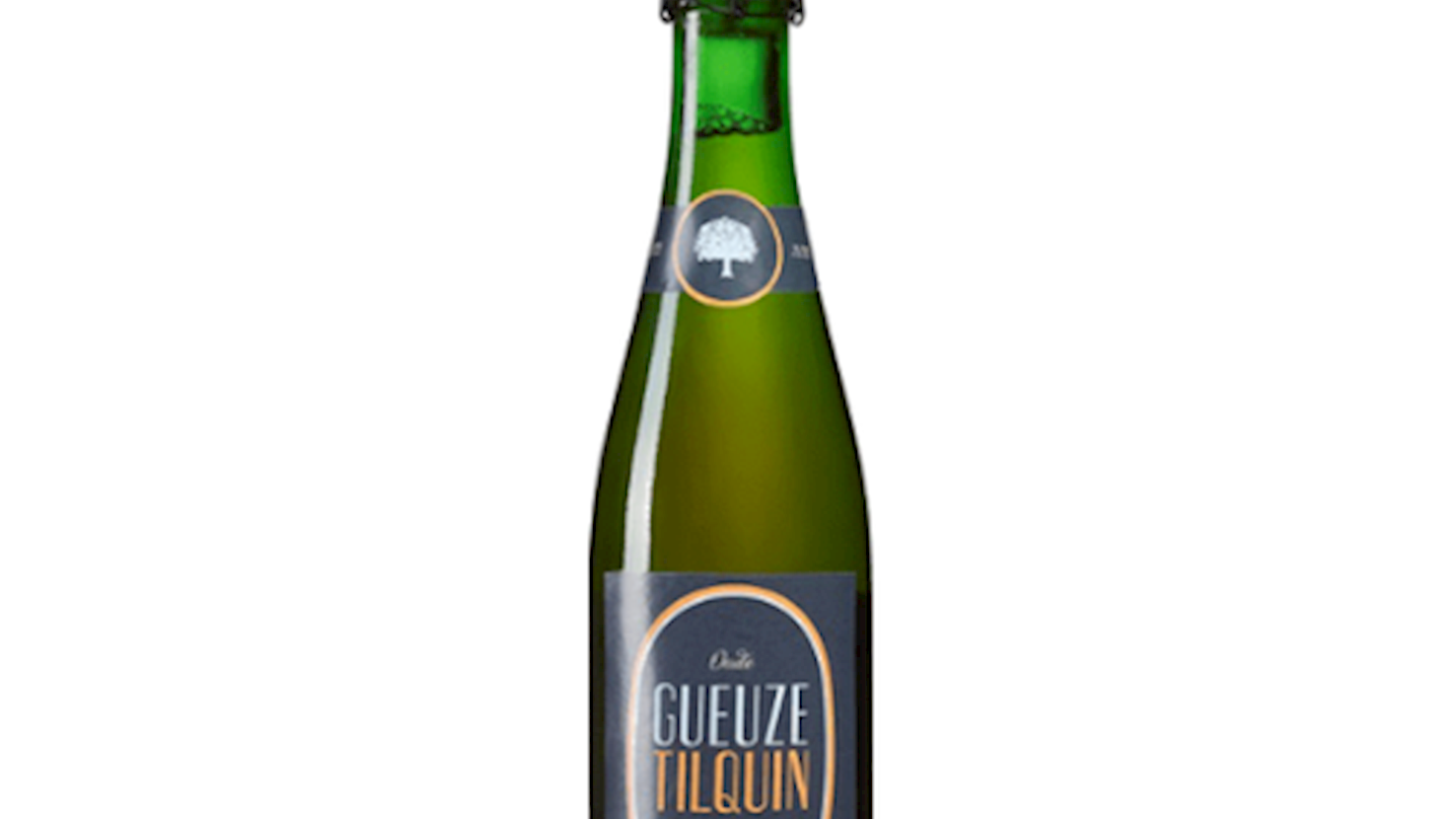
Gueuzerie Tilquin, located in Rebecq, is the only gueuze blendery in Wallonia - a prestigious fermentation hub dedicated to spontaneous fermentation and the century-old lambic beer tradition. Founded in 2009 by bioengineer Pierre Tilquin, the blendery sources finished lambic from renowned breweries and ages it in oak barrels for one, two, or three years before blending it into Oude Gueuze Tilquin à l’ancienne - bottle-refermented for at least six months. The facility houses over 575 oak barrels with a total capacity of approximately 2,300 hectoliters, producing around 1,350 hectoliters of beer annually, most of which is exported, particularly to the United States, Scandinavia, and China. Tilquin is a prime example of the fusion between traditional lambic craftsmanship and regional innovation; its beers - especially the Oude Gueuze and various fruited variants - are characterized by elegance, precision, stylistic consistency, strong terroir expression, and impressive aging potential.
Awards
Beer Advocate - 96 World-Class
Untappd - 4.1
06

Brasserie Fantôme

4.8 ·
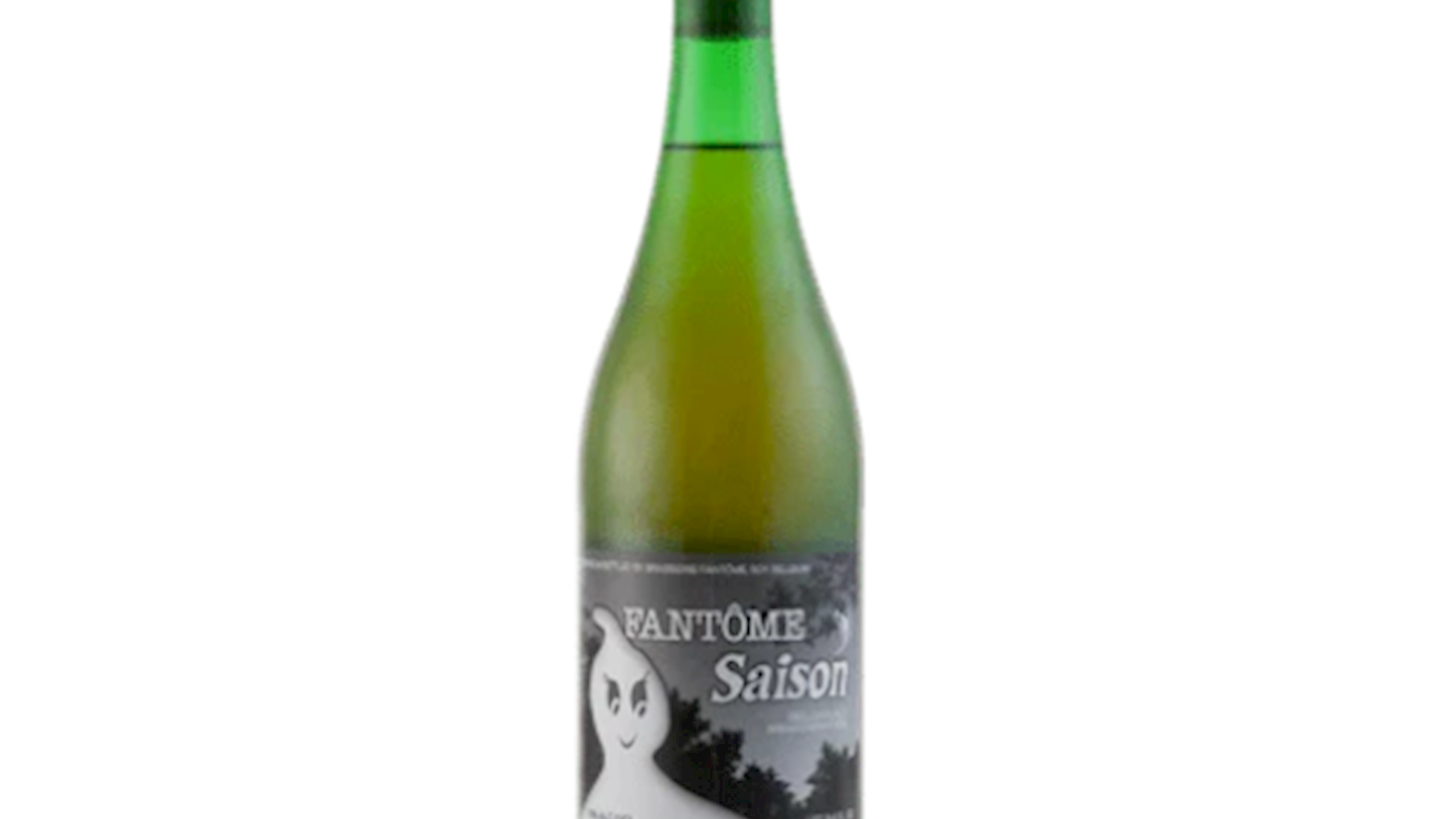
Brasserie Fantôme is a small yet legendary Belgian brewery located in the Érezée, in the Wallonia region. It was founded in 1988 by Dany Prignon in a restored countryside farmhouse along a rural road. Specializing in highly creative saisons and other farmhouse ale styles, Fantôme is known for its constant experimentation with spices, herbs, fruits, and even vegetables - often changing recipes each year, which has become a hallmark of the brewery. Their lineup ranges from the standard Saison (8% ABV), with fruity-citrusy and earthy notes, to a variety of unusual and inventive releases. Production is entirely manual, with a 6.5-barrel brewing system that requires the brewer’s full attention. Visitors to the taproom can enjoy a wide range of offerings in a quirky, rustic setting. Fantôme has gained cult status among beer enthusiasts in the U.S. and across Europe thanks to its unconventional brewing philosophy and relentless innovation. Though still relatively unknown in its home country, it is highly respected for its originality and creative freedom.
Awards
Beer Advocate - 95 World-Class
Untappd - 3.8
07

Distillerie de Maredsous

4.5 ·
Awards
IWSC- International wine & spirit competition - Spirit Gold (2021)
08

Brasserie Maziers

4.5 ·
Awards
Concours International de Lyon - Gold (2024)
09

Brasserie de Blaugies

4.5 ·
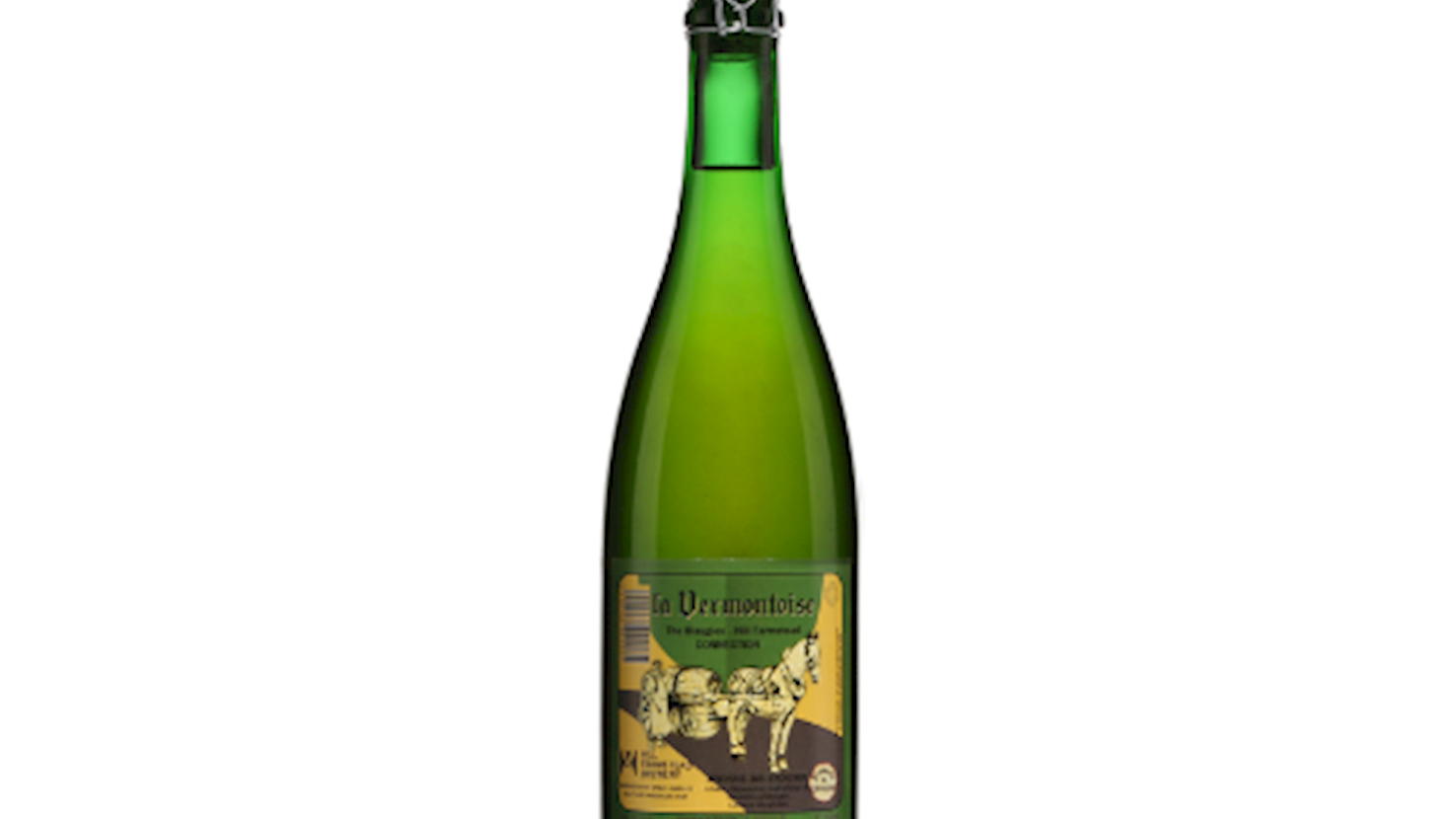
Brasserie de Blaugies is a small family-run Belgian brewery founded in 1988 in the village of Blaugies, located in the Hainaut region, an area known for its deep saison brewing tradition. From the very beginning, the brewery has worked entirely by hand, focusing on unfiltered and unpasteurized production, as well as secondary fermentation in the bottle, which gives their beers complexity, liveliness, and a distinctly rustic authenticity. Founders Pierre-Alex Carlier and Marie-Noëlle Pourtois developed a brewing approach that combines classic Belgian techniques with local ingredients and minimal intervention throughout the process. The brewery has remained a family operation - today run by the second generation - while carefully modernizing its equipment without compromising its traditional character. Brasserie de Blaugies emphasizes local terroir and rural identity, offering visitors tours and tastings in its on-site restaurant, effectively merging production and gastronomy. Their beers are exported to several countries, though quantities remain limited, adding an element of exclusivity to the brand. Within the craft beer world, Blaugies is considered a benchmark for authentic Belgian saisons - beers that are complex, vibrant, unapologetically traditional, and stylistically consistent. This makes the small rural brewery highly relevant to the gourmet segment and a respected representative of true farmhouse-style Belgian brewing.
Awards
Untappd - 3.8
10

Cin'Kin

4.5 ·
Awards
World Gin Awards - Country Winner (2022, 2020)

Best Wallonia Beverage Types

01

Chimay Red

4.1 ·

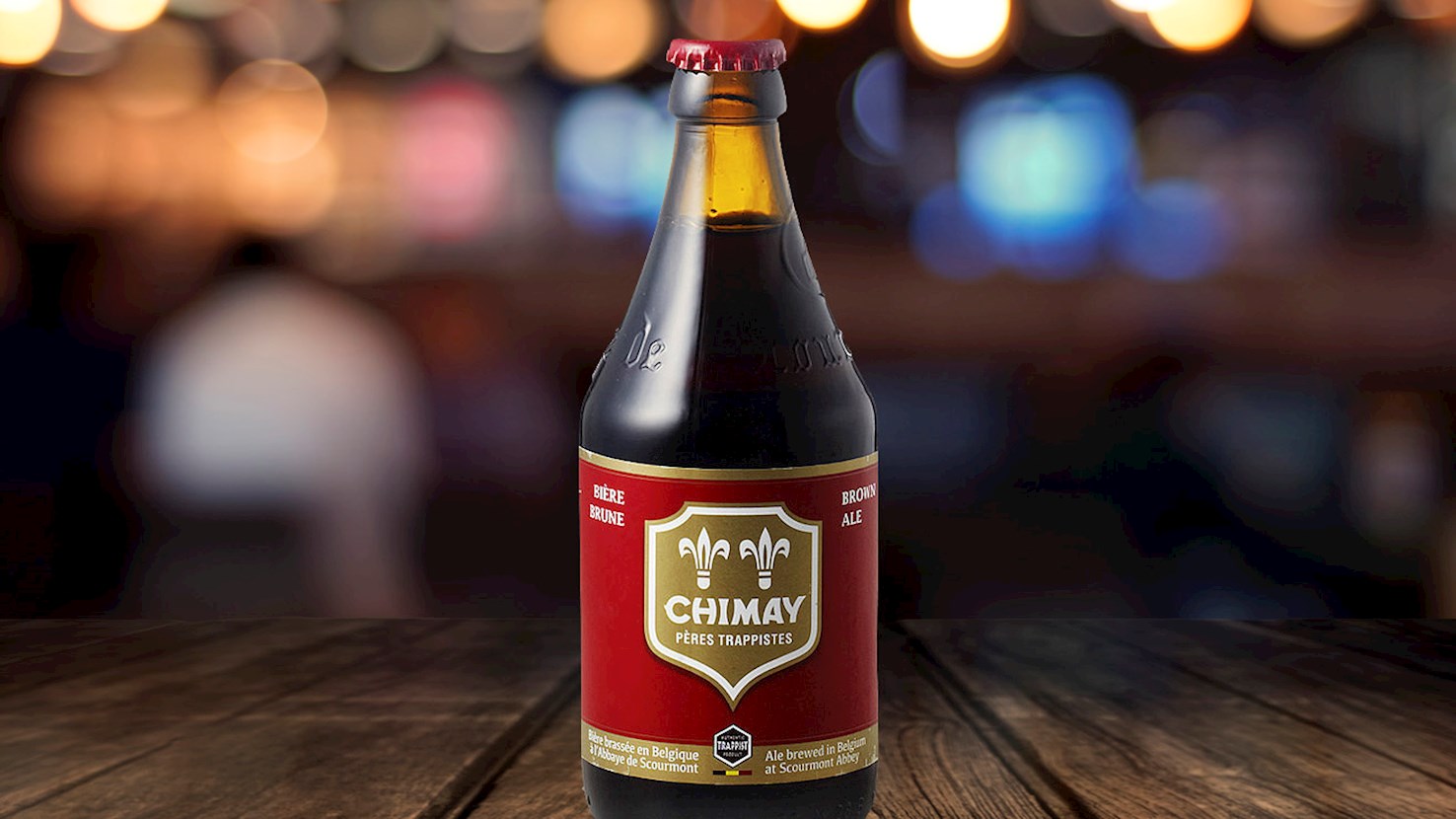
Chimay Red was the first Trappist beer that was brewed by monks at the Scourmont Abbey, a Trappist monastery in Chimay, Belgium. This amber-colored dubbel—a specific Trappist style—is made with ground malt (germinated and dried barley) and water that is exclusively drawn from the two wells located inside the monastery. The wort that is extruded is then boiled with hops before it is clarified, fermented, and stored. After the storage process, the beer is flat and clear, and active yeast is then added to create effervescence and to reach the desired alcohol content (7% ABV). When bottled, the beer undergoes the second fermentation in the bottle. Red Chimay has a light body, smooth texture, and aromas that are reminiscent of ripe fruit, leather, toffee, and licorice. It is available in bottles of 33cl and 75cl, and it is best served in traditional Chimay chalice. This Trappist beer is best paired with washed-rind and nutty cheeses, caramelized nuts, tomato-based sauces, and hearty stews.

02

Saison

3.9 ·

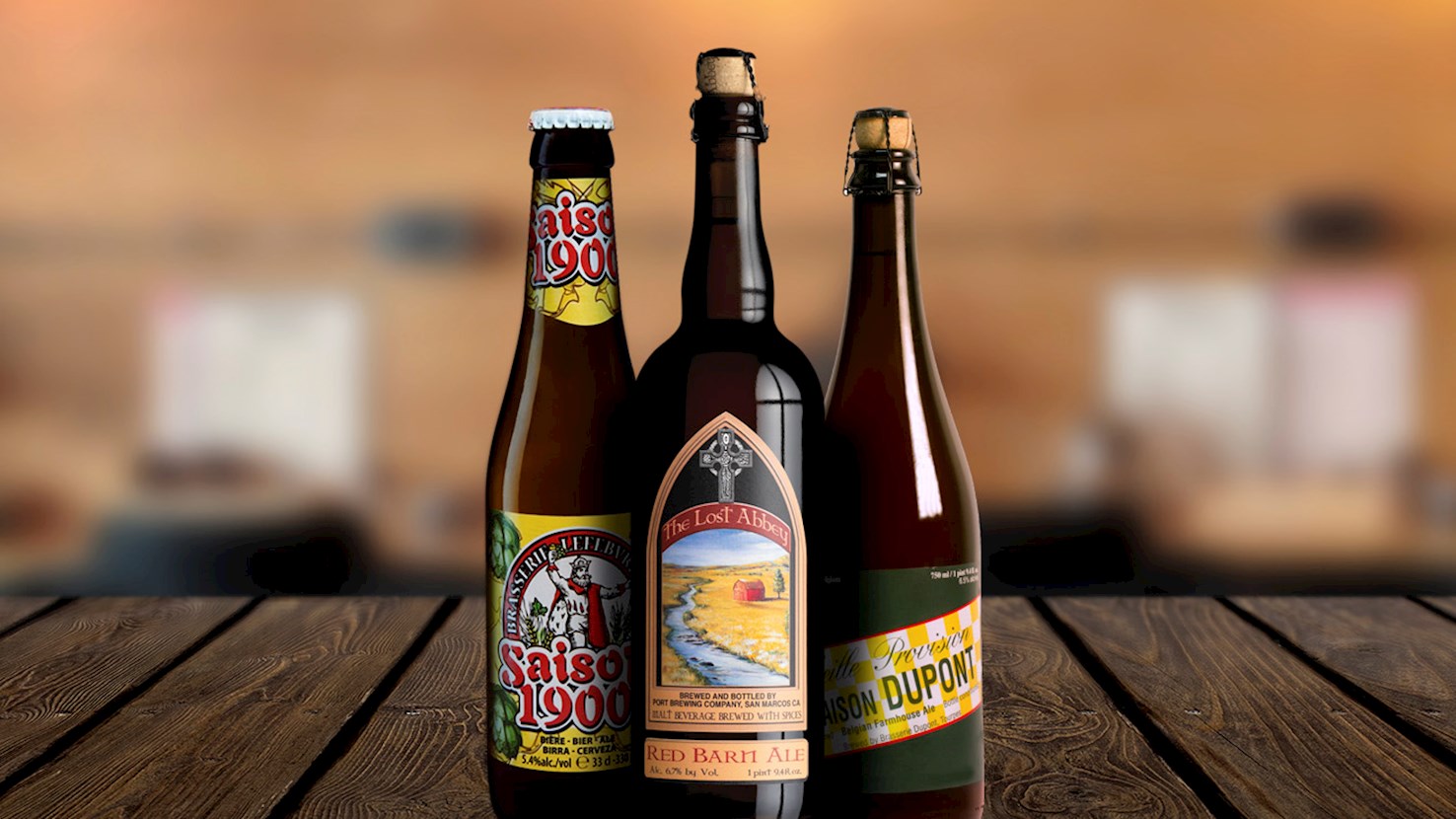
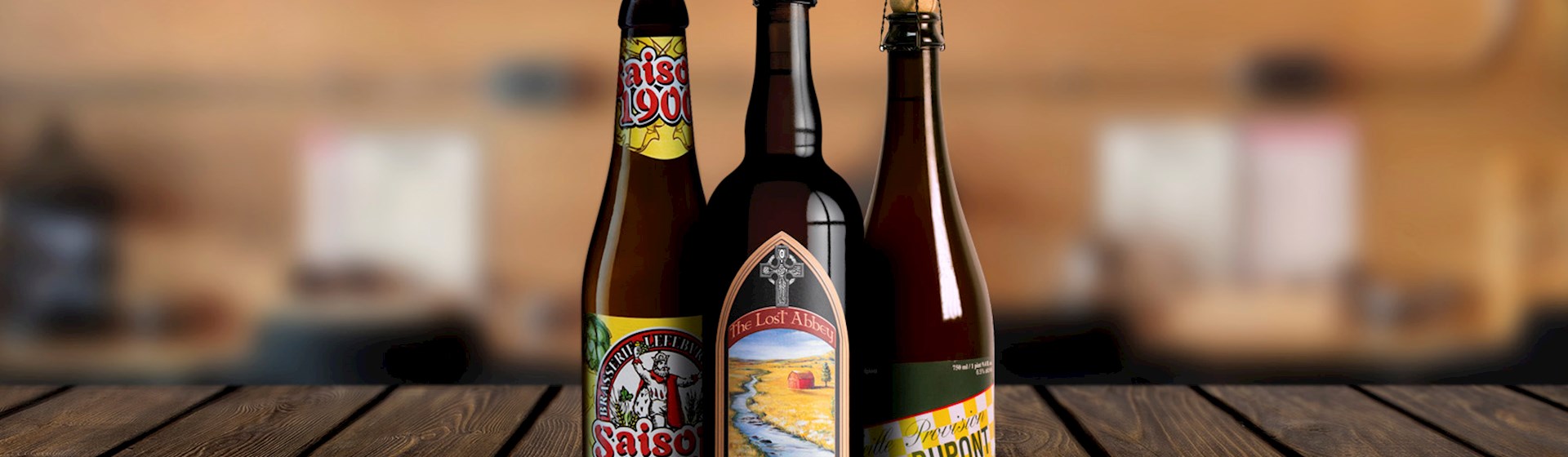
Saison, which translates as season, is a Belgian style ale that originated in the French-speaking region of Wallonia as a seasonal thirst-quenching beer that was mainly brewed during winter or fall, and it was then left to ferment until the summer. Also known as farmhouse ale, it was made by farmers, and though each brewer had a unique recipe, saisons were usually pale, low in alcohol, and had distinctive spicy notes. The style is believed to have originated sometime in the 18th century, but its popularity declined by the end of the 20th century. Only recently, it has been reintroduced by various craft breweries that brew versatile saisons which are typically higher in alcohol and which range from pale golden to light amber. Modern versions also often include spices and tend to be fruity and subtly malty, with light hop bitterness. They are often bottle-conditioned—they undergo a second fermentation in the bottle—and tend to be quite effervescent and refreshing. Although they are quite versatile in character, most varieties can match full-flavored and spicy dishes, seafood, creamy cheese, and even tangy desserts.

03

Grisette

3.2 ·

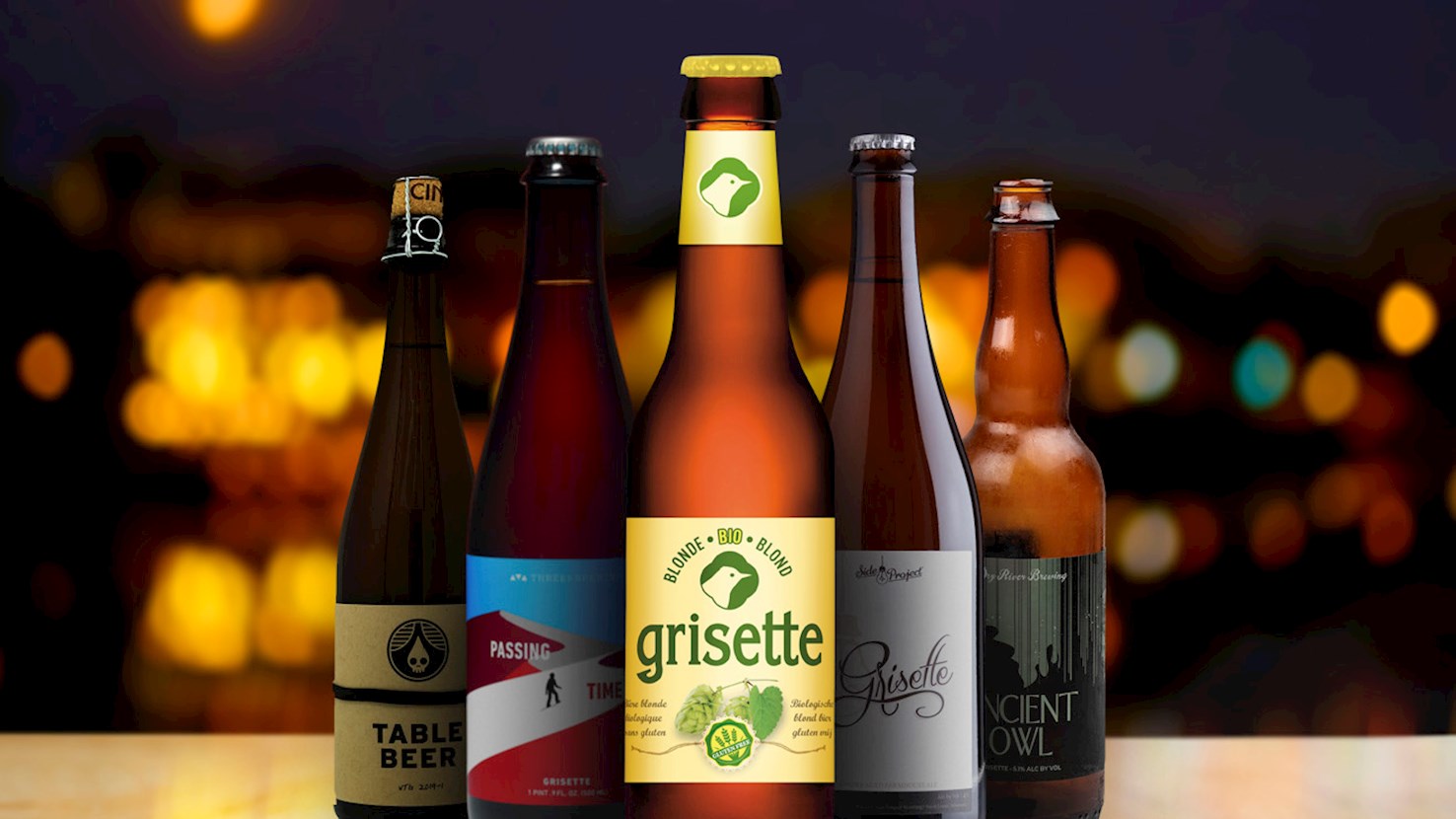
Grisette is a beer style that hails from Hainaut province in Belgium. Often compared to saison—the preferred choice among Belgian farmers—grisette was a farmhouse ale developed to satisfy the needs of the local miners. By 1960, the style disappeared, and its revival was not as big as with saison. The style was not well documented, so the exact characteristics of the original are difficult to pinpoint. The beer was most likely a refreshing and hop-forward pale ale that varied in color and strength. Modern interpretations of grisette were introduced in the 1990s, and since there was no specific historical framework, they tend to vary in character. They can be described as light, approachable, refreshing, and moderately hoppy, with low alcohol content, typically around 4% ABV. They usually have a dry finish, while some may have spicy, fruity, or funky character. It is not clear what is the origin of the name. Grisette can be translated as little gray, and while some theories claim the name was inspired by the ladies who wore gray aprons and served grisette, some suggest that it was a reference to the gray dust that the miners were covered at the end of the day.

Best producers
04

Maitrank

n/a ·

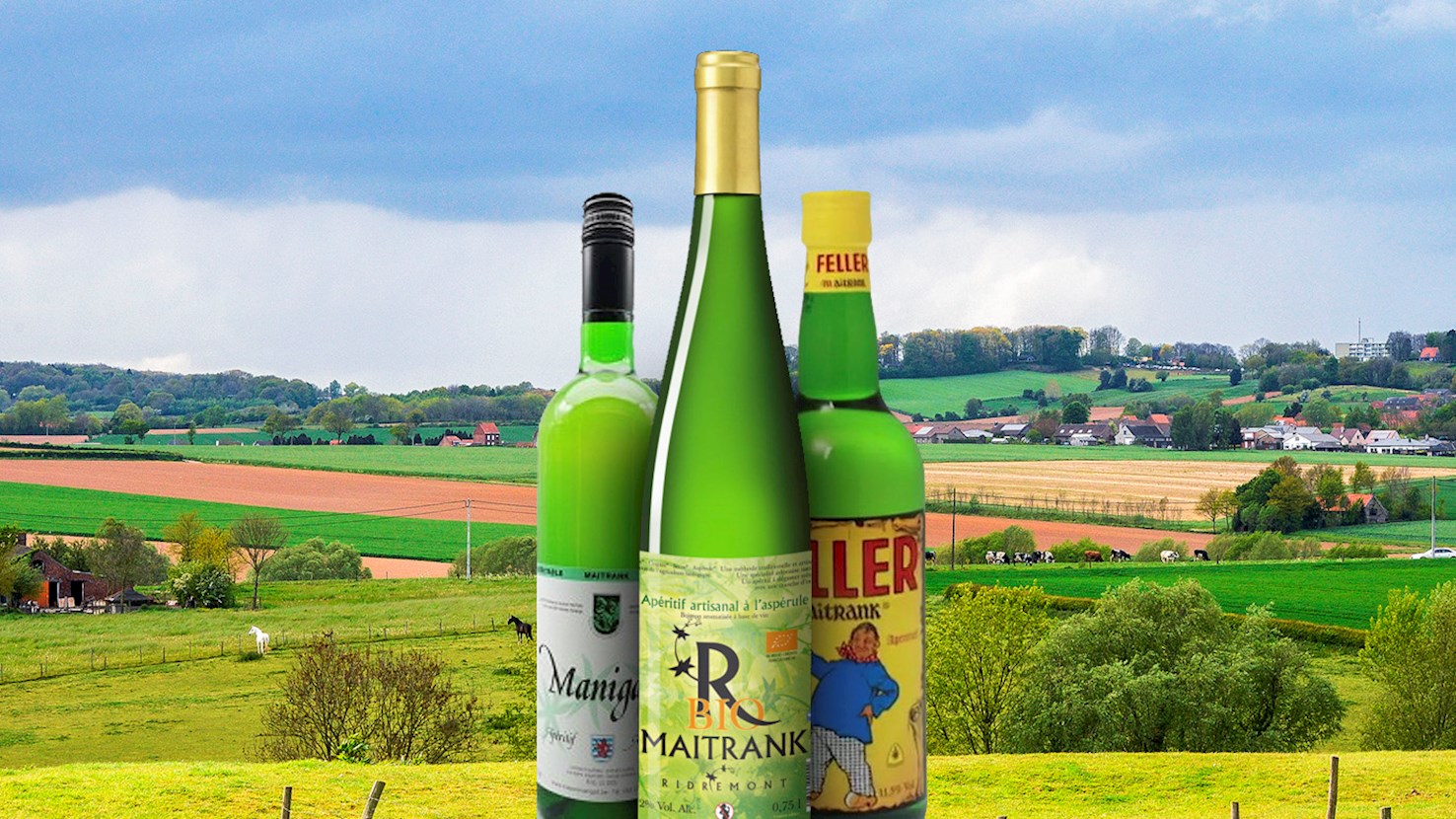
Maitrank is a seasonal flavored wine from Arlon. The base of the drink is made with white wine from the Moselle region and bedstraw flowers (woodruff). The flowers are picked before blossoming and are then macerated in the wine. Typically, the drink also includes sugar and sliced oranges. Frequent additions also include brandy, triple-sec, port, or other types of alcoholic beverages. It is believed that the first variations of this drink were made by monks, who used it as a health tonic. Modern interpretation re-emerged in the 1950s, and it has since been promoted as a local specialty. In May, the city of Arlon holds a festival to commemorate the drink. Maitrank is best served with sliced oranges and should be enjoyed soon after maceration.

About this ranking

TasteAtlas food rankings are based on the ratings of the TasteAtlas audience, with a series of mechanisms that recognize real users and that ignore bot, nationalist or local patriotic ratings, and give additional value to the ratings of users that the system recognizes as knowledgeable. For the “Top 16 Local Beverages in Wallonia” list until June 15, 2026, 156 ratings were recorded, of which 138 were recognized by the system as legitimate. TasteAtlas Rankings should not be seen as the final global conclusion about food. Their purpose is to promote excellent local foods, instill pride in traditional dishes, and arouse curiosity about dishes you haven’t tried.

The initial list of top producers was compiled based on available reviews, awards, local recommendations, media and blog coverage, and consumer reviews. The list will be updated with ratings from TasteAtlas local ambassadors and TasteAtlas users.

Similar lists