Tomate frito

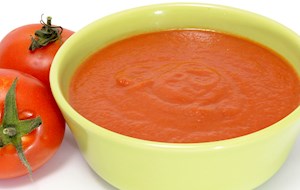
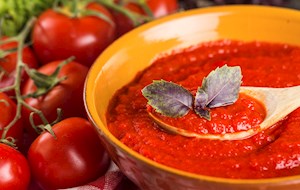
Tomate frito is a cooked tomato sauce made by slowly cooking tomatoes with vegetable oil, most commonly olive oil, until they lose much of their water and develop a smooth, concentrated consistency. Homemade versions often include onion and garlic, while salt is essential and a small amount of sugar may be added when the tomatoes are particularly acidic. Despite the name, which literally means “fried tomato,” the tomatoes are not usually fried at high temperature; they are cooked gradually in oil, often after onion or garlic has first been softened. Tomate frito is one of the most widely used basic preparations in Spanish home cooking and is also a major commercial pantry product. It can be served directly with eggs, rice, pasta, meat, fish, or vegetables, but is equally important as an ingredient in stews, fillings, casseroles, and other sauces. It should not be confused with ketchup, passata, or plain tomato purée. Spanish food regulations recognize tomate frito as a separate category made from tomato cooked with edible vegetable oil, with optional additional ingredients. Its development is connected with the gradual incorporation of tomatoes into Spanish cooking after they arrived in Europe from the Americas during the sixteenth century. By the eighteenth century, tomato sauces were established enough to appear in Spanish cookbooks. Juan de la Mata’s Arte de repostería, published in Madrid in 1747, includes a salsa de tomates a la española made from roasted and peeled tomatoes with parsley, onion, garlic, salt, pepper, olive oil, and vinegar. He also recorded another tomato sauce with garlic, cumin, oregano, broth, and vinegar and noted that numerous other versions were already common. These early preparations were not identical to modern tomate frito, but they show that tomato sauces had become established in Spanish cooking by the mid-eighteenth century. During the eighteenth and nineteenth centuries, cooked tomato sauces became increasingly common with fish, meat, eggs, potatoes, and other foods. The preparation now recognized as tomate frito developed from this broader practice of cooking tomatoes with oil and aromatics. Unlike sauces defined by a particular herb or pasta pairing, tomate frito is characterized mainly by the cooking process and the balance of tomato, oil, acidity, and mild sweetness. In a common homemade version, ripe tomatoes are peeled or passed through a food mill and then chopped or crushed. Onion and sometimes garlic are softened slowly in olive oil without excessive browning. The tomatoes are added and cooked gently, usually for 30 minutes to an hour, until much of their water has evaporated and the sauce has thickened. Salt is added during cooking, while sugar may be used sparingly to reduce excessive acidity. Some versions also contain green pepper, carrot, or bay leaf, but these are optional additions. Once cooked, the sauce may remain slightly textured or be passed through a food mill or blender for a smoother consistency. The word frito therefore refers more to cooking in oil than to frying tomatoes until browned. Most of the process is a slow reduction in which the tomato combines with the oil and develops a thicker texture. Industrial production follows the same basic principle on a larger scale. Spanish regulations allow commercial tomate frito to be made from fresh tomato, juice, purée, paste, or concentrate, provided the finished product contains the required amount of vegetable oil and meets standards for texture, composition, and color. Packaged tomate frito became particularly important during the second half of the twentieth century as prepared foods became more common in Spanish households. Solís introduced a commercially marketed tomate frito in Spain in 1964, helping establish it as a distinct supermarket category. The sauce soon became a standard pantry item sold in jars, cans, bottles, and cartons. This commercial development did not create the preparation itself, since cooked tomato sauces had been made at home long before then, but it greatly increased its everyday availability. Homemade and commercial tomate frito can differ considerably. Versions made with fresh ripe tomatoes and olive oil usually retain more variation in sweetness, acidity, and texture, while industrial products aim for consistency and may contain concentrated tomato and additional permitted ingredients. Both differ from passata, which is essentially sieved tomato with little or no oil, and from ketchup, which contains significantly more vinegar, sugar, and spices. Sofrito is also different: it is a cooking base of slowly fried vegetables, often including onion, garlic, peppers, and tomato, that is normally incorporated into another dish. Tomate frito can function both as a finished sauce and as an ingredient. A good tomate frito should taste primarily of ripe cooked tomato, with the oil fully incorporated rather than separated on the surface. The consistency should be thick enough to coat food but not reduced to a paste. Slow cooking is particularly important with fresh tomatoes because of their high water content. Cooking too quickly can burn the natural sugars before enough moisture evaporates, while insufficient cooking produces a watery sauce. Fleshy plum-type tomatoes work particularly well, although any ripe and flavorful tomato can be used. Tomate frito is eaten throughout Spain rather than being strongly associated with a single region. One of its most recognizable uses is with arroz a la cubana, where white rice and fried egg, often accompanied by fried banana, are served with tomato sauce. It is also commonly eaten with fried eggs, meatballs, fish, pasta, stuffed vegetables, cannelloni, and baked dishes. With meatballs or fish, the food may finish cooking directly in the sauce, while with pasta it is normally heated and mixed through the noodles before serving. Because tomate frito is mild and adaptable, beverage pairings depend mainly on the food served with it. Simple pasta, rice, or eggs work well with young Spanish reds, dry rosé, light lager, or sparkling water. When used with fish such as cod or tuna, dry whites such as Verdejo or Albariño are suitable, while meatballs and other meat dishes pair naturally with Tempranillo or Garnacha.
Marinara

Marinara is a tomato-based sauce associated with Naples and the cooking of Campania in southern Italy, usually built from tomatoes, extra-virgin olive oil, garlic, oregano, and salt. In its simplest Italian form it is a quick-cooked sauce with a clean tomato flavor and a clear presence of garlic and herbs rather than a long-simmered ragù. The term requires some clarification because “marinara sauce” has acquired a broader meaning in the United States, where it can refer to almost any relatively simple meatless tomato sauce used for pasta, baked dishes, or dipping. In Naples, alla marinara is more specifically associated with the combination of tomato, garlic, oregano, and olive oil, most famously on pizza marinara. Onion, basil, parsley, wine, chili, and other ingredients occur in different versions, especially outside Italy, but they are not all necessary to the basic Neapolitan profile. Despite the maritime name, seafood is not a defining ingredient. Italian marinara derives from marinaro, meaning sailor or seafarer, and alla marinara can be understood as “sailor-style.” Several explanations have been proposed for the name. One claims that Neapolitan sailors prepared the sauce because tomatoes, garlic, oil, and dried herbs could be kept more easily than highly perishable ingredients; another says that it was made by sailors’ wives when the men returned from fishing. These stories are repeatedly cited but are not supported by enough contemporary documentation to identify one of them as the established explanation. The connection with Naples and maritime language is secure, while the specific circumstances in which the name was created remain uncertain. Marinara could not have existed in its modern tomato-based form before tomatoes entered European cooking following contact with the Americas. Tomatoes were initially slow to become a major food in much of Europe, but southern Italy was one of the areas where their culinary use developed relatively early. Naples was under Spanish rule for much of this period and had strong commercial and political connections with Spain, which helped bring New World ingredients into local cooking. An important early document appeared in Naples in 1692, when Antonio Latini published the first volume of Lo Scalco alla Moderna. Latini, who worked for the first minister of the Spanish viceroy of Naples, included a recipe called salsa di pomodoro alla spagnuola. The tomatoes were roasted, peeled, chopped, and mixed with onion, chili, thyme, salt, oil, and vinegar. It was not marinara in the modern sense and was not described as a pasta sauce, but it is the earliest surviving Italian cookbook recipe for a tomato-based sauce and demonstrates that tomato sauces were being prepared in Naples by the late seventeenth century. During the eighteenth century, tomatoes became increasingly integrated into southern Italian cooking. Vincenzo Corrado's Il cuoco galante, published in Naples in 1773, included numerous ways of preparing tomato sauces, although they were still primarily sauces for other foods rather than specifically for pasta. A decisive development appeared in Francesco Leonardi's L'Apicio moderno of 1790, which contained one of the earliest documented Italian recipes connecting tomato sauce with macaroni. These sources establish the growth of Naples's tomato-sauce culture, but none provides a simple documentary moment when the modern sauce was officially created and named marinara. The strongest early association of the word marinara with the familiar combination of tomato, garlic, oregano, and olive oil is found in Neapolitan pizza. Pizza marinara became one of the fundamental styles of pizza in Naples, alongside the later Margherita. European documentation for Pizza Napoletana gives 1734 as the date associated with the creation of the marinara, although the precise dating rests partly on later accounts rather than an uninterrupted written recipe record. By the nineteenth century, descriptions of Neapolitan pizza clearly document toppings based on oil, tomato, garlic, and other inexpensive ingredients, and marinara had become part of the city's established pizza vocabulary. This background also explains why marinara sauce and pizza marinara are closely related but should not be treated as exactly the same thing. Pizza marinara uses the flavor combination directly on uncooked pizza dough: tomato, garlic, oregano, olive oil, and salt are applied before the pizza enters the oven, where they cook rapidly at very high temperature. Marinara sauce is cooked separately in a pan and can then be used with pasta or other foods. Both depend on essentially the same group of ingredients, and neither requires seafood or cheese. Mozzarella is specifically absent from the classic pizza marinara, which helps distinguish it immediately from a Margherita. To make marinara sauce, extra-virgin olive oil is heated gently and sliced or lightly crushed garlic is added. The garlic should perfume the oil without becoming dark or bitter. Tomatoes are then added, usually peeled whole tomatoes crushed by hand, tomato pulp, or ripe fresh tomatoes when they are in season. The sauce is seasoned with salt and oregano and cooked at a moderate simmer until the tomatoes have broken down and excess liquid has evaporated. Unlike a meat ragù, which may cook for several hours, marinara benefits from relatively short cooking. Roughly 15 to 30 minutes is sufficient for many versions, leaving the tomato flavor fresh and slightly acidic rather than heavily reduced. The choice of tomatoes has a significant effect because there are few other ingredients to alter their flavor. Ripe plum tomatoes are particularly suitable because they have firm flesh, relatively little excess water, and a good balance between sweetness and acidity. San Marzano tomatoes from Campania are frequently used when available, although they are not mandatory for a sauce to be called marinara. Canned whole tomatoes are also well suited to it and make the sauce possible throughout the year. Garlic is generally kept clearly perceptible, but it should not dominate to the point that the tomato becomes secondary. Oregano is especially closely associated with the Neapolitan marinara profile. Basil is also widely used, particularly in pasta sauces, and is normally added toward the end so its aroma remains fresh. Using both oregano and basil is common, particularly in Italian-American cooking, but a sauce made simply with tomato, garlic, oregano, olive oil, and salt already contains the essential flavor structure associated with marinara in Naples. Onion illustrates one of the differences between different uses of the name. Many American marinara recipes begin with chopped onion, sometimes together with garlic, and commercial sauces may also contain carrot, celery, sugar, herbs, wine, or spices. These can produce a good tomato sauce, but the expanded ingredient list reflects the broader Italian-American meaning of marinara rather than a strict requirement of the Neapolitan style. Marinara became particularly important in the United States through the cooking of immigrants from southern Italy during the late nineteenth and early twentieth centuries. Italian-American food developed from regional Italian foundations but adapted to different ingredients, household circumstances, restaurant culture, and American expectations. The term marinara eventually became a convenient general name for a meatless red sauce, particularly in contrast with meat sauces cooked for much longer periods. In contemporary American English, dictionaries consequently define marinara broadly as a tomato sauce served especially with pasta, often including onion, garlic, and herbs. This American development also expanded the uses of the sauce. Marinara became a standard accompaniment to spaghetti, ravioli, manicotti, baked ziti, eggplant parmigiana, chicken parmigiana, meatballs, and numerous baked pasta dishes. It also developed a major role as a dipping sauce for foods such as fried mozzarella and other breaded appetizers. These uses are now firmly established within Italian-American cuisine even when there is no direct equivalent under the same name in Naples. In Italy, a simple tomato sauce for pasta is more commonly described according to its actual form, such as sugo di pomodoro or pasta al pomodoro, while marinara remains particularly recognizable through pizza marinara and the garlic-oregano flavor combination. Food writer John Mariani has similarly noted that the American concept of marinara developed into its own recognizable category within Italian-American red-sauce cooking. The name creates another frequent misunderstanding in countries where “marinara” has come to suggest seafood. A pasta dish containing mussels, clams, prawns, squid, and tomato may be called spaghetti marinara in Australia and some other countries, but this usage should not be taken as the definition of Italian marinara sauce. In Italy, seafood pasta is more likely to be described with terms such as ai frutti di mare or alla pescatora. The maritime reference in marinara concerns the name and its association with sailors, not a requirement that fish or shellfish be present. Another defining characteristic is what marinara does not require. There is no meat stock, cream, butter, flour, or prolonged reduction needed to create its body. The tomato provides almost all of the sauce's texture, while olive oil gives it richness and helps carry the aroma of garlic and herbs. It can remain slightly chunky or be crushed more thoroughly according to the intended use. A pasta version is usually loose enough to coat the noodles without forming a thick paste. When pasta is involved, it is best finished briefly in the pan with the sauce and a small amount of starchy cooking water, which helps the tomato and olive oil adhere to the pasta. Grated cheese can be added at the table in Italian-American settings, but it is not necessary to the sauce itself, and pizza marinara contains no cheese. Marinara is now eaten far beyond Campania and has become one of the world's most recognizable tomato sauces, although the meaning of the name changes according to place. In Naples, its clearest expression remains the combination of tomato, garlic, oregano, and olive oil found on pizza marinara and in similarly seasoned tomato preparations. In the United States it is primarily a versatile meatless red sauce used with pasta, baked dishes, fried foods, and sandwiches. With pasta, it pairs particularly well with spaghetti, linguine, penne, rigatoni, ravioli, or other shapes that do not require a heavy sauce. It can accompany meatballs, breaded eggplant, chicken cutlets, or simple grilled vegetables, while fried mozzarella and calamari are common Italian-American pairings when marinara is served as a dip. For wine, the acidity of tomato generally favors wines with good acidity of their own rather than very tannic or heavily oaked styles. Campanian reds such as Piedirosso and lighter Aglianico-based wines work well, as do young Sangiovese wines, while a dry rosé can suit a lighter pasta serving. With pizza marinara, a light red, dry rosé, or lager works particularly well. The simplest serving remains pasta coated with freshly cooked marinara and eaten immediately, or the same fundamental combination of tomato, garlic, oregano, olive oil, and salt spread over Neapolitan pizza dough and baked as pizza marinara.

Islas Canarias
Islas Canarias wine is a regional classification that encompasses viticultural production across the seven main islands of the Canary archipelago: Tenerife, Lanzarote, Gran Canaria, La Palma, La Gomera, El Hierro, and Fuerteventura. Established as a unified designation in 2012 to represent the islands on the international market, it sits alongside eleven other specific island or sub-zone denominations. The wines are defined by their volcanic origin, produced from vines grown in basaltic soils, volcanic ash (lapilli), and clay at altitudes ranging from sea level to 1,600 meters. The subtropical climate is heavily influenced by the Atlantic trade winds, which provide moisture and maintain acidity in the grapes despite the southern latitude. Viticulture in the archipelago began in the early 15th century when European explorers and settlers from the Iberian Peninsula, Portugal, and Flanders introduced vine cuttings. By the 16th and 17th centuries, Canary wine, particularly the sweet Malvasia known as "Canary Sack," achieved significant international prominence and was a primary export to the British Empire and the American colonies. A critical factor in the current state of these vineyards is the historical absence of the phylloxera pest, which devastated European viticulture in the late 19th century. Because the volcanic and sandy soils prevented the spread of the insect, the Canary Islands remain one of the few places globally where vines are grown on their own rootstocks rather than grafted onto American resistant roots. This has preserved over 80 distinct varieties, many of which have disappeared or genetically drifted in their continental places of origin. Preparation involves labor-intensive manual techniques necessitated by the rugged terrain. Training systems vary by island to mitigate environmental stressors: in Lanzarote, vines are planted in deep "hoyos" (pits) protected by semi-circular stone walls to capture dew and block wind, while in the Orotava Valley of Tenerife, the "cordón trenzado" (braided cord) system is used, where vine branches are woven into horizontal ropes reaching up to 15 meters in length. Red wines are primarily made from Listán Negro and Tintilla, often utilizing carbonic maceration to preserve fresh fruit profiles or aging in neutral oak to manage the naturally high mineral tension. White wines are produced from Listán Blanco, Albillo Criollo, and Malvasía Volcánica, frequently kept on the lees to enhance texture. Serving temperatures are standard at 8°C to 10°C for whites and 14°C to 16°C for reds. A distinct attribute of these wines is the perceptible salinity and smoky aromatic profile derived from the high concentrations of volcanic minerals in the soil. These wines are consumed both as a staple of the local diet and in specialized international enotecas. They are eaten with regional staples such as "Papas Arrugadas" (wrinkled potatoes cooked in salt water) served with "Mojo" sauces, as the wine’s salinity complements the salt-crusted skin of the tubers. White varieties are paired with Atlantic seafood such as parrotfish (Vieja) or limpets, and semi-cured goat cheeses like Queso Majorero. Red wines are typically served with "Conejo en Salmorejo" (marinated rabbit) or slow-cooked goat stews, where the wine's acidity and structure balance the gamey flavors of the protein.
Puddingbrezel

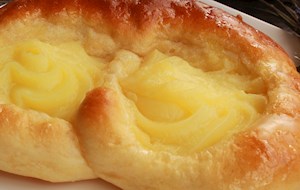
Puddingbrezel is a sweet pastry originating in Germany, where it is commonly found in bakeries across southern and western regions. The name translates to “pudding pretzel,” reflecting both its distinctive shape and the creamy filling that defines it. The dough is usually a rich, buttery yeast dough similar to Danish pastry, prepared by layering the dough with fat to create a light, flaky texture. Once the dough has been rolled out and folded, it is cut into strips and twisted into a figure-eight or pretzel shape. Before baking, the pastry is filled with a smooth vanilla custard that sits in the central loops of the form. During baking, the custard sets into a firm, glossy layer while the pastry develops a golden brown surface. After cooling, the Puddingbrezel is often finished with a thin sugar glaze to enhance sweetness and give it a slight sheen. The combination of buttery dough and soft vanilla filling makes it popular as a midmorning snack or an accompaniment to coffee. Unlike some filled pastries, the custard in a Puddingbrezel is applied raw and baked along with the dough, so it becomes integrated into the structure rather than added afterward. Puddingbrezel can be found in many German bakeries year-round, and although recipes are similar, small variations exist in the proportions of butter, sugar, and custard thickness. Some bakers use a richer pastry base while others prefer a lighter version with more pronounced layers. The shape is always recognizable, with the custard filling arranged symmetrically in the loops. Because the dough is laminated, it requires careful handling and enough resting time to develop the right texture without becoming tough.
Merdenele

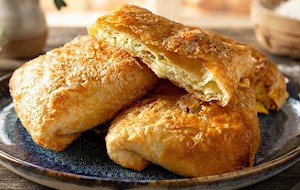
Merdenele are Romanian savory pastries made from layers of folded dough filled most commonly with salty cheese and baked until the exterior is crisp and deeply browned. The singular form is merdenea, while merdenele is the plural normally encountered on bakery signs and in everyday speech. They are found throughout Romania but are particularly associated with urban bakeries, street-side patisseries, railway stations, markets, and the everyday food culture of Bucharest and southern Romania. A typical merdenea is square or slightly rectangular, relatively flat, rich in fat, and large enough to serve as a substantial snack rather than a small pastry. Its filling is usually based on telemea, often combined with cow's-milk curd cheese or another softer cheese and egg, producing a salty, moist center surrounded by crisp, flaky layers. The Romanian term comes from Turkish merdane, a word for a rolling pin or slender implement used to roll dough, reflecting the close connection between the pastry and the techniques of Ottoman and Balkan sheet-pastry making. Merdenele belong to the broader group of filled pastries that circulated for centuries through the Ottoman Empire, the Balkans, Anatolia, and southeastern Europe. It is therefore difficult to identify a single moment or individual responsible for their creation. Their establishment in Romania is generally connected with Ottoman culinary influence and especially with Dobrogea and the southern part of the country, regions that had long-standing contact with Turkish and Tatar communities and with the pastry culture of the Ottoman world. From there, the pastry became familiar farther inland and was already known in different parts of Romania before the twentieth century was well advanced. Accounts of Romanian food culture also associate the sale of merdenele with Turkish and Albanian pastry makers and street vendors, who sold filled pastries in busy urban areas and markets. The linguistic development is particularly useful for understanding the food. In Turkish, merdane refers to the implement used for rolling dough, while Romanian sources record merdenea both as a regional word for a pastry-rolling rod and as the name of the finished pastry. One linguistic explanation connects the culinary meaning more specifically with Turkish merdane böreği, a type of rolled pastry whose name was shortened after entering Romanian usage. Whatever the exact linguistic path, the name places the merdenea firmly within the family of Ottoman-derived pastries based on thin or repeatedly folded dough. Once established in Romania, however, the merdenea developed a recognizable form of its own. Rather than referring broadly to many types of börek, the Romanian word came to mean a specific individual pastry, usually square, compact, flaky, and filled with salty cheese. By the twentieth century it had become firmly associated with urban bakery culture. Romanian gastronomic writer Radu Anton Roman included merdenele among the foods of the country and described both cheese and meat fillings, although the cheese version became by far the most familiar form sold by modern bakeries. His cheese filling used sheep's-milk telemea with butter and eggs, while the meat version combined mutton and beef with onion, egg, pepper, and allspice. The dough is responsible for much of the character of a merdenea. It is generally made from wheat flour, water, and salt, sometimes with a small amount of vinegar, and it normally contains no yeast. Instead of rising through fermentation, the pastry develops its layered structure through repeated rolling, spreading with fat, folding, and resting. Butter, lard, margarine, or combinations of these fats have all been used. In commercial Romanian patisseries, margarine became especially common because it is inexpensive, stable, and suitable for producing clearly separated pastry layers on a large scale, while home recipes frequently use butter or lard. The basic dough is kneaded until smooth, allowed to rest, divided into portions, rolled thinly, coated with softened fat, and folded repeatedly. Chilling or resting between stages helps the fat remain separated from the dough, creating the layers that expand during baking. The cheese filling is usually deliberately salty. Telemea, a brined white cheese widely eaten in Romania, provides most of the flavor, while a less salty cow's-milk cheese may be added to soften the texture and control the salt level. Egg helps bind the mixture, and some recipes add semolina when the cheese contains too much moisture. Keeping the filling reasonably dry is important because excess whey can soften the dough and prevent the inner layers from baking properly. To form the characteristic shape, a portion of laminated dough is rolled into a square or rectangle, the cheese mixture is placed in the center, and the edges or corners are folded inward so that the filling is completely enclosed. The parcel is normally placed seam-side down on a baking tray. Some versions are brushed with egg before baking, although the surface of a bakery merdenea can also be left relatively plain. In the oven, the fat between the layers melts while moisture in the dough turns to steam, separating the sheets and creating the flaky structure. A well-made merdenea should have a crisp, browned exterior, clearly defined layers around the edges, and a softer interior where the dough meets the cheese. It is richer and heavier than many forms of puff pastry, and a certain amount of fat on the fingers or paper wrapping is considered normal for the bakery style. Its square folded construction is also one of the easiest ways to distinguish it visually from Romanian pateuri, plăcinte, and other cheese pastries. Although industrial puff pastry can be used to make a similar product quickly, the more characteristic method starts with a simple dough that is manually coated with fat and folded into layers rather than using ready-made puff pastry sheets. Merdenele became particularly well suited to city life because they are inexpensive, filling, portable, and can be eaten without plates or cutlery. They are usually sold individually from glass-fronted bakery counters and handed over in a paper bag or wrapped in bakery paper. They are best eaten warm, while the exterior remains crisp and the cheese filling is soft. Once completely cold, the fat firms and the pastry becomes denser, which is one reason bakeries often sell them directly from warm trays throughout the day. Radu Anton Roman specifically recommended eating merdenele hot with cold bragă, the lightly fermented cereal drink once much more common in Romanian towns. That pairing also reflects the wider Balkan context in which rich, salty pastries are commonly balanced by cool, mildly acidic or fermented drinks. A merdenea can therefore also be paired successfully with sana, kefir, plain drinking yogurt, or ayran, particularly when the filling is strongly salted. Coffee or black tea are practical alternatives for breakfast, while a light lager works well when the pastry is eaten later in the day. Because the pastry already combines bread, fat, and cheese, it is normally eaten on its own rather than served with a substantial side dish. Today merdenele remain common across Romania, especially in Bucharest and other large cities, where they are bought for breakfast, during work or school breaks, while commuting, or simply as a quick hot snack from a neighborhood bakery. Their defining qualities remain straightforward: folded layered dough, a generous salty-cheese filling, a square shape, a crisp exterior, and the expectation that they will be eaten warm soon after they leave the oven.
Beskuit

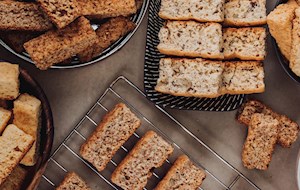
Beskuit is a twice-baked bread or rusk, especially associated with Afrikaans food culture and commonly eaten with coffee or tea. It is made by baking a leavened dough until cooked, dividing the loaf or slab into thick pieces, and then drying those pieces slowly in the oven until they become firm, crisp, and very low in moisture. In English it is usually called a South African rusk, although it differs considerably from the small, thin rusks found in many other countries. Beskuit is generally substantial enough to be held and dipped into a hot drink, which softens its dense, dry interior before it is eaten. The Afrikaans word beskuit is related to Dutch beschuit, which ultimately derives from the French biscuit, a term connected with the idea of something being baked twice. Twice-baked breads had long been used in Europe as durable provisions because removing most of the moisture substantially extended their storage life. Dutch seafaring culture already had several forms of hard bread and ship’s biscuit when the Dutch East India Company established its settlement at the Cape of Good Hope in 1652. At the Cape, this method of preserving bread became adapted to local domestic baking, and evidence indicates that rusks were being made there by at least the late seventeenth century. Cape households supplied them to sailors and passengers on ships stopping at the settlement and to people travelling into the interior, where a dry bread that could remain edible for long periods had an obvious practical value. By the eighteenth century, beskuit had become an established part of Cape foodways rather than simply imported ship provisions. Accounts of the period describe extremely hard rusks, while Cape bakers gradually produced versions intended for household consumption as well as travel. The product remained particularly useful as settlement expanded away from the Cape. During the Great Trek of the 1830s and 1840s, when Dutch-speaking colonists travelled long distances into the South African interior, dried rusks were well suited to wagon journeys because they required no refrigeration and could be stored for considerably longer than fresh bread. Beskuit also appears in accounts connected with Boer commandos and later the South African War of 1899–1902, alongside other durable foods such as biltong. One important form that developed in farming households is boerebeskuit. Older recipes were based on yeast-leavened bread dough, sometimes with little or no sugar. Small portions of dough were shaped into balls and packed closely together in a bread tin so that they joined during baking. Once the loaf had cooled enough to handle, the individual sections were pulled apart rather than necessarily cut into neat slices and returned to a low oven to dry completely. This produced large, irregular pieces with a porous bread-like interior that readily absorbed coffee. Later recipes broadened the category considerably. Buttermilk became especially closely associated with South African rusks, while sugar, butter or margarine, eggs, bran, oats, seeds, raisins and other ingredients became common in household and commercial versions. Modern buttermilk beskuit is often chemically leavened rather than made with yeast, giving it a texture somewhere between bread, scone and firm cake before the drying stage. The second heating is crucial: the pieces are kept at a relatively low temperature for several hours, sometimes overnight, until moisture has been driven from the centre. They are then cooled completely before being stored in an airtight tin or container. The result should be dry throughout rather than merely crisp on the outside. This extended drying is responsible both for beskuit's long keeping quality and for the way it behaves when dipped into a drink. The major difference between South African beskuit and many related twice-baked foods is therefore not simply that it is baked twice. Italian biscotti are also baked twice, but they are generally made from a firmer, sweeter cookie dough, formed into loaves and sliced relatively thinly before the second baking. Modern Dutch beschuit, despite sharing its name and ancestry with beskuit, is usually a light, round, brittle rusk rather than the thick pieces familiar in South Africa. South African beskuit developed into a distinct category of large, substantial rusks made specifically to withstand prolonged drying and then soften when dipped. The habit of dipping is so closely connected with the food that texture is judged partly by how well a rusk absorbs coffee or tea without immediately disintegrating. Commercial production helped turn what had largely been home and farm baking into a nationally available product during the twentieth century. The best-known example began in 1939 in Molteno in the Eastern Cape, when Elizabeth Ann Greyvensteyn, widely known as Ouma Greyvensteyn, began selling rusks made from a family recipe during the economic difficulties of the Great Depression. Demand expanded beyond the local community, production increased, and the business eventually developed into Ouma Rusks, which remains one of South Africa's best-known rusk brands and continues to be produced in Molteno. The commercial success of Ouma did not replace home baking, and beskuit remains one of the South African baked foods that is still commonly made in large batches in domestic kitchens. Recipes are often designed to fill several tins at once because the dried product keeps well, making it practical to prepare more than would be eaten immediately. Buttermilk rusks are among the most familiar forms, while bran and seed rusks have also become firmly established. Despite these additions, the defining structure remains the same: a baked dough is divided into substantial pieces and dried until hard enough for long storage. Beskuit is eaten throughout South Africa, particularly at breakfast or as a snack in the morning or afternoon, but it is also associated with road trips, farms, outdoor travel and early starts because it requires no additional cooking and travels well. It is normally served at room temperature directly from a tin or packet. The usual way to eat it is to dip one end briefly into a hot drink, allow the liquid to penetrate the dry crumb, and eat the softened section before dipping again. Coffee is the most characteristic accompaniment, particularly strong black coffee or coffee with milk, while rooibos tea and ordinary black tea are equally suitable. A relatively plain or lightly sweetened boerebeskuit works especially well with strong coffee, while richer buttermilk rusks suit coffee with milk and unsweetened tea. Bran, oat or seed versions pair naturally with rooibos, whose mild roasted and herbal character does not overwhelm them. Beskuit generally does not require butter, jam or another topping because the drink provides the moisture it needs, although a freshly baked rusk can occasionally be eaten before it has undergone its final drying. In its fully dried form, however, beskuit is most recognizably South African not because twice-baked bread is unique to the country, but because South Africa developed this old preservation method into a particular type of thick rusk, a large domestic and commercial baking category, and a specific everyday practice of eating it softened in coffee or tea.
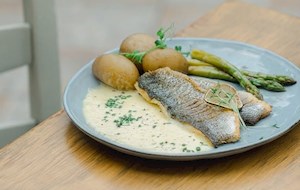
Bar au beurre blanc

Bar au beurre blanc is a traditional fish dish prepared with sea bass (also called loup de mer) as the main ingredient. The fish has a delicate flavor, and it's poached in a lightly flavored court-bouillon in this dish, either whole or after it's been cut into sections. The beurre blanc sauce is made with a combination of shallots, wine vinegar, court-bouillon, and butter, while a bit of fresh cream may be stirred in at the end. In order to finish the dish, the sea bass is served with the beurre blanc sauce.
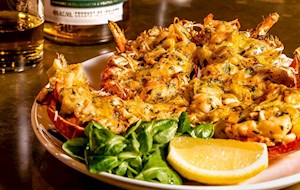
Dublin Lawyer

Dublin Lawyer is a rich and indulgent lobster dish, particularly associated with the city of Dublin and the country’s coastal culinary heritage. It consists of lobster meat cooked in a sauce of butter, cream, and Irish whiskey, creating a luxurious and deeply flavorful dish that highlights the abundance of seafood from Ireland’s waters and the nation’s fondness for whiskey as a cooking ingredient. Its origins can be traced back to the 19th century, when lobster was more widely accessible in Ireland than it is today and often appeared in upper-class households and fine dining establishments. The dish’s curious name is believed to refer to the stereotype of Dublin lawyers of the time, wealthy and fond of whiskey and rich living, reflecting both the opulence of the ingredients and the social context in which it was first enjoyed. Preparation begins with freshly cooked lobster, usually boiled or steamed before the meat is carefully removed from the shell. The meat is then sautéed in melted butter, often with a touch of shallot or onion for added depth, before being combined with cream and a generous splash of Irish whiskey. The sauce reduces gently to a velvety consistency that coats the lobster, which is then often returned to the shell for serving. Some variations flambé the whiskey to intensify its flavor and add a touch of theatre to the cooking process. The result is a rich, aromatic dish that balances the sweetness of lobster with the depth of dairy and the distinctive warmth of whiskey. Dublin Lawyer is typically served as a centerpiece of a special meal, often accompanied by simple sides that allow its flavors to shine. Crusty bread or boiled potatoes are common, and a crisp green salad or lightly cooked seasonal vegetables may round out the plate. It appears most frequently in fine dining restaurants and at festive occasions, particularly around Christmas or on celebratory menus in Ireland. Wine pairings tend to favor crisp whites such as Chablis or Sauvignon Blanc, which cut through the richness, though some prefer the continuity of Irish whiskey served alongside it.

Puente Alto

Puente Alto is a red wine appellation located in the Maipo Province of central Chile, approximately 40 kilometers south of Santiago. It is situated on the northern bank of the Maipo River within the foothills of the Andes Mountains, at an elevation of 650 to 700 meters above sea level. The region is defined by its alluvial soils, which consist of a complex mosaic of gravel and volcanic rocks transported from the mountains by glacial and river activity over millennia. This nutrient-poor, free-draining terrain is coupled with a semi-arid Mediterranean climate characterized by high solar radiation and significant diurnal temperature variation, where cold alpine winds cool the vineyards at night. The foundation of viticulture in this sector dates to the late 19th century, specifically 1883, when pre-phylloxera French vine cuttings were first planted on the gravelly terraces of the Maipo River. While European vineyards were decimated by the phylloxera aphid, the geographic isolation provided by the Andes and the Pacific Ocean allowed these original genetic selections to survive ungrafted on their own roots. For much of the 20th century, the area was recognized primarily as a source for high-volume production until 1972, when specific plots began to be vinified separately to highlight the site’s distinct environmental characteristics. In 2013, the National Viticulture Institute of Chile officially recognized Puente Alto as a Denomination of Origin (DO). Preparation of the wine is centered on the Cabernet Sauvignon grape, which represents the vast majority of the regional output, often supplemented by small percentages of Cabernet Franc, Merlot, and Petit Verdot. Grapes are typically hand-harvested and subjected to a rigorous selection process before being aged for 15 to 20 months in French oak barrels. For serving, these wines are best presented at a temperature between 16°C and 18°C. Due to their high concentration of tannins and complex phenolic structure, decanting for at least 30 to 60 minutes prior to consumption is recommended to allow the aromatic layers of graphite, cassis, and cedar to develop. A physical characteristic of the vines in this area is their limited vigor, a direct result of the stony subsoil that forces roots to grow deep in search of water, producing small berries with a high skin-to-juice ratio. One specific site, the Don Melchor Vineyard, is divided into 151 mini-parcels to manage the subtle differences in soil composition across its 125 hectares. The resulting wines are notable for a tactile sensation of round, polished tannins and a persistent mineral finish often likened to pencil lead or cold stones. The wine is consumed as a primary accompaniment to savory, protein-rich meals. It is paired with grilled red meats such as ribeye steak or wagyu beef, as well as roasted lamb seasoned with garlic and rosemary. The structure of the wine also complements complex dishes like Beef Wellington or duck breast served with dark fruit reductions. For non-meat pairings, aged hard cheeses such as Manchego or Gouda are used to match the wine’s intensity, while earthy components like wild mushrooms or black truffles highlight the savory notes of the Bordeaux-style blends.
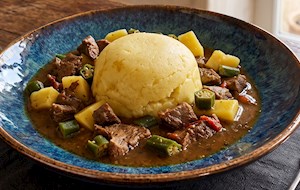
Fungee and Pepperpot

Fungee and pepperpot is the national dish of Antigua and Barbuda, and although one may think that they are going to be served some kind of mushroom and pepper stew, the truth is far more interesting than the unusual name suggests. Fungee is a bread ball similar to polenta, consisting of cornmeal mixed with okra. To make fungee, okra is boiled in salted water and mixed with wet cornmeal until the mixture becomes stiff. When the mixture does not stick to the pan, the fungee is ready to be consumed. The key ingredients in pepperpot are leafy vegetables, taro leaves, pumpkin, squash and other vegetables, while the stew is traditionally made with corned beef and offal. Since this dish consists of two separate meals that are combined together, it can be traced back to the times of slave population in the region, when the combination of cheap meat and carbohydrates provided a balanced and nutritious diet for a day of hard labor, with the added benefit of complex and rich flavors of the stew.
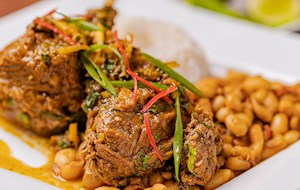
Cabrito a la norteña

Cabrito a la norteña is a dish of northern Peru, consisting of tender, young goat meat that is marinated in a blend of flavorful ingredients such as garlic, Peruvian chili peppers, and chicha de jora—a traditional fermented corn beverage. After marinating, the goat meat is slowly cooked in a sauce made with chicha de jora, cilantro, cumin, pumpkin, and other spices until it becomes tender and infused with the rich flavors of the marinade, resulting in a deep and aromatic profile. Cabrito a la norteña is commonly accompanied by sides such as yucca (cassava), rice, or beans. The dish is a cherished staple during festivities and family gatherings in northern Peru, capturing the essence of the region's culinary heritage and traditions.
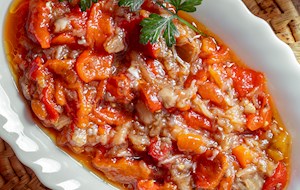
Espencat
Espencat is a dish of roasted vegetables and cod from Valencia. Its name comes from the Valencian word espencar, meaning “to tear,” which describes the way the roasted vegetables are prepared before being combined with other ingredients. The dish is made primarily with red peppers and eggplants, which are roasted until their skins blister and char, then peeled and torn into strips. Salted cod, soaked to remove excess salt and then flaked, is often added, giving the dish a savory depth that contrasts beautifully with the natural sweetness of the vegetables. While cod is considered one of its main components, espencat can also be prepared without it, allowing the roasted vegetables to take center stage. In some versions, it incorporates canned chopped tomatoes, tuna (mojama), hard-boiled eggs, onions, pine nuts, and olives. Espencat is also closely related to esgarraet, another Valencian dish of flaked cod and roasted peppers, though espencat typically includes a broader mix of vegetables and textures. The preparation begins by roasting red peppers and eggplants—sometimes with garlic and onions—over an open flame or in an oven until their skins blister and blacken. Once cooled, the skins and seeds are removed, and the flesh is torn by hand into thin strips—a key step that helps the vegetables retain moisture and better absorb olive oil and seasoning. The cod is flaked into the mix, which is then dressed with generous amounts of extra virgin olive oil, salt, and often raw garlic for an aromatic finish. Some recipes recommend letting the dish rest for several hours or even overnight so the flavors can deepen and meld together. It is typically served at room temperature or slightly chilled as a starter, a side dish, or a light main course, often accompanied by slices of crusty bread to soak up the juices. The dish is most common in the warmer months, when peppers and eggplants are at their best, and it pairs particularly well with crisp white wines or dry rosés, which enhance its freshness and balance its flavors.
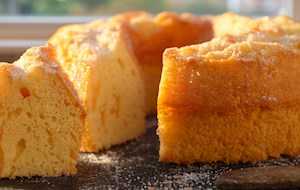
Fouace
Fouace Aveyronnaise is a traditional brioche-like bread flavored with orange blossom water from the Aveyron region. It is known for its sweet, slightly dense texture. The dough is rich with butter, eggs, and sugar and shaped into a round or oval loaf. Once baked, it develops a golden, slightly crispy crust. This bread is often enjoyed during festive occasions and holidays, such as Epiphany, and can be served plain or with jams and spreads, eaten for breakfast, as a snack, or as dessert.
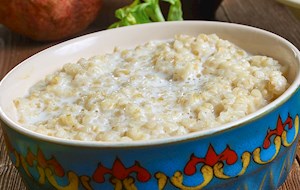
La bouillie

La bouillie is a Chadian breakfast made with rice or wheat combined with milk, flour, and peanut butter. The dish is always served hot after it has been boiled to a thick consistency. Although it is typically prepared with the aforementioned ingredients, la bouillie is often modified with other ingredients, depending on which ingredients are available in each household.
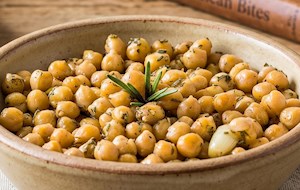
Ceci al rosmarino
Ceci al rosmarino is a traditional dish hailing from the Lazio area, although nowadays it's prepared throughout the country. The dish is usually made with a combination of chickpeas, onions, rosemary, olive oil, and seasonings such as salt and black pepper. The chickpeas are cooked in boiling salted water over low heat until tender. The onions are thinly sliced and sautéed with the rosemary needles in olive oil. When the onions become almost translucent, the drained chickpeas are added to the mix. The dish is seasoned with salt and pepper, stirred well, and served while still hot, either on its own or as an accompaniment to other foods.

Œufs de Marans
Œufs de Marans are extra-dark, reddish-brown chicken eggs produced by purebred Marans hens, native to the port city of Marans and the surrounding Marais Poitevin wetlands in the Charente-Maritime department of southwestern France. The egg line developed throughout the 19th and early 20th centuries as local marshland hens (poules des marais) crossed with game fowl brought by English sailors and heavy Asiatic breeds such as Langshans and Brahmas imported through the Atlantic trade docks. What is unique to œufs de Marans is that this heavy, mucilaginous pigment coating dries into a dense extra-cuticular layer that acts as a natural seal, significantly reducing shell porosity, lowering internal moisture loss over time, and inhibiting bacterial penetration through the shell wall compared to standard commercial eggs. The dark reddish-brown exterior is caused by protoporphyrin IX pigments secreted by the epithelial cells of the hen's oviduct during the final 3 to 4 hours of shell calcification, forming a thick, polished surface cuticle over an otherwise white calcium carbonate base. Preparation involves soft-boiling in water for 3 to 4 minutes to serve en cocotte or à la coque, hard-boiling for 8 to 9 minutes, gentle poaching, pan-frying in butter, or separating the large, rich yolks to emulsify classic sauces like barnaise, hollandaise, and mayonnaise. Œufs de Marans are eaten in French households, Parisian bistros, local Charente markets, and international Michelin-starred establishments, served soft-boiled in ceramic egg cups with toasted buttered bread strips (mouillettes), poached over fresh asparagus or frisée salads, or baked into savory tarts, paired with dry white wines such as Muscadet Sèvre et Maine or Sancerre, light red wines like Saumur-Champigny, hot espresso, or chilled mineral water.
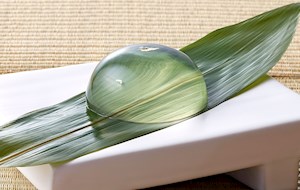
Mizu shingen mochi

Mizu shingen mochi is a transparent, gelatinous confection made from mineral water and agar, produced by the Kinseiken Seika confectionery company in Hokuto. The confection was created in 2014 as a seasonal variant of Yamanashi's established shingen mochi, utilizing local mineral water sourced from the Southern Japanese Alps near Mount Kaikoma instead of glutinous rice flour (mochiko). Preparation involves dissolving a minimal ratio of vegan agar-agar (kanten) powder into heated spring water, pouring the liquid into spherical molds, and chilling until a fragile, semi-solid gel forms, which is then unmolded onto a boat-shaped leaf or plate and served alongside a dusting of roasted soybean flour (kinako) and a drizzle of dark brown sugar syrup (kuromitsu). Despite containing the word mochi in its product name, the preparation contains no rice flour or starch paste, relying entirely on the hydrocolloid network of agar to trap water molecules within a transparent matrix. What is unique to mizu shingen mochi is its structural instability at room temperature, as the low concentration of gelling agent causes the sphere to lose its solid shape through syneresis and dissolve into a liquid pool within 20 to 30 minutes of unmolding. Mizu shingen mochi is eaten on-site at Kinseiken confectionery shops and select seasonal pop-ups in Yamanashi Prefecture during the summer months from June through September, consumed immediately with a spoon to combine the unflavored water gel with the nuttiness of the soybean powder and the sweetness of the syrup, paired with hot matcha, iced sencha green tea, roasted barley tea (mugicha), or cold spring water.
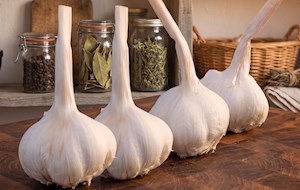
Aglione di Valdichiana
Aglione di Valdichiana is a rare and unique variety of garlic that is technically a type of leek native to the Valdichiana region in Tuscany, Italy. Known for its exceptionally large size, with individual cloves often weighing 50–70 grams, it has a mild, sweet flavor and low levels of allicin, making it easy to digest and free of the strong aftertaste associated with regular garlic. The bulbs are smooth and pale, with large, easy-to-peel cloves, making them ideal for culinary use. Aglione is a key ingredient in traditional Tuscan dishes, most notably pici all'aglione, where its delicate flavor enhances a rich tomato sauce served over handmade pici pasta. Its mildness also makes it versatile for use in soups, sauces and spreads without overpowering other flavors. Cultivated using traditional farming methods in the fertile soils of Valdichiana, Aglione is a symbol of the region's agricultural heritage and is often called "the garlic of lovers" because it leaves no lingering odor. Its rarity and artisanal production have made it a cherished product, celebrated for embodying the rich culinary traditions of Tuscany.
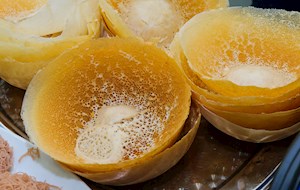
Pani appa

This traditional Sri Lankan appam (hopper) variety is prepared with a rice batter that is usually enriched with sugar or thick, syrupy molasses. The base of this pancake-like dish combines rice flour and coconut milk, while treacle, jaggery, or brown sugar are added to sweeten and give pani appam its typical golden brown hue. This sweet snack is best enjoyed accompanied by a cup of tea.
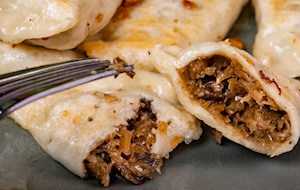
Pierogi z kapustą i grzybami leśnymi

Pierogi z kapustą i grzybami leśnymi are dumplings that are filled with a heavily seasoned mixture of slow-cooked sauerkraut and dried wild forest mushrooms. While variations exist across all of Poland, this highly specific regional iteration from the heavily forested Lubusz Voivodeship carries a profound historical pedigree, brought to the area following World War II by displaced populations resettled from the eastern territories around Lviv and Stanyslaviv. Dumplings are created with hyper-local sourcing of two key ingredients. First, locals exclusively use kamienna głowa (lit. stone head) cabbage, a late-harvest, densely packed white cabbage variety perfectly suited to the local climate and soil, which is shredded and barrel-fermented with salt and spices in the autumn. Second, the filling demands wild mushrooms—specifically noble porcini or bay boletes—foraged directly from the vast Lubusz forests, cut into exact quarters or sixths, and dried to concentrate their deep, earthy umami flavor. To prepare the filling, cooks rehydrate and finely chop the dried mushrooms, thoroughly boil the fermented cabbage to soften it, then squeeze it completely dry, and aggressively combine the two with onions that have been deeply caramelized in clarified butter, seasoning the heavy mass exclusively with coarse salt and sharp black pepper. This dense filling is enclosed in a pale, creamy dough, shaped into 5–8-centimeter (2–3-inch) half-moons, and sealed tightly with either a smooth pinch or a decorative ruffled edge. The dumplings are rapidly boiled for about five minutes until they float to the surface, at which point local cooks employ a crucial technical trick: instantly shocking them with a cup of cold water in the pot before draining, a process that completely halts the cooking and ensures the dough remains perfectly springy and delicate rather than turning mushy on the plate. These dumplings are a staple of the Lubusz diet all year long—usually served on a random weekday, smothered in hot pork cracklings. But when Christmas Eve arrives, the pork fat is strictly forbidden, and the dumplings take center stage on the holiday table, drenched simply in warm clarified butter.
Merdenele
Merdenele are Romanian savory pastries made from layers of folded dough filled most commonly with salty cheese and baked until the exterior is crisp and deeply browned. The singular form is merdenea, while merdenele is the plural normally encountered on bakery signs and in everyday speech. They are found throughout Romania but are particularly associated with urban bakeries, street-side patisseries, railway stations, markets, and the everyday food culture of Bucharest and southern Romania. A typical merdenea is square or slightly rectangular, relatively flat, rich in fat, and large enough to serve as a substantial snack rather than a small pastry. Its filling is usually based on telemea, often combined with cow's-milk curd cheese or another softer cheese and egg, producing a salty, moist center surrounded by crisp, flaky layers. The Romanian term comes from Turkish merdane, a word for a rolling pin or slender implement used to roll dough, reflecting the close connection between the pastry and the techniques of Ottoman and Balkan sheet-pastry making. Merdenele belong to the broader group of filled pastries that circulated for centuries through the Ottoman Empire, the Balkans, Anatolia, and southeastern Europe. It is therefore difficult to identify a single moment or individual responsible for their creation. Their establishment in Romania is generally connected with Ottoman culinary influence and especially with Dobrogea and the southern part of the country, regions that had long-standing contact with Turkish and Tatar communities and with the pastry culture of the Ottoman world. From there, the pastry became familiar farther inland and was already known in different parts of Romania before the twentieth century was well advanced. Accounts of Romanian food culture also associate the sale of merdenele with Turkish and Albanian pastry makers and street vendors, who sold filled pastries in busy urban areas and markets. The linguistic development is particularly useful for understanding the food. In Turkish, merdane refers to the implement used for rolling dough, while Romanian sources record merdenea both as a regional word for a pastry-rolling rod and as the name of the finished pastry. One linguistic explanation connects the culinary meaning more specifically with Turkish merdane böreği, a type of rolled pastry whose name was shortened after entering Romanian usage. Whatever the exact linguistic path, the name places the merdenea firmly within the family of Ottoman-derived pastries based on thin or repeatedly folded dough. Once established in Romania, however, the merdenea developed a recognizable form of its own. Rather than referring broadly to many types of börek, the Romanian word came to mean a specific individual pastry, usually square, compact, flaky, and filled with salty cheese. By the twentieth century it had become firmly associated with urban bakery culture. Romanian gastronomic writer Radu Anton Roman included merdenele among the foods of the country and described both cheese and meat fillings, although the cheese version became by far the most familiar form sold by modern bakeries. His cheese filling used sheep's-milk telemea with butter and eggs, while the meat version combined mutton and beef with onion, egg, pepper, and allspice. The dough is responsible for much of the character of a merdenea. It is generally made from wheat flour, water, and salt, sometimes with a small amount of vinegar, and it normally contains no yeast. Instead of rising through fermentation, the pastry develops its layered structure through repeated rolling, spreading with fat, folding, and resting. Butter, lard, margarine, or combinations of these fats have all been used. In commercial Romanian patisseries, margarine became especially common because it is inexpensive, stable, and suitable for producing clearly separated pastry layers on a large scale, while home recipes frequently use butter or lard. The basic dough is kneaded until smooth, allowed to rest, divided into portions, rolled thinly, coated with softened fat, and folded repeatedly. Chilling or resting between stages helps the fat remain separated from the dough, creating the layers that expand during baking. The cheese filling is usually deliberately salty. Telemea, a brined white cheese widely eaten in Romania, provides most of the flavor, while a less salty cow's-milk cheese may be added to soften the texture and control the salt level. Egg helps bind the mixture, and some recipes add semolina when the cheese contains too much moisture. Keeping the filling reasonably dry is important because excess whey can soften the dough and prevent the inner layers from baking properly. To form the characteristic shape, a portion of laminated dough is rolled into a square or rectangle, the cheese mixture is placed in the center, and the edges or corners are folded inward so that the filling is completely enclosed. The parcel is normally placed seam-side down on a baking tray. Some versions are brushed with egg before baking, although the surface of a bakery merdenea can also be left relatively plain. In the oven, the fat between the layers melts while moisture in the dough turns to steam, separating the sheets and creating the flaky structure. A well-made merdenea should have a crisp, browned exterior, clearly defined layers around the edges, and a softer interior where the dough meets the cheese. It is richer and heavier than many forms of puff pastry, and a certain amount of fat on the fingers or paper wrapping is considered normal for the bakery style. Its square folded construction is also one of the easiest ways to distinguish it visually from Romanian pateuri, plăcinte, and other cheese pastries. Although industrial puff pastry can be used to make a similar product quickly, the more characteristic method starts with a simple dough that is manually coated with fat and folded into layers rather than using ready-made puff pastry sheets. Merdenele became particularly well suited to city life because they are inexpensive, filling, portable, and can be eaten without plates or cutlery. They are usually sold individually from glass-fronted bakery counters and handed over in a paper bag or wrapped in bakery paper. They are best eaten warm, while the exterior remains crisp and the cheese filling is soft. Once completely cold, the fat firms and the pastry becomes denser, which is one reason bakeries often sell them directly from warm trays throughout the day. Radu Anton Roman specifically recommended eating merdenele hot with cold bragă, the lightly fermented cereal drink once much more common in Romanian towns. That pairing also reflects the wider Balkan context in which rich, salty pastries are commonly balanced by cool, mildly acidic or fermented drinks. A merdenea can therefore also be paired successfully with sana, kefir, plain drinking yogurt, or ayran, particularly when the filling is strongly salted. Coffee or black tea are practical alternatives for breakfast, while a light lager works well when the pastry is eaten later in the day. Because the pastry already combines bread, fat, and cheese, it is normally eaten on its own rather than served with a substantial side dish. Today merdenele remain common across Romania, especially in Bucharest and other large cities, where they are bought for breakfast, during work or school breaks, while commuting, or simply as a quick hot snack from a neighborhood bakery. Their defining qualities remain straightforward: folded layered dough, a generous salty-cheese filling, a square shape, a crisp exterior, and the expectation that they will be eaten warm soon after they leave the oven.
Salzburger Nockerl

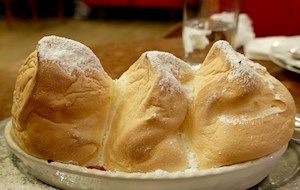
Salzburger nockerl are light and delicate vanilla-flavored dumplings which are, due to the method of preparation, often labeled as a soufflé. As the name implies, the dish was invented in Salzburg in the 17th century, and as an ode to its place of origin, when preparing these sweet treats, the airy mass is arranged on a baking tray in three mounds, representing the three hills that surround the city. The dish is always served warm, either as a dessert or a main dish, and it is traditionally dusted with powdered sugar and paired with various fruit sauces.
Marinara
Marinara is a tomato-based sauce associated with Naples and the cooking of Campania in southern Italy, usually built from tomatoes, extra-virgin olive oil, garlic, oregano, and salt. In its simplest Italian form it is a quick-cooked sauce with a clean tomato flavor and a clear presence of garlic and herbs rather than a long-simmered ragù. The term requires some clarification because “marinara sauce” has acquired a broader meaning in the United States, where it can refer to almost any relatively simple meatless tomato sauce used for pasta, baked dishes, or dipping. In Naples, alla marinara is more specifically associated with the combination of tomato, garlic, oregano, and olive oil, most famously on pizza marinara. Onion, basil, parsley, wine, chili, and other ingredients occur in different versions, especially outside Italy, but they are not all necessary to the basic Neapolitan profile. Despite the maritime name, seafood is not a defining ingredient. Italian marinara derives from marinaro, meaning sailor or seafarer, and alla marinara can be understood as “sailor-style.” Several explanations have been proposed for the name. One claims that Neapolitan sailors prepared the sauce because tomatoes, garlic, oil, and dried herbs could be kept more easily than highly perishable ingredients; another says that it was made by sailors’ wives when the men returned from fishing. These stories are repeatedly cited but are not supported by enough contemporary documentation to identify one of them as the established explanation. The connection with Naples and maritime language is secure, while the specific circumstances in which the name was created remain uncertain. Marinara could not have existed in its modern tomato-based form before tomatoes entered European cooking following contact with the Americas. Tomatoes were initially slow to become a major food in much of Europe, but southern Italy was one of the areas where their culinary use developed relatively early. Naples was under Spanish rule for much of this period and had strong commercial and political connections with Spain, which helped bring New World ingredients into local cooking. An important early document appeared in Naples in 1692, when Antonio Latini published the first volume of Lo Scalco alla Moderna. Latini, who worked for the first minister of the Spanish viceroy of Naples, included a recipe called salsa di pomodoro alla spagnuola. The tomatoes were roasted, peeled, chopped, and mixed with onion, chili, thyme, salt, oil, and vinegar. It was not marinara in the modern sense and was not described as a pasta sauce, but it is the earliest surviving Italian cookbook recipe for a tomato-based sauce and demonstrates that tomato sauces were being prepared in Naples by the late seventeenth century. During the eighteenth century, tomatoes became increasingly integrated into southern Italian cooking. Vincenzo Corrado's Il cuoco galante, published in Naples in 1773, included numerous ways of preparing tomato sauces, although they were still primarily sauces for other foods rather than specifically for pasta. A decisive development appeared in Francesco Leonardi's L'Apicio moderno of 1790, which contained one of the earliest documented Italian recipes connecting tomato sauce with macaroni. These sources establish the growth of Naples's tomato-sauce culture, but none provides a simple documentary moment when the modern sauce was officially created and named marinara. The strongest early association of the word marinara with the familiar combination of tomato, garlic, oregano, and olive oil is found in Neapolitan pizza. Pizza marinara became one of the fundamental styles of pizza in Naples, alongside the later Margherita. European documentation for Pizza Napoletana gives 1734 as the date associated with the creation of the marinara, although the precise dating rests partly on later accounts rather than an uninterrupted written recipe record. By the nineteenth century, descriptions of Neapolitan pizza clearly document toppings based on oil, tomato, garlic, and other inexpensive ingredients, and marinara had become part of the city's established pizza vocabulary. This background also explains why marinara sauce and pizza marinara are closely related but should not be treated as exactly the same thing. Pizza marinara uses the flavor combination directly on uncooked pizza dough: tomato, garlic, oregano, olive oil, and salt are applied before the pizza enters the oven, where they cook rapidly at very high temperature. Marinara sauce is cooked separately in a pan and can then be used with pasta or other foods. Both depend on essentially the same group of ingredients, and neither requires seafood or cheese. Mozzarella is specifically absent from the classic pizza marinara, which helps distinguish it immediately from a Margherita. To make marinara sauce, extra-virgin olive oil is heated gently and sliced or lightly crushed garlic is added. The garlic should perfume the oil without becoming dark or bitter. Tomatoes are then added, usually peeled whole tomatoes crushed by hand, tomato pulp, or ripe fresh tomatoes when they are in season. The sauce is seasoned with salt and oregano and cooked at a moderate simmer until the tomatoes have broken down and excess liquid has evaporated. Unlike a meat ragù, which may cook for several hours, marinara benefits from relatively short cooking. Roughly 15 to 30 minutes is sufficient for many versions, leaving the tomato flavor fresh and slightly acidic rather than heavily reduced. The choice of tomatoes has a significant effect because there are few other ingredients to alter their flavor. Ripe plum tomatoes are particularly suitable because they have firm flesh, relatively little excess water, and a good balance between sweetness and acidity. San Marzano tomatoes from Campania are frequently used when available, although they are not mandatory for a sauce to be called marinara. Canned whole tomatoes are also well suited to it and make the sauce possible throughout the year. Garlic is generally kept clearly perceptible, but it should not dominate to the point that the tomato becomes secondary. Oregano is especially closely associated with the Neapolitan marinara profile. Basil is also widely used, particularly in pasta sauces, and is normally added toward the end so its aroma remains fresh. Using both oregano and basil is common, particularly in Italian-American cooking, but a sauce made simply with tomato, garlic, oregano, olive oil, and salt already contains the essential flavor structure associated with marinara in Naples. Onion illustrates one of the differences between different uses of the name. Many American marinara recipes begin with chopped onion, sometimes together with garlic, and commercial sauces may also contain carrot, celery, sugar, herbs, wine, or spices. These can produce a good tomato sauce, but the expanded ingredient list reflects the broader Italian-American meaning of marinara rather than a strict requirement of the Neapolitan style. Marinara became particularly important in the United States through the cooking of immigrants from southern Italy during the late nineteenth and early twentieth centuries. Italian-American food developed from regional Italian foundations but adapted to different ingredients, household circumstances, restaurant culture, and American expectations. The term marinara eventually became a convenient general name for a meatless red sauce, particularly in contrast with meat sauces cooked for much longer periods. In contemporary American English, dictionaries consequently define marinara broadly as a tomato sauce served especially with pasta, often including onion, garlic, and herbs. This American development also expanded the uses of the sauce. Marinara became a standard accompaniment to spaghetti, ravioli, manicotti, baked ziti, eggplant parmigiana, chicken parmigiana, meatballs, and numerous baked pasta dishes. It also developed a major role as a dipping sauce for foods such as fried mozzarella and other breaded appetizers. These uses are now firmly established within Italian-American cuisine even when there is no direct equivalent under the same name in Naples. In Italy, a simple tomato sauce for pasta is more commonly described according to its actual form, such as sugo di pomodoro or pasta al pomodoro, while marinara remains particularly recognizable through pizza marinara and the garlic-oregano flavor combination. Food writer John Mariani has similarly noted that the American concept of marinara developed into its own recognizable category within Italian-American red-sauce cooking. The name creates another frequent misunderstanding in countries where “marinara” has come to suggest seafood. A pasta dish containing mussels, clams, prawns, squid, and tomato may be called spaghetti marinara in Australia and some other countries, but this usage should not be taken as the definition of Italian marinara sauce. In Italy, seafood pasta is more likely to be described with terms such as ai frutti di mare or alla pescatora. The maritime reference in marinara concerns the name and its association with sailors, not a requirement that fish or shellfish be present. Another defining characteristic is what marinara does not require. There is no meat stock, cream, butter, flour, or prolonged reduction needed to create its body. The tomato provides almost all of the sauce's texture, while olive oil gives it richness and helps carry the aroma of garlic and herbs. It can remain slightly chunky or be crushed more thoroughly according to the intended use. A pasta version is usually loose enough to coat the noodles without forming a thick paste. When pasta is involved, it is best finished briefly in the pan with the sauce and a small amount of starchy cooking water, which helps the tomato and olive oil adhere to the pasta. Grated cheese can be added at the table in Italian-American settings, but it is not necessary to the sauce itself, and pizza marinara contains no cheese. Marinara is now eaten far beyond Campania and has become one of the world's most recognizable tomato sauces, although the meaning of the name changes according to place. In Naples, its clearest expression remains the combination of tomato, garlic, oregano, and olive oil found on pizza marinara and in similarly seasoned tomato preparations. In the United States it is primarily a versatile meatless red sauce used with pasta, baked dishes, fried foods, and sandwiches. With pasta, it pairs particularly well with spaghetti, linguine, penne, rigatoni, ravioli, or other shapes that do not require a heavy sauce. It can accompany meatballs, breaded eggplant, chicken cutlets, or simple grilled vegetables, while fried mozzarella and calamari are common Italian-American pairings when marinara is served as a dip. For wine, the acidity of tomato generally favors wines with good acidity of their own rather than very tannic or heavily oaked styles. Campanian reds such as Piedirosso and lighter Aglianico-based wines work well, as do young Sangiovese wines, while a dry rosé can suit a lighter pasta serving. With pizza marinara, a light red, dry rosé, or lager works particularly well. The simplest serving remains pasta coated with freshly cooked marinara and eaten immediately, or the same fundamental combination of tomato, garlic, oregano, olive oil, and salt spread over Neapolitan pizza dough and baked as pizza marinara.
Limber

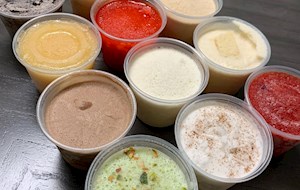
Limber is a Puerto Rican frozen treat consisting of coconut milk, pineapple juice, and sweeteners such as sugar. There are numerous variations, so it can also be prepared with mangos or raspberries. This dessert is named after Charles A. Lindbergh, who was the first pilot to fly across the Atlantic Ocean. When he flew to Puerto Rico, the locals offered him a frozen fruit juice, which he enjoyed, so the people named it Limber in his honor. Nowadays, Limber can be found at numerous roadside fruit stands and gas stations in Puerto Rico.
Khychin

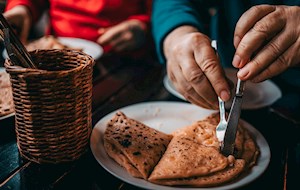
Khychin is a traditional filled flatbread originating from the regions of Kabardino-Balkaria and Karachay-Cherkessia. This thin flatbread is made from unleavened dough and it's filled with boiled potatoes, local cheese, or meat with fresh herbs. The dough is usually made with a combination of flour, salt, and kefir or ayran, while the filling can contain soft cheese, potatoes, butter, veal or lamb, garlic, onions, coriander, and mint. Once assembled, khychin is fried in butter until it's slightly browned and crispy. The dish is prepared for all special occasions such as weddings, childbirth, funerals, or visiting guests. It is believed that khychin symbolizes the Sun, wealth, and hospitality.
Kwacoco

Kwacoco is a dish made from grated cocoyam, wrapped in banana or plantain leaves, and cooked until it sets into a firm, tender mass. It is particularly associated with the Bakweri people of southwestern Cameroon, especially the area around Buea and Mount Cameroon. Cocoyam is an important staple in this part of Cameroon, and the variety commonly known as macabo is widely used. The peeled cocoyam is grated into a thick, starchy paste, lightly seasoned with salt and wrapped tightly in softened banana or plantain leaves. The parcels are then arranged in a pot and cooked with water until the raw starch sets completely. Depending on the method, they may be steamed above the water or cooked in a leaf-lined pot with water added around the parcels. The banana leaves are usually passed briefly over a flame or softened with hot water before wrapping. This makes them flexible enough to fold without tearing and also gives the cooked kwacoco a subtle leafy aroma. As the cocoyam cooks, its starch gelatinizes, and the loose grated mixture becomes firm enough to hold its shape when unwrapped. The simplest version is relatively plain and is intended to be eaten with a flavorful sauce or soup. One of the best-known combinations is kwacoco with mbanga soup, a rich soup made from the pulp of fresh oil-palm fruits. Among the Bakweri, this pairing is also known as ngonya mosaka. Mbanga soup is commonly seasoned with hot pepper, crayfish, and aromatic spices, and may contain smoked fish, stockfish, or meat. A richer version called kwacoco Bible incorporates many of those flavors directly into the cocoyam mixture. Grated cocoyam is combined with red palm oil, ground crayfish, smoked fish, hot pepper, and seasonings before being wrapped. Chopped leafy vegetables such as spinach may also be mixed into the paste. The palm oil gives the kwacoco its characteristic orange color, while the fish and crayfish make it much more savory than the plain version. No single kwacoco Bible recipe is fixed. Some versions contain generous amounts of smoked fish and crayfish, while others emphasize the palm oil and vegetables. Country onion, garlic, ginger, and fresh or dried pepper may also be used. These ingredients are mixed throughout the cocoyam paste rather than placed as a separate filling in the center. Plain kwacoco and kwacoco Bible are therefore related but distinct preparations. Plain kwacoco functions much like fufu or another starchy accompaniment and is usually eaten with soup. Kwacoco Bible is more of a complete dish because it already includes fish, crayfish, palm oil, and vegetables. Mbanga soup is the classic accompaniment to plain kwacoco, but other sauces can also be served with it. A spicy tomato sauce is one option, while kwacoco Bible is sometimes paired with canda sauce made with cow skin, tomatoes, onions and pepper. Kwacoco is strongly associated with the Bakweri communities around Mount Cameroon, where cocoyam has long been an important crop. The region's fertile volcanic soils support the cultivation of cocoyam, plantains and other tropical staples. However, no documented evidence shows that kwacoco was specifically invented as a portable food for agricultural workers or as a way to prevent spoilage in the tropical climate. At its simplest, kwacoco is about the transformation of grated cocoyam through leaf-wrapped cooking. The plain version is mild and starchy, designed to be paired with a rich soup, while kwacoco Bible is a is more intensely flavored dish, made by adding palm oil, smoked fish, crayfish, vegetables, and spices directly to the cocoyam.
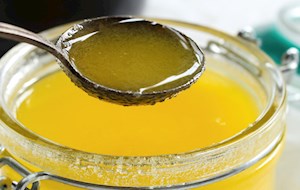
Ghee

Ghee is a type of clarified butter that is considered a superfood by many people. It is cooked for a long time so that nearly all of the milk and moisture is removed. In India, due to the hot climate, butter has to be stabilized for storage and use, so people decided to clarify it. Although it was initially made in the northeast of India, ghee first started to gain popularity in southern India. Ghee is also extremely healthy, since it is full of vitamins A and E, fights inflammation, and is low in lactose and casein. It is also considered a sacred fat, and ritual candles are sometimes made of ghee. At some Hindu weddings, men have an eating contest where they eat as much of it as possible as part of a fertility ritual. With its nutty flavor and numerous health benefits, ghee is guaranteed to remain a staple of Indian culinary world.
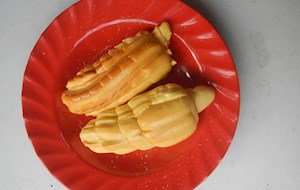
Pinagong

Pinagong is a traditional bread roll originating from Sariaya (Quezon province) in the Philippines. This dense bread roll is usually made with a combination of flour, salt, yeast, sugar, and milk. Eggs and butter are sometimes also added to the dough mixture. It is believed that pinagong is a version of pan de monja, but it's distinctive for its shape and a complex scoring pattern on top before baking. The name of the bread roll is derived from the word pagong, meaning turtle, because once baked, it looks similar to a turtle. The roll is also soft in the inside and slightly crunchy on the outside.
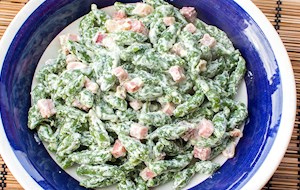
Spätzle Tirolesi
Spatzle Tirolesi (also known as spinatspatzeln) is an Italian version of the German spätzle, traditionally prepared throughout the region of Trentino Alto Adige. One of the most classic ways of enjoying this rustic green pasta variety made with boiled spinach, eggs, flour, nutmeg, salt, pepper, and water is in a simple sauce consisting of heavy cream and crispy speck, previously fried in butter. Cooked spatzle are added to the sauce, then tossed until fully coated. Spinatspatzeln are best enjoyed immediately after preparation, topped with grated Parmigiano and a sprinkle of a freshly ground pepper.
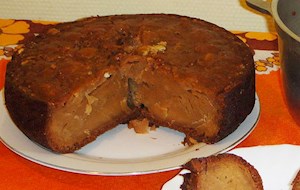
Godrogodro

Godrogodro is a traditional cake originating from Madagascar. Although there are some variations, the cake is usually made with a combination of rice flour, coconut milk, sugar, vanilla, cinnamon, nutmeg, and oil. In order to prepare the cake, caramel is first made, and it’s mixed with coconut milk. The mixture is heated over low heat, and the nutmeg, vanilla, and cinnamon are mixed into the pot along with rice flour. Once the mixture becomes slightly thick, it’s poured into a greased baking tray and baked in the oven for about half an hour. Godrogodro is left to cool down a bit, and it’s then cut into slices and served. In the past, Malagasy didn’t have ovens, so they baked the cake over charcoal in a cocotte pot.
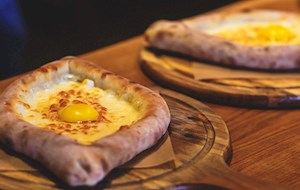
Ajaruli khachapuri

One of the most popular khachapuri varieties, adjarian is an open-faced pie that is filled with a combination of cheese and eggs. The base is made from yeasted dough that is rolled into an oblong shape and traditionally comes filled with Sulguni or Imeretian cheese, or the combination of both. The dish is finished off with an egg that is placed on top, and the pie is then additionally baked until the egg is partially set. This boat-shaped pie hails from the coastal Adjaria region, and it is usually served with a slice of butter on top.
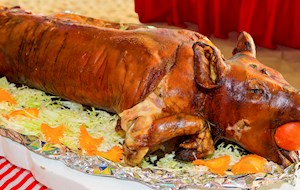
Lechon
Lechon, derived from a Spanish word for roasted suckling pig is one of the most popular dishes in the Philippines. The slowly-roasted suckling pig is usually stuffed with lemongrass, tamarind, garlic, onions, and chives, and is then roasted on a large bamboo spit over an open fire. It is traditionally served whole on a platter, at celebrations and festive events such as weddings and Christmas. Once the meat is properly roasted and falls off the bone, people tend to eat every part of the pig, and the crispy, reddish-brown, crackling skin is especially beloved. Lechon is often served with a thick and rich liver sauce that is cooked with sugar, fresh herbs, and vinegar. If anything is left after the feast, the leftovers are often made into lechon slaw, slowly cooked with vinegar, garlic, and liver sauce for that extra bit of flavor. Apart from the Philippines, the dish is especially popular in countries such as Cuba, Puerto Rico, the Dominican Republic, and Spain. Some famous chefs even named lechon the best pig in the world, so it is definitely worth a try.
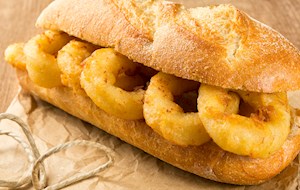
Bocadillo de calamares
Bocadillo de calamares is one of the best-known bocadillo sandwiches in Spain, and a most beloved bar snack staple in the country’s capital, Madrid. It typically consists of a crusty Spanish-style baguette called barra de pan, which has been sliced in half lengthwise and stuffed with fresh and crunchy fried calamari rings. The calamari are usually dipped in flour and fried in olive oil, while the sandwich’s filling may be enhanced with a touch of olive oil or alioli (garlic mayonnaise) or a drizzle of fresh lemon juice. This simple sandwich makes for a filling breakfast, lunch, dinner, or a mid-afternoon snack, and it is traditionally washed down with a small glass of ice-cold draft beer known as a caña in Spanish. In Madrid, where calamari sandwiches can be found at any corner, people usually enjoy this sandwich on the spot, standing in the bar where they bought it, or for a more pleasurable experience, they often eat it al fresco while sitting on one of the benches on the Plaza Mayor.

Fanouropita

Traditionally baked in honor of Saint Phanourios—a martyr and a patron of all things lost—fanouropita is the Greek version of a dense, spiced cake that is also commonly enjoyed during Lent. It is prepared with a dough that combines flour, olive oil, orange juice, orange zest, hefty amounts of spices such as cinnamon and cloves, and occasionally raisins and nuts. Tender and fragrant fanouropita can be enjoyed warm or chilled and is typically served dusted with powdered sugar.
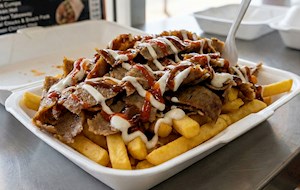
Halal snack pack

The halal snack pack, often abbreviated as HSP, is a fast-food dish that originated in Australia and consists of layers of hot chips, sliced halal-certified doner or shawarma-style meat, and sauces such as garlic, chili, and barbecue. It is most closely associated with takeaway kebab shops operated by Middle Eastern and Turkish communities in urban centers like Sydney and Melbourne, though its popularity has since spread across the country and to other parts of the world. The meal’s development is linked to the expansion of halal-certified kebab outlets in Australia during the late twentieth and early twenty-first centuries, when doner meat and chip combinations became a common after-hours meal choice among students and nightlife crowds. The phrase “halal snack pack” gained traction on social media around 2015, when the combination of kebab meat, fries, and sauce was informally standardized under that name. Preparation begins with fried potato chips placed at the base of a styrofoam or foil container. Freshly shaved lamb, beef, or chicken meat is added directly from the rotating vertical spit, followed by sauces poured in parallel stripes or swirled across the top. Some shops add extras like cheese, tabbouleh, or pickled chili peppers, though the core elements remain consistent. The meat’s halal certification means it is permissible according to Islamic dietary law, which contributed to the dish’s visibility as a cross-cultural fast food that appealed to both Muslim and non-Muslim consumers. It is most often consumed late at night, particularly after social gatherings or as a quick meal on the way home, and is associated with casual dining culture rather than formal restaurants. The dish pairs well with soft drinks or lightly carbonated beverages, which help offset the richness of the sauces and meat, though some prefer it with ayran, a salty yogurt drink common in Turkish cuisine.
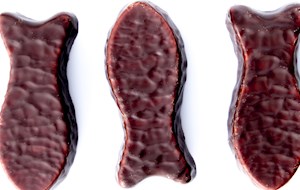
Chocolate fish

Chocolate fish is a New Zealander confectionery consisting of either white or pink marshmallow that is covered in chocolate and shaped into an elongated fish. It is a favorite of numerous children from New Zealand and also represents a reward for a well-done job. This sweet treat has been around since the 1950s, and today it can be found in groceries and convenience stores throughout the country.
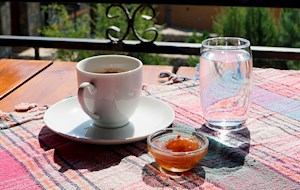
Slatko

Slatko is a Serbian fruit preserve that consists of distinguishable, usually whole pieces of fruit that are doused in a thick, sugary syrup. It can be prepared with various types of fruit such as quinces, watermelon rinds, cherries, raspberries, strawberries, blackberries, figs, grapes, plums, prunes, and even rose petals, while sugar-based syrups can often be flavored with vanilla, lemon juice, cinnamon, or cloves. Serbian slatko, which translates as sweet, is a sign of hospitality that is traditionally offered as a warm welcome to guests. It is always served in small glass bowls and the guests should customarily enjoy only a spoonful of the preserve. A portion of slatko is usually accompanied by a glass of water and is typically followed by coffee and traditional plum brandy (rakija). Slatko is closely associated with the Greek spoon sweets, while similar preserves can also be found in Montenegro and Bulgaria.
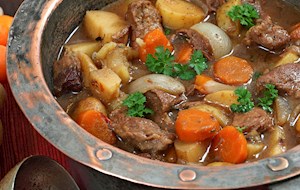
Irish stew
Irish stew is a traditional folk stew that first appeared at the beginning of the 19th century and was developed out of necessity to make a meal out of available, leftover ingredients. Originally, the stew was made only with mutton, onions, potatoes, and sometimes barley, while lamb meat and other root vegetables like carrots, turnips, and parsnips were added later. It is said that goat meat was also used in the past, but besides the previously mentioned mutton and lamb, beef is a common addition in today's recipes. Given that the meat used in the dish is chewy and hard, usually bone-in, the stew is cooked slowly for a couple of hours so that the meat turns tender and releases the fat into the stew, thus enhancing the flavor of the entire dish. A stew made with Guinness stout has gained widespread popularity throughout Ireland as it intensifies the flavors and gives the broth a rich, brown color. Traditionally, the stew is consumed on St. Patrick's Day and for Samhain, an old Gaelic festival, but it can also be found on the menus of most Irish restaurants throughout the year.
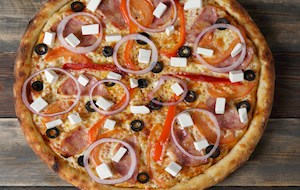
Pugliese Pizza
As the name suggests, this classic Italian pizza variety is named after the region of Puglia. In its simplest form, the basic pizza dough is topped with tomato sauce, mozzarella, and red onion rings. Typical variations include replacing mozzarella with Provolone or Pecorino cheese and adding other ingredients such as anchovies, oregano, capers, or olives.
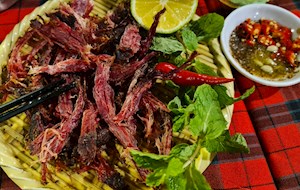
Thịt trâu gác bếp

Thịt trâu gác bếp is a traditional meat product originating from the mountainous Sapa region, where it's prepared by the Black Thai people of Sapa. It consists of cured and dried buffalo meat, and it originated from the need to preserve food for the rainy seasons. On the outside, the buffalo meat is dark brown, but on the inside it's bright red. The meat is seasoned with salt, pepper, garlic, and ginger, and it's then hung from their kitchens from 8 months up to a year. After that period, it's usually stewed, grilled, or cooked into various dishes. It's said that the first bite might be a little tough, but after that the flavors become sweet and pleasant.





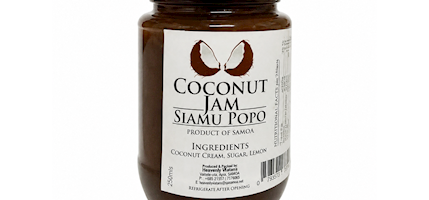





The Fruit Garden
Pineapple Coco Rhum Jam
Great Taste Awards 1 Star 2018





Planteray
Cut & Dry

SFWSC - San Francisco World Spirits Competition Double Gold 2025