M.B.

Top 16 Mekong Foods

Last updated on September 16, 2026

Best Mekong Food Products
01
Condiment

Thuần Chay Gò Công

5.0 ·

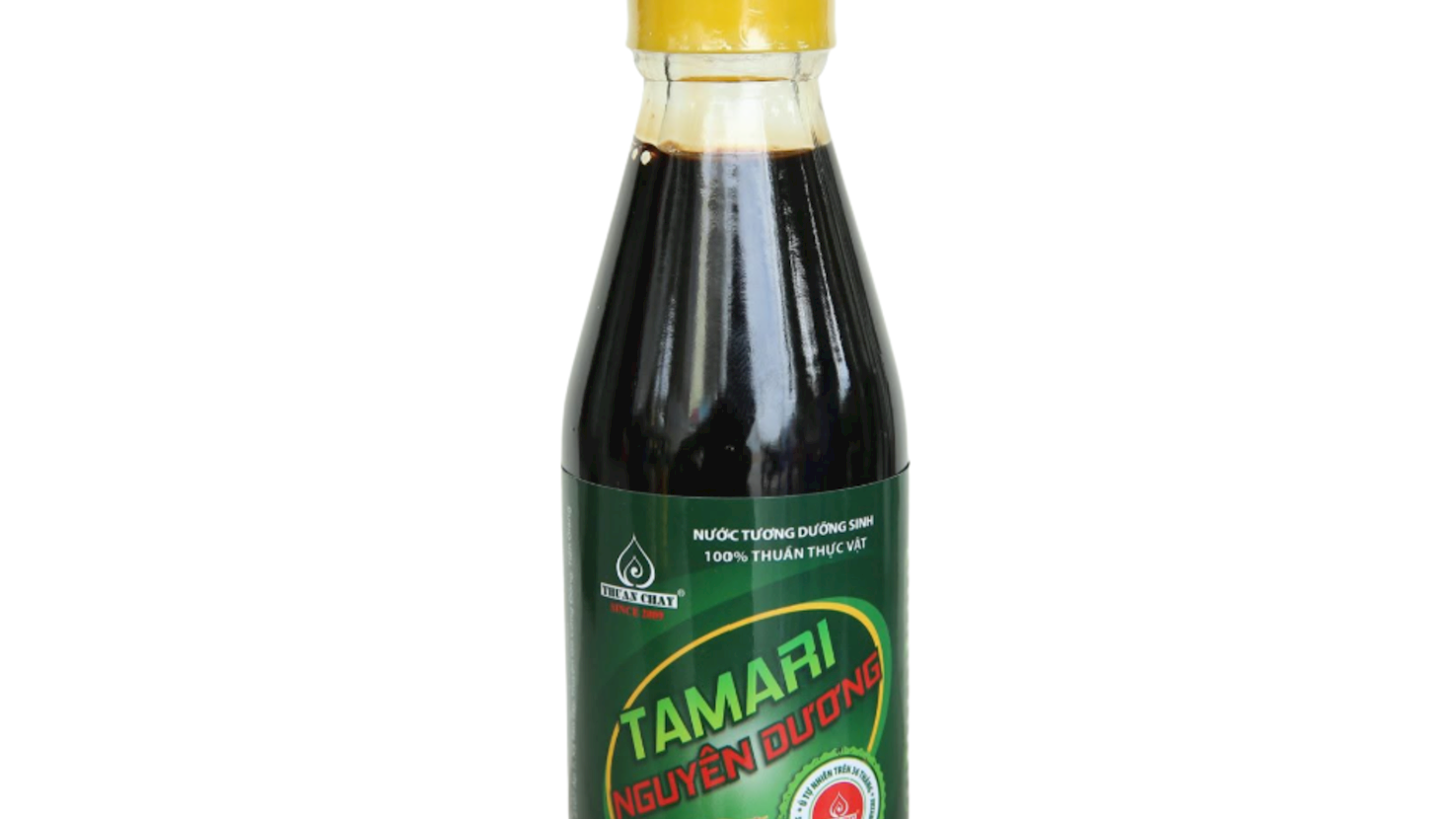
Thuần Chay Gò Công is a Vietnamese producer of fermented soybean products based in the Gò Công Đông district of the Mekong Delta. Its production facility is located in Tân Tây commune in Tiền Giang Province. The company specializes in soy sauces and fermented pastes intended for vegetarian diets. Production is based on a traditional manual fermentation process that lasts more than 36 months for certain products. The primary ingredients are soybeans, sea salt, and water, while red beans and brown glutinous rice are also used to make the fermented paste. During maturation, the products are exposed to natural temperature fluctuations, sunlight, and humidity. This process contributes to their pronounced aroma, dark color, and complex balance of salty and sweet flavors. Thuần Chay Gò Công is a small regional producer whose identity is built around extended fermentation and the preservation of traditional soybean-processing methods.

02
Rice

Lộc Trời

4.9 ·

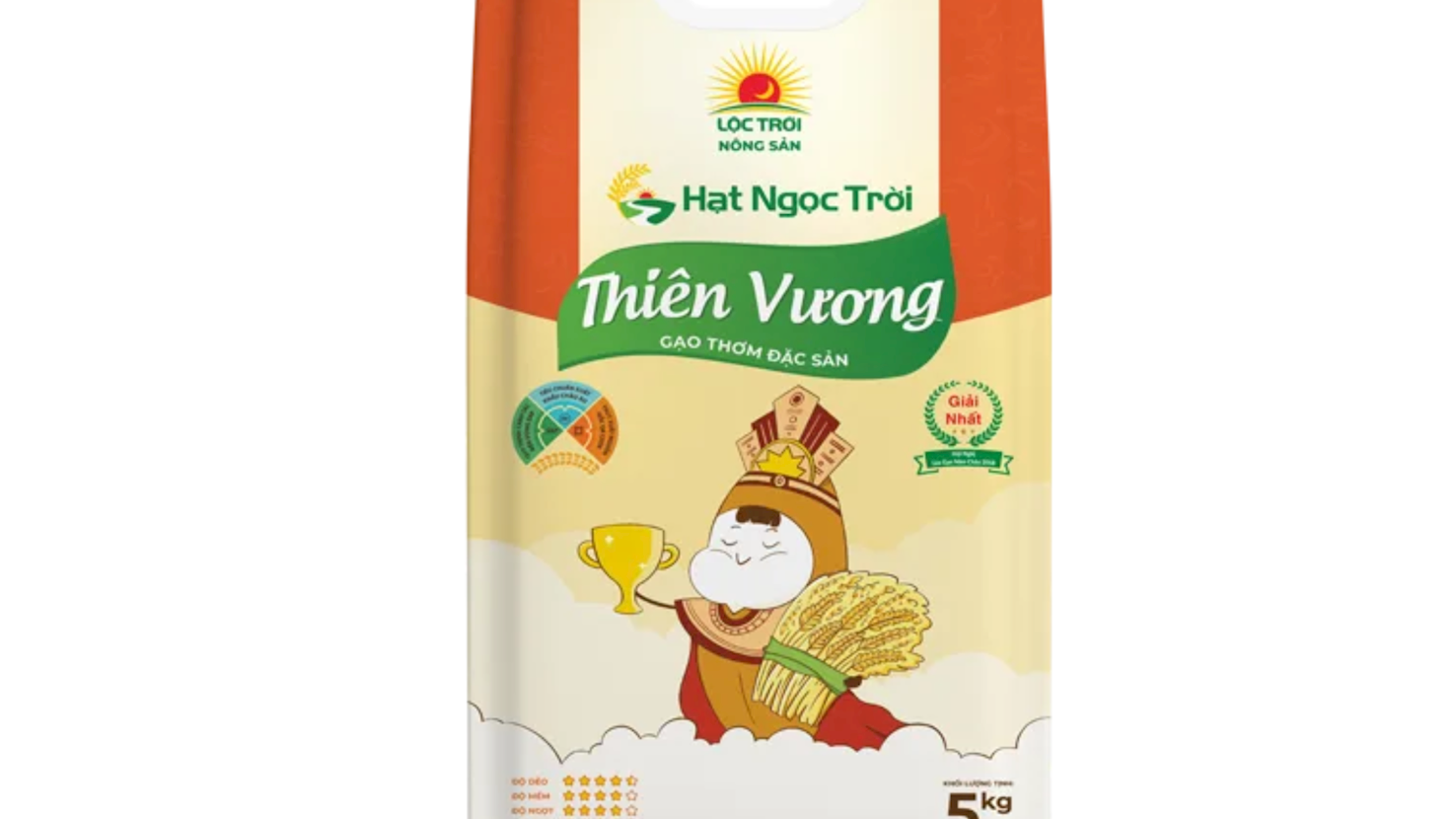
Lộc Trời is one of Vietnam’s leading agricultural companies and is headquartered in Long Xuyên in An Giang Province. It was established in 1993 as a plant protection services company in An Giang. Its operations initially focused on crop protection products while seed research and production began in 1996. Over time, the company developed an integrated supply chain covering seed selection, cultivation management, farmer support, procurement, processing, and distribution of agricultural products. Rice grown in the Mekong Delta occupies a particularly important place in its business. Production quality is controlled from the selection of varieties and cultivation areas to harvesting, processing, and packaging. Lộc Trời works with agricultural cooperatives and growers by providing professional support throughout the cultivation process. In addition to rice, the company produces seeds, fertilizers, biological preparations, crop protection products, coffee, and other agricultural goods. Its products are sold throughout Vietnam and exported to markets in Europe, Asia, the Middle East, Africa, and Australi

03
Rice

TUFOCO

4.8 ·

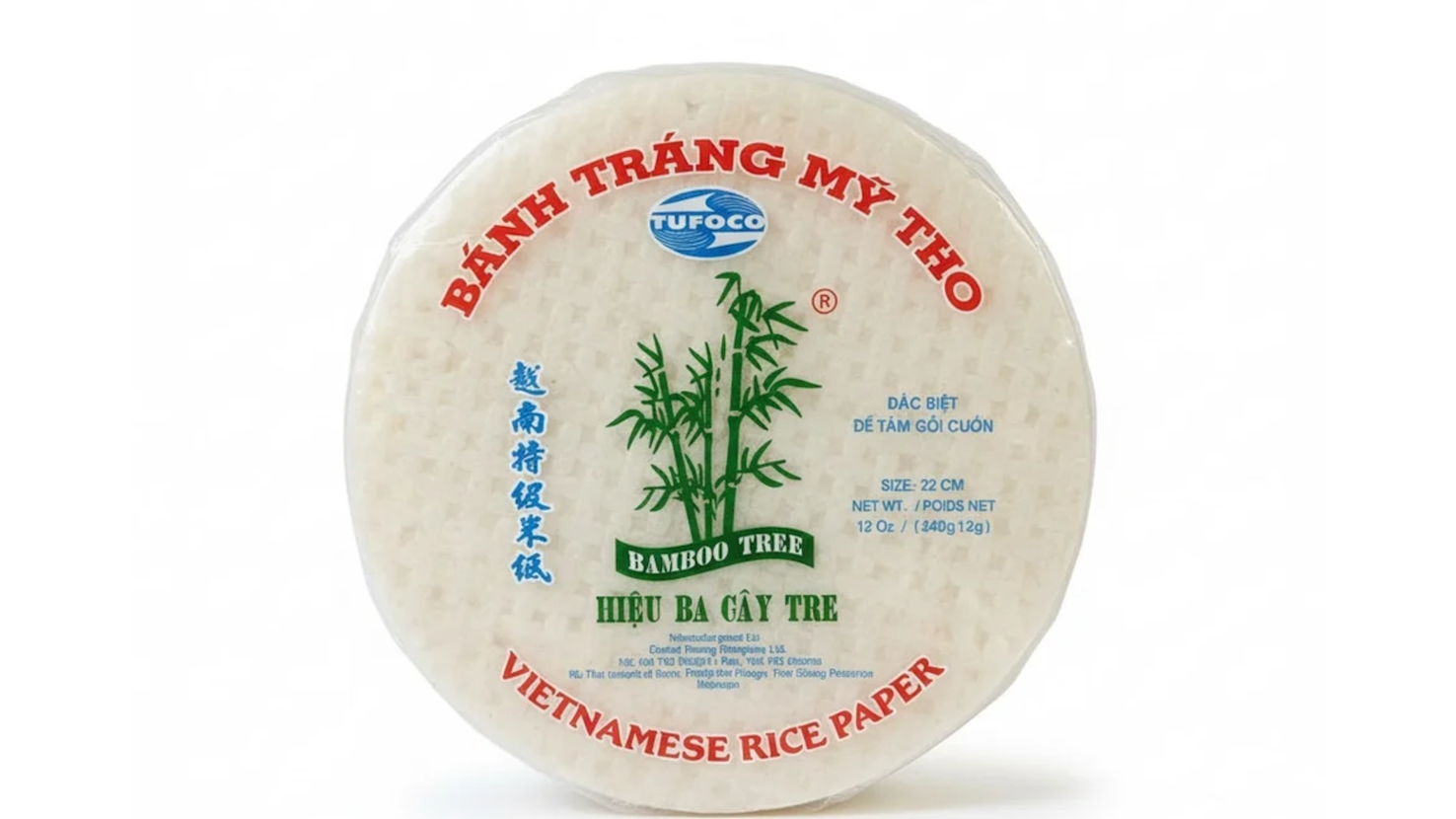
TUFOCO is a Vietnamese food company established in 2002 and specializing in the processing of agricultural raw materials. It operates under the official name Thuan Phong Agricultural Products Processing Company Limited. Its headquarters and main production complex are located in Chau Thanh District in Ben Tre Province in the Mekong Delta. The company initially focused on rice-based foods such as rice paper, pho noodles, rice vermicelli and other types of rice noodles. Its rice products are mainly sold internationally under the Bamboo Tree brand. The rice paper range includes round and square sheets in various sizes intended for fresh and fried rolls. Depending on the variety the principal ingredients include rice, tapioca starch, water and salt. The rice paper is industrially produced on automated lines to ensure consistent thickness, shape and elasticity. In addition to rice products the company processes coconuts, fruit and vegetables and produces coconut milk, coconut water, oil, juices and canned and frozen foods. Its production complex covers approximately 18 hectares and has an annual capacity of up to 50,000 tonnes of finished products. TUFOCO exports its products to the United States, Canada, European countries, Australia, Japan, South Korea and China.

04
Rice

Sa Giang

4.8 ·

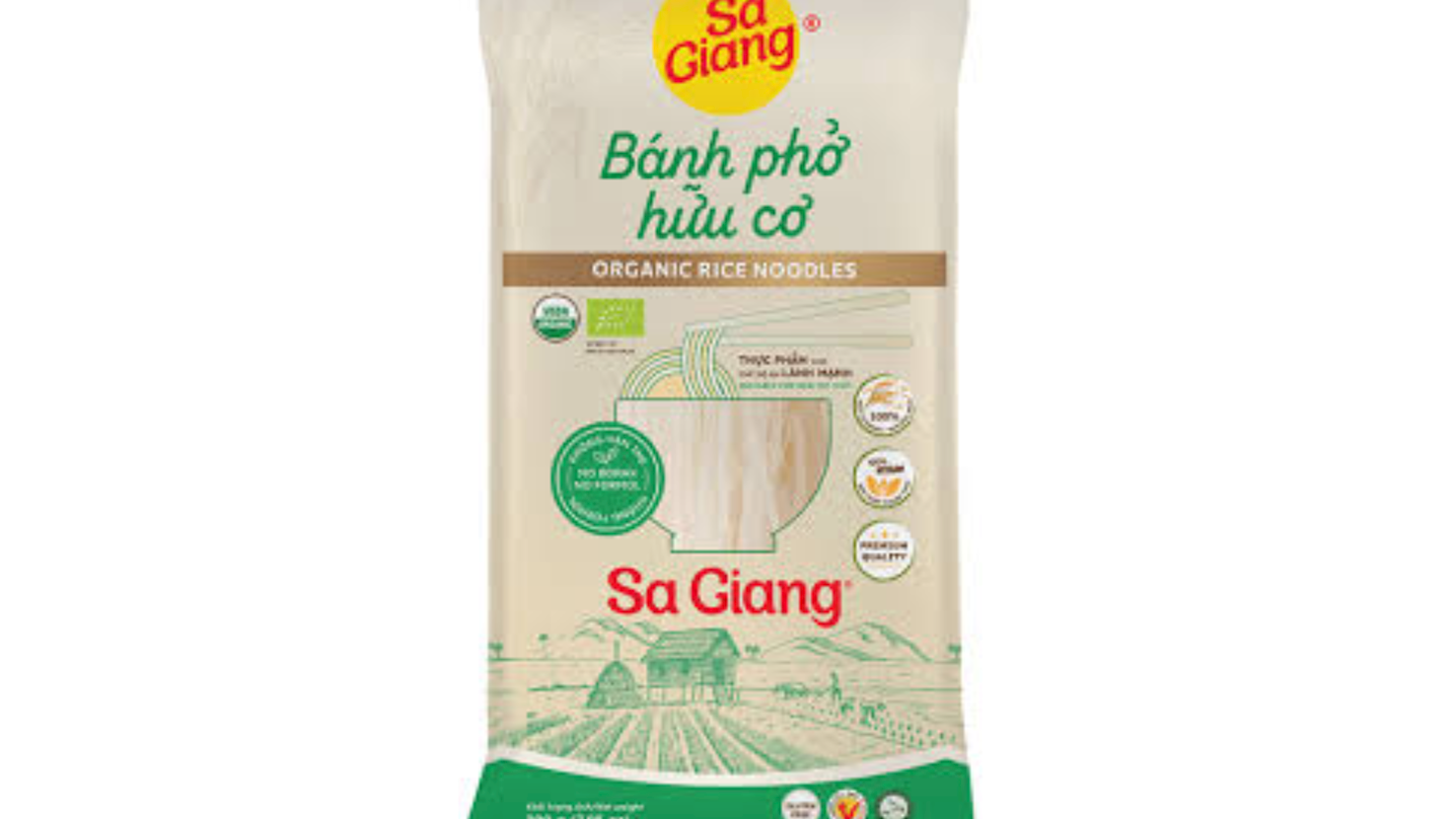
Sa Giang is a Vietnamese food company headquartered in Sa Dec in Dong Thap Province. Its history dates back to 1960 when Le Minh Triet established a small workshop producing traditional shrimp crackers. The company takes its name from a local river that flows through the Sa Dec area. Over time Sa Giang expanded its range from shrimp crackers to dried rice products including rice noodles, noodles used in traditional soups and rice paper. The company uses rice grown in the Mekong Delta where fertile alluvial soil supports cultivation throughout most of the year. Its rice paper is an industrially produced version of the traditional Vietnamese product and is intended for preparing fresh and fried rolls. In addition to standard sheets the company produces varieties in different sizes, shapes and formulations for the domestic and export markets. Sa Giang products are now exported to more than 30 countries including France, Germany, Japan, the United States and Australia.

05
Condiment

Huỳnh Khoa

4.8 ·

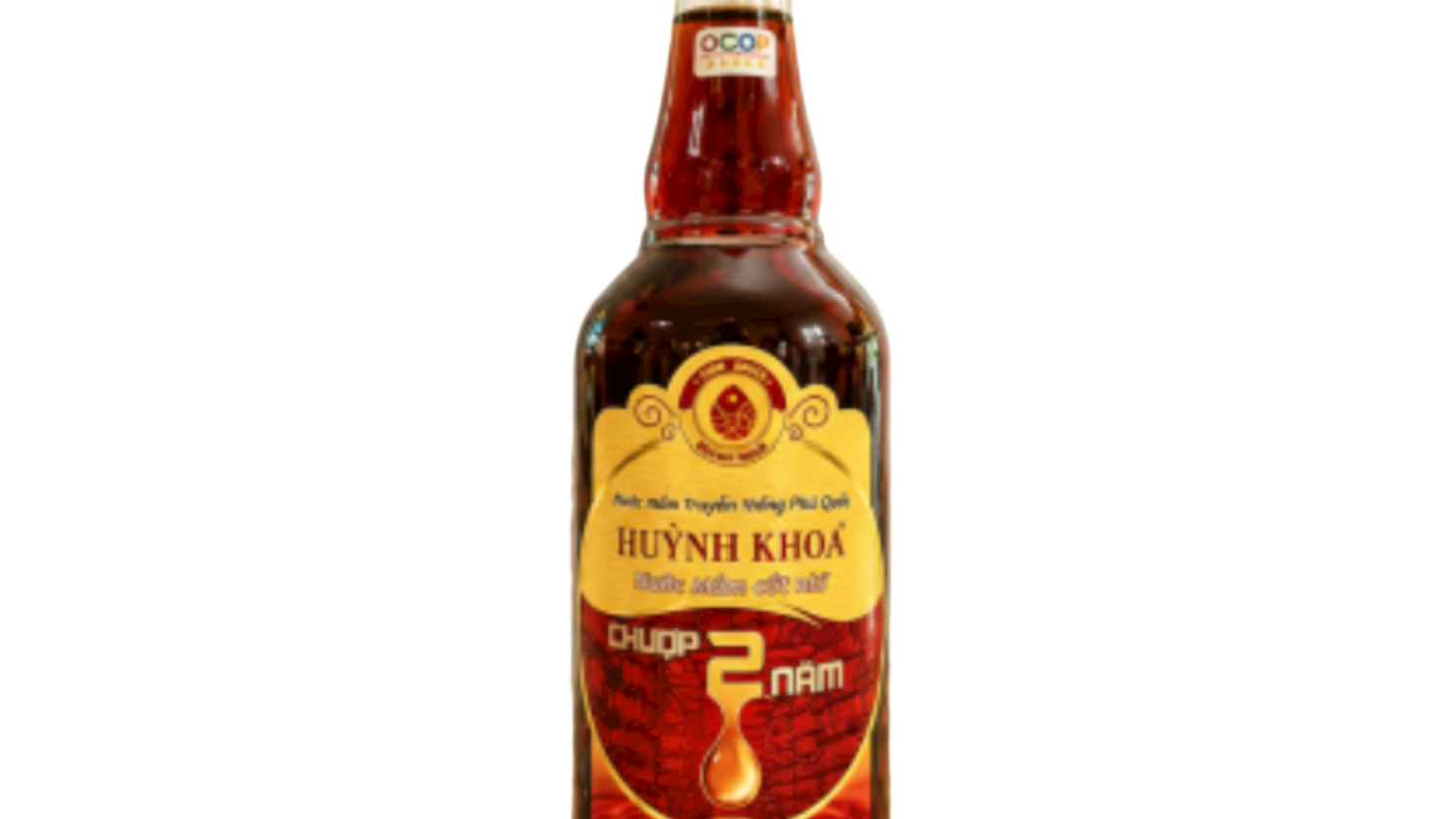
Huỳnh Khoa is a family-owned Vietnamese producer of traditional fish sauce from Phú Quốc Island. Its production history can be traced to the grandparents of the current owner who made fish sauce in small wooden barrels for family use and local trade before 1980. The next generation gradually expanded production and established the private enterprise Huỳnh Khoa in 1995 with approximately 50 fermentation barrels. The current director, Nguyễn Huỳnh Anh Khoa, represents the third generation of the family involved in the craft. After returning to Phú Quốc, he established Huỳnh Khoa Fish Sauce Trading Company Limited on June 9, 2017. The production complex is located in Suối Đá village in the Dương Tơ area. Today, it contains more than 200 large wooden fermentation barrels spread across an area of over 5,000 square meters. The fish sauce is made from fresh anchovies caught in the waters surrounding the island and sea salt according to the traditional Phú Quốc method. The fish and salt ferment for more than 12 months before the matured concentrate is gradually extracted from the wooden barrels. Production encompasses raw-material inspection, fermentation, filtration, and bottling in a closed system. The range includes traditional fish sauces with total nitrogen concentrations of 35, 40, 43, and 45 grams per liter. Production follows recognized food-safety standards while the fish sauce meets the requirements for using the protected Phú Quốc geographical indication.

06
Noodles

Huỳnh Đức

4.8 ·

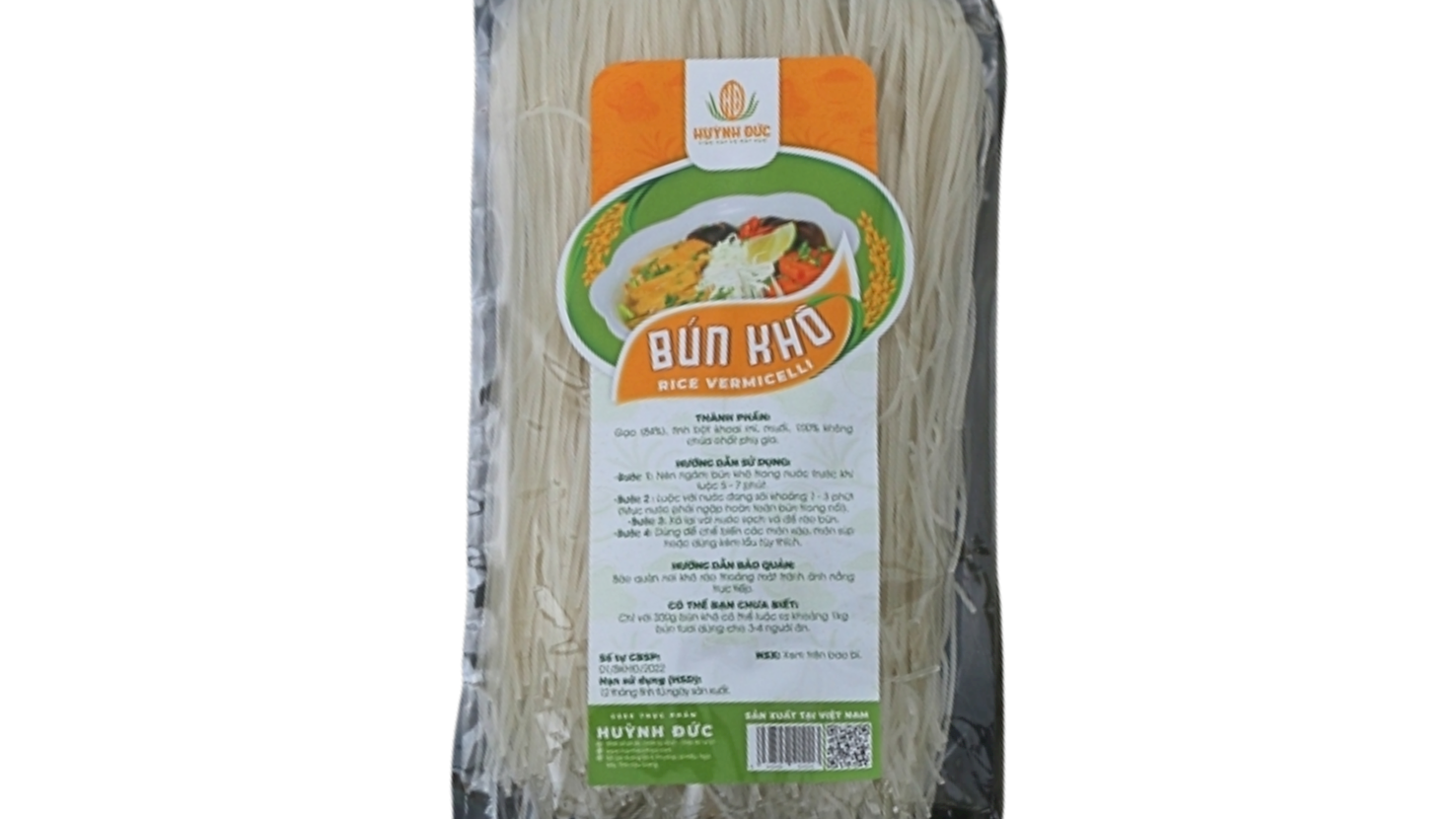
Huỳnh Đức is a Vietnamese family-owned producer of fresh and dried rice noodles from the city of Ngã Bảy in the Mekong Delta. The business originated from the Lò Bún Huỳnh Đức workshop, which has produced noodles since 1985. Trương Huỳnh Đức developed the workshop using family knowledge of noodle making passed down through five generations. After moving to Ngã Bảy with his wife during the 1980s, he established a small production operation serving local markets. Management of the family business was later taken over by his son Trương Đắc Nguyện, who began developing the production operation at the age of 22. The business was formally incorporated as Huỳnh Đức in late 2025. Its range includes traditional bún, brown rice noodles and varieties made with sweet potato, pumpkin and katuk leaves. The producer also makes flat dried phở noodles in traditional and brown rice versions. Traditional methods of preparing rice and shaping noodles have gradually been supplemented with a mechanized and enclosed production line. According to data from 2024, the facility produced more than 1,300 tonnes of noodles annually and distributed its products across more than 50 Vietnamese provinces and cities.

07
Condiment

Hương Sen

4.8 ·

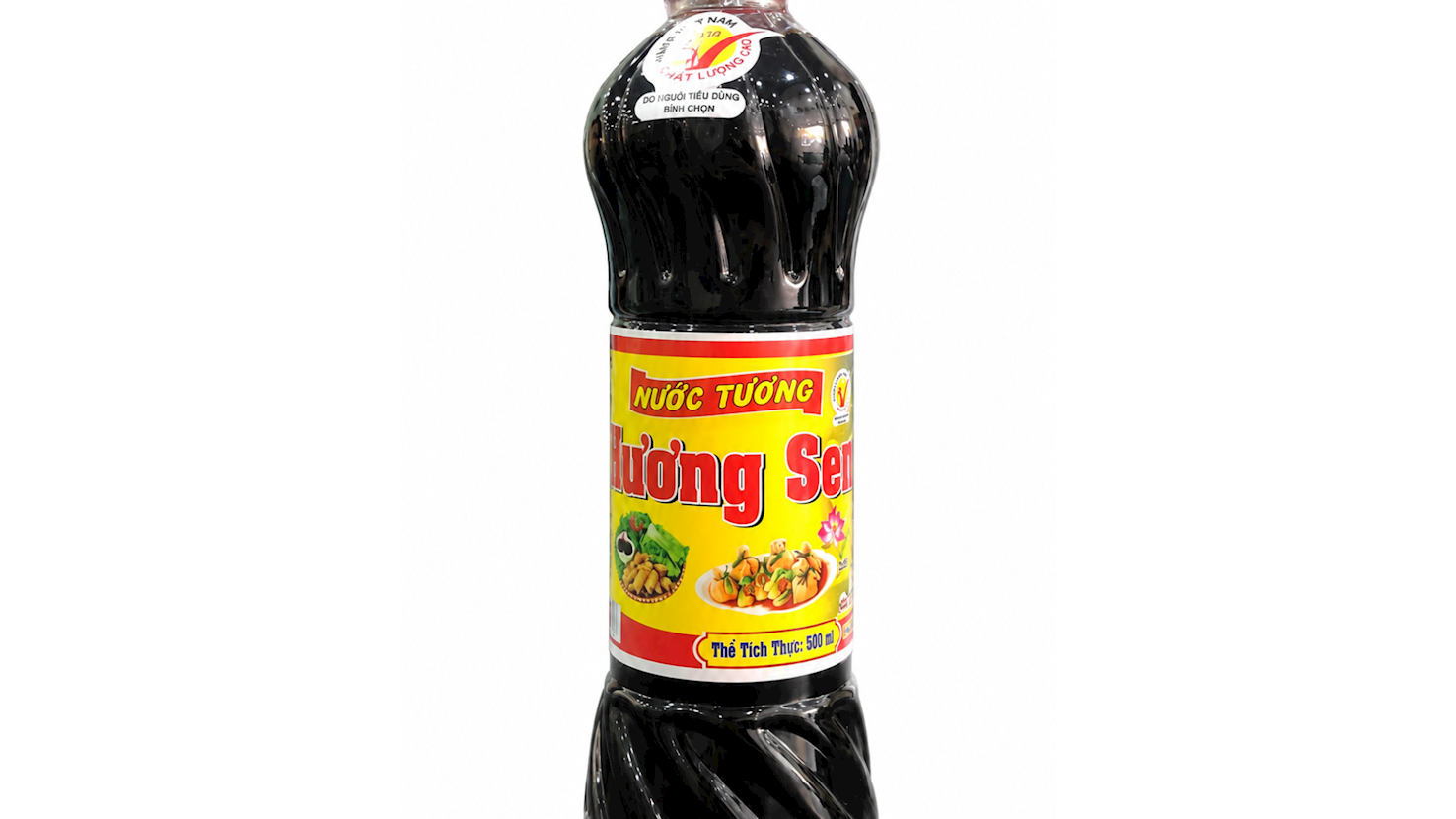
Hương Sen is a Vietnamese producer of soy sauce and fermented soybean paste based in Long Xuyên in An Giang Province. The production facility was established by Lê Văn Bàng in 1997 following his many years of experience in traditional soybean processing. The business began as a small local producer whose products were sold primarily within An Giang Province. Its current range includes soy sauce, fermented whole soybeans, and vegetarian alternatives to fish sauce. Hương Sen produces soy sauce by fermenting whole soybeans soaked in a salt solution. During this process, the natural soybean proteins gradually break down and create compounds responsible for the sauce’s salty and umami character. The producer adopted this method to replace an earlier process based on treating defatted soybean meal at high temperatures. Production takes place in a closed system with hygiene and quality controls. The finished soy sauce has a dark brown color, a moderately thick consistency, and balanced salinity. It can be used as a dipping sauce, an ingredient in marinades, or a seasoning for rice, noodles, vegetables, and tofu.

08
Paste

Thanh Bình

4.8 ·

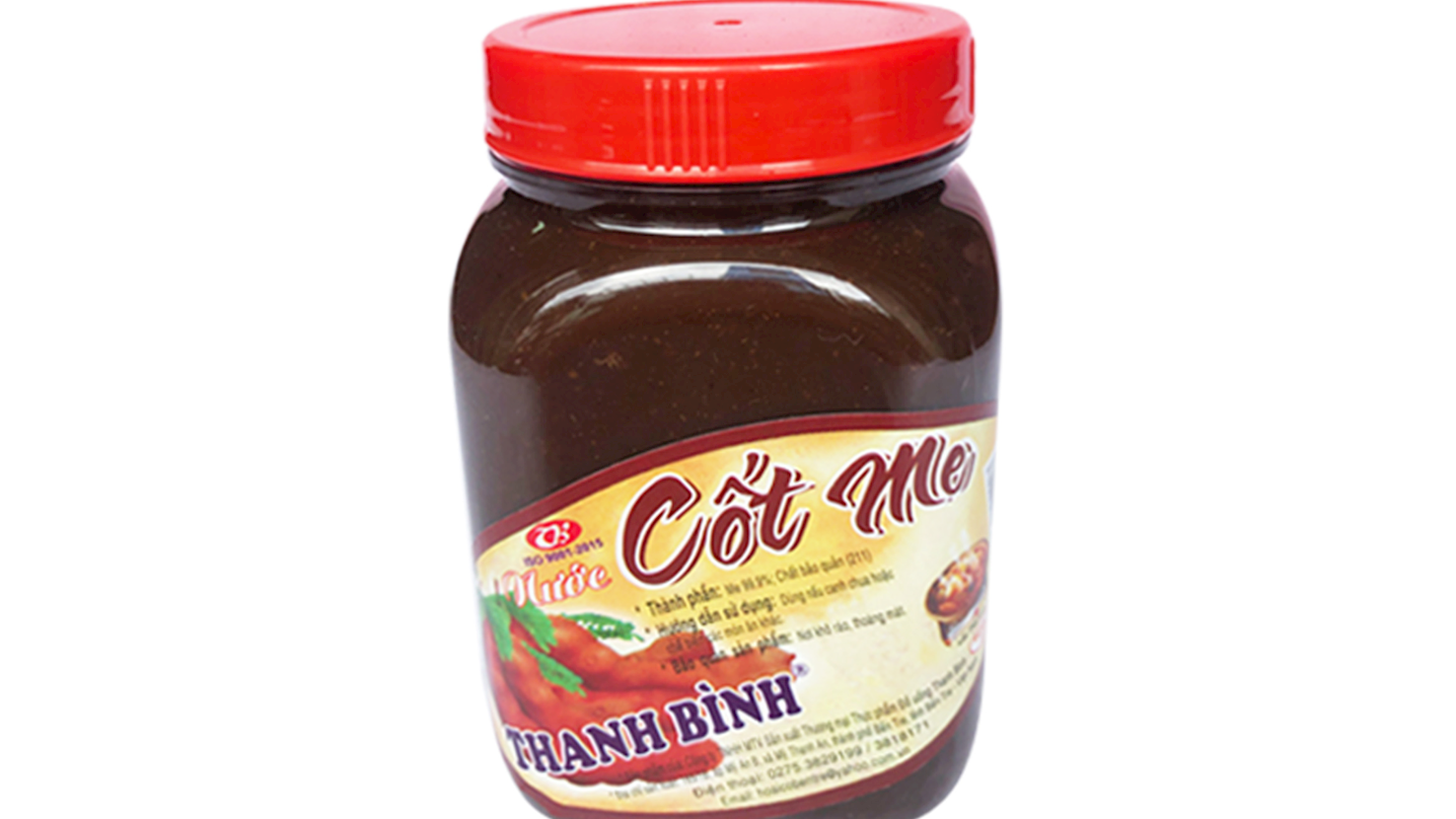
Thanh Bình is a Vietnamese food company specializing in the processing of tamarind, fruit, and other agricultural raw materials. It operates under the full name Thanh Binh Food and Beverage Production Trading Company Limited, with its production historically associated with the Bến Tre area in the Mekong Delta. The company has been operating since 2007, with Lê Thị Cẩm Thu listed as its owner and legal representative. Tamarind is one of the most important raw materials in its production portfolio. The company processes it into tamarind concentrate or paste, products for preparing beverages, and other processed foods. In addition to tamarind products, its range includes banana candies, milk rice crackers, and various preserved and processed fruit products. The natural sweet and sour character of tamarind forms the basis of the flavor profile of its tamarind-based products. Its portfolio includes concentrates in different packaging sizes intended for both beverage preparation and culinary use. The production process includes the selection of raw materials, processing, and packaging at the company’s facility. Thanh Bình states that its production is organized using modern processing lines and follows domestic and international food safety requirements. In addition to the Vietnamese market, the company’s products are distributed internationally, including tamarind products intended for export.

09
Rice

Viễn Phú

4.8 ·

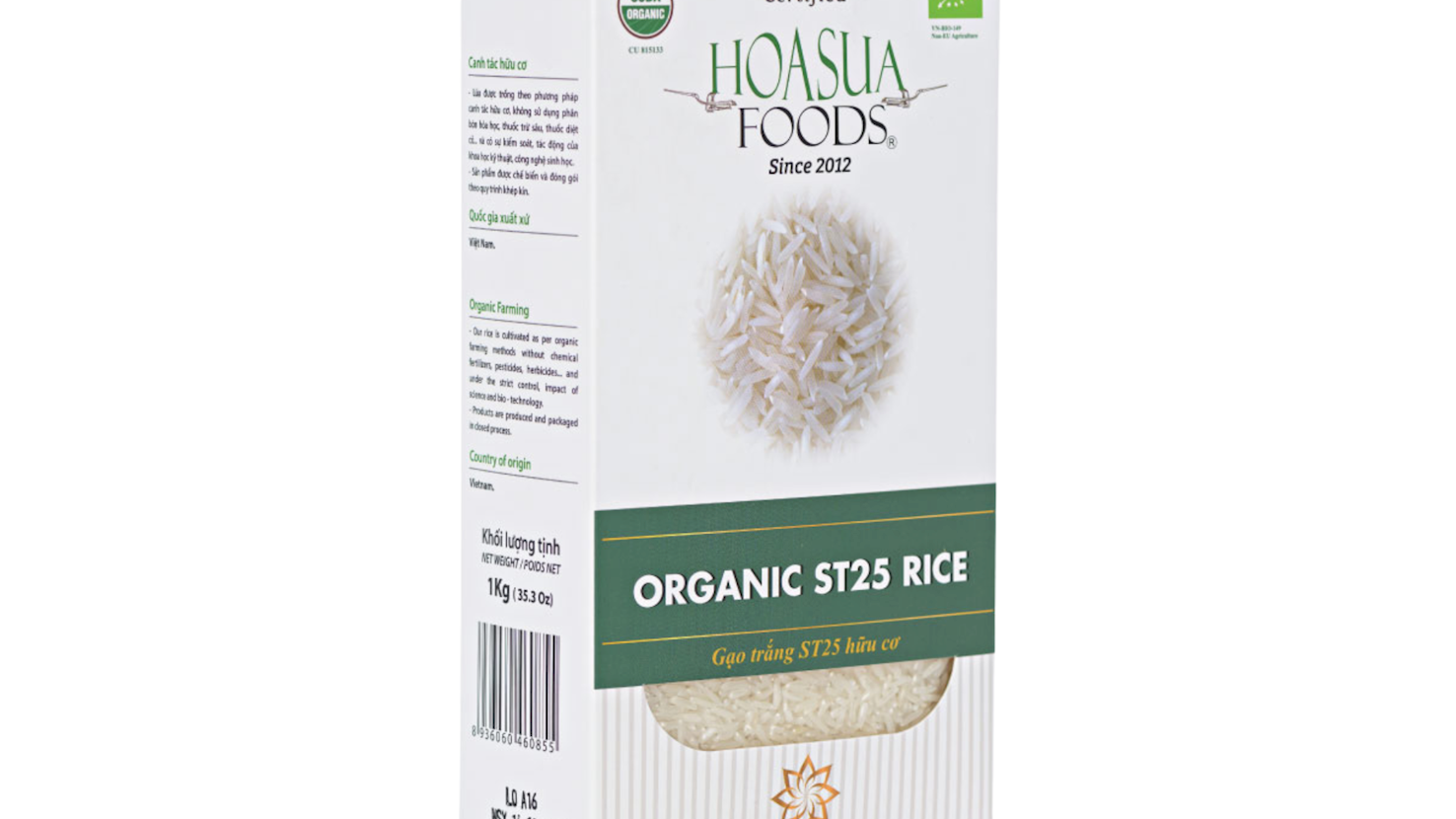
Viễn Phú is a Vietnamese agricultural company specializing in organic rice and rice-based products. In 2008, the company established an organic farm in U Minh District in Cà Mau Province in southern Vietnam. The farm covers approximately 317 hectares of land that was largely uncultivated before production began. Its fields are separated from the surrounding area by canals which serve as protective buffer zones and reduce the risk of external contamination. The rice is cultivated without synthetic fertilizers, chemical pesticides, or chemical treatments for acidic soil. Weeds are removed manually while pests are controlled using traps and approved biological preparations. Viễn Phú manages the production chain from cultivation and harvesting to the processing and packaging of finished products. Its rice is marketed under the Hoa Sữa brand which includes organic white, brown, red, and black rice. The range also includes pasta, noodles, rice paper, and other products made from organic rice. Part of the production is intended for the domestic market while the company also exports to North America, Europe, Japan, and Australia. Viễn Phú was among the first Vietnamese companies to develop certified organic rice production within a large and geographically controlled farming system.

10
Noodles

Ba Khánh

4.7 ·

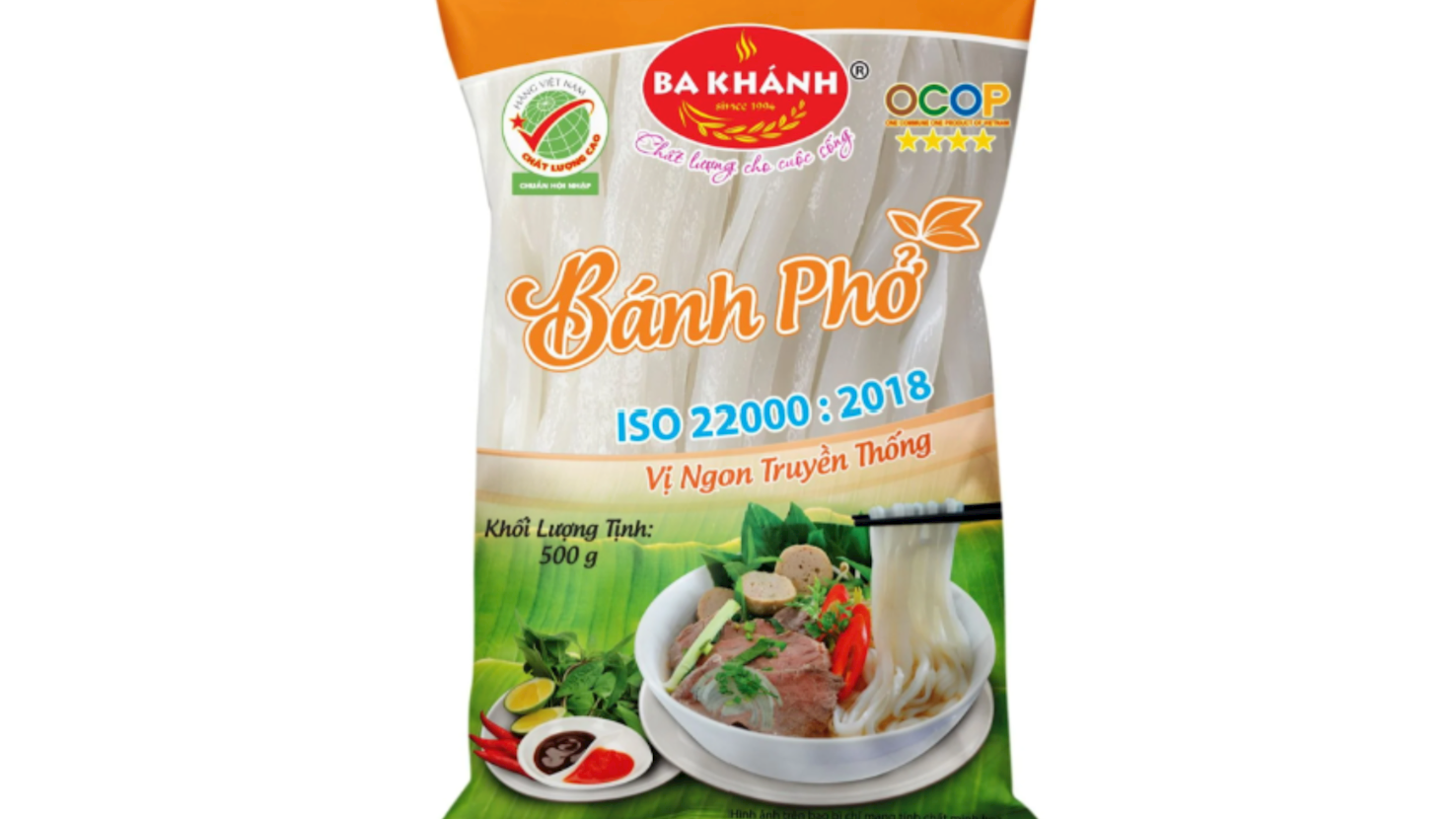
Ba Khánh is a Vietnamese producer of fresh rice noodles from Vĩnh Long City in the Mekong Delta. It officially operates as the family-run production facility Hộ kinh doanh Cơ sở sản xuất Ba Khánh. It was established by Lưu Kim Phụng and Trương Nhựt Khánh in 1994 after they separated from a family business based on four generations of noodle-making tradition. Many of its products are made from rice that remains firm after cooking and is suitable for producing elastic noodles. The family’s traditional knowledge was gradually supplemented with machinery developed and adapted by Trương Nhựt Khánh to meet the facility’s production needs. Production takes place on automated lines with controls covering raw materials, water, noodle shaping and finished products. The facility uses a reverse osmosis water purification system, while steam processing reduces the amount of water required during certain production stages. Its products are distributed through markets, shops, retail chains and general stores across the Mekong Delta and the greater Ho Chi Minh City area. In 2021, the facility also received a Vietnamese recognition for product quality and readiness for market integration.

Best Mekong Foods

01
Chicken Dish

Gà kho sả ớt (Lemongrass Chicken)

3.9 ·

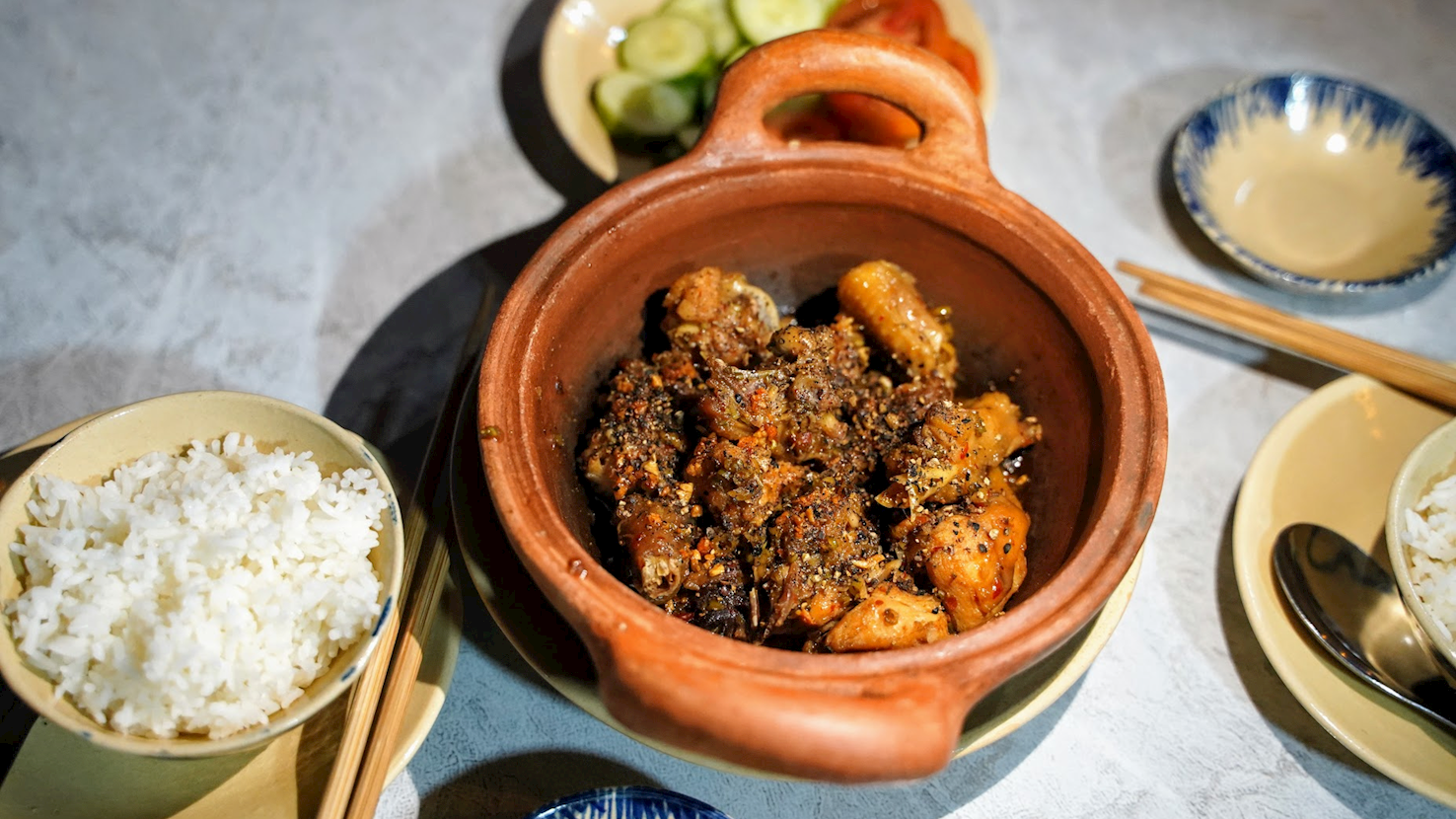
Gà kho sả ớt is a traditional chicken dish that’s especially popular in the Mekong Delta area. The dish is usually prepared with a combination of chicken pieces, lemongrass, hot chili peppers, shallots, garlic, sugar, salt, oil, turmeric, and fish sauce. The chicken pieces are first marinated in lemongrass, turmeric, salt, sugar, garlic, shallots, and fish sauce, then stir-fried in oil and simmered in liquid until tender. Once done, the dish is typically served with hot rice or noodles. If desired, coconut juice can be added to the pot as the chicken simmers.

02
Dessert

Pop Rice

3.6 ·

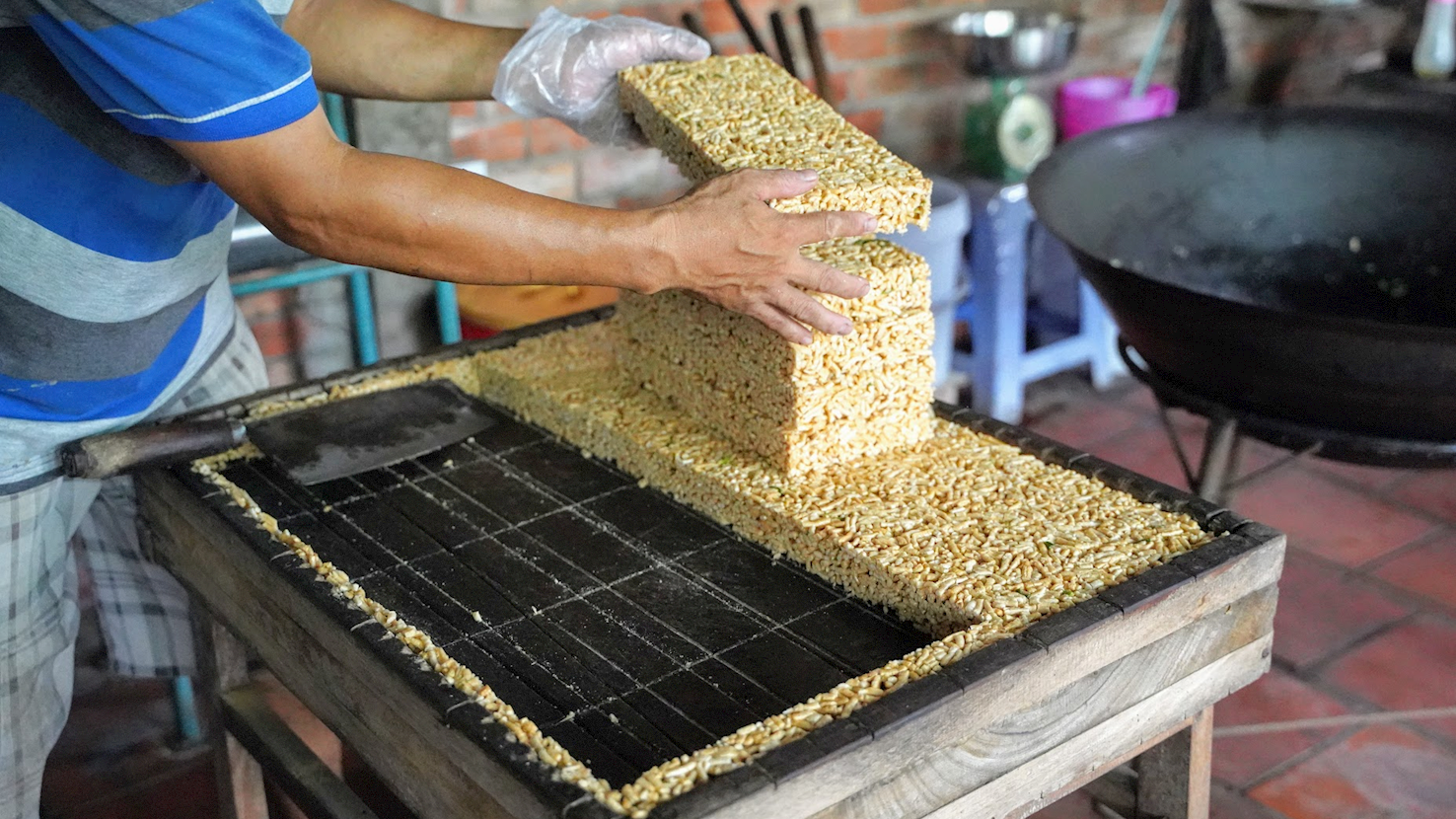
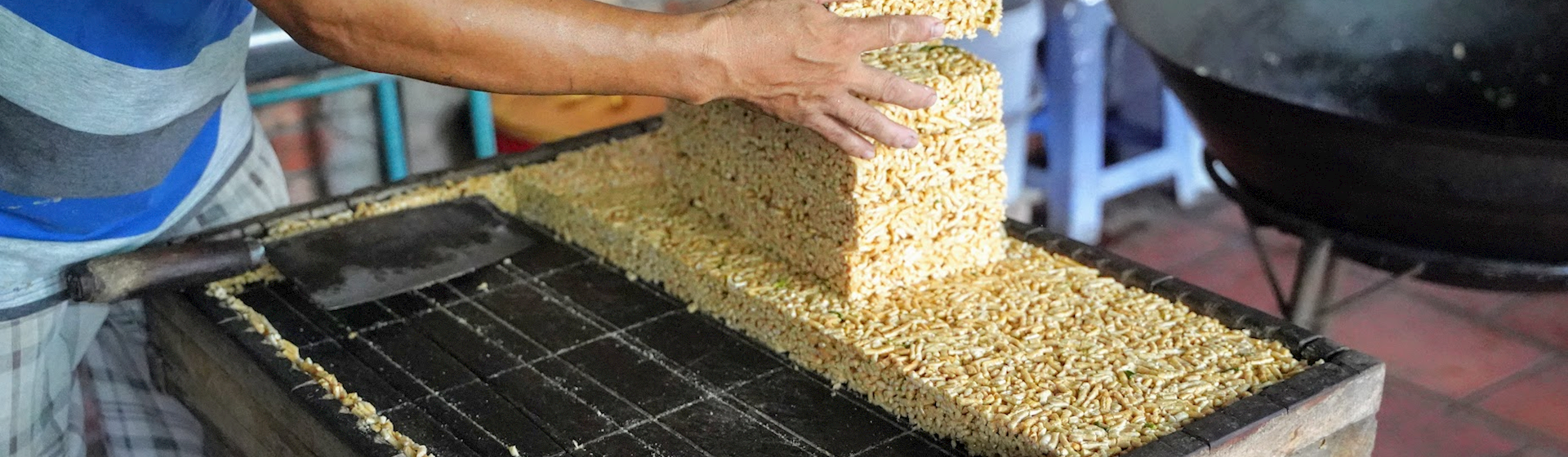
Pop rice is a traditional puffed rice treat originating from the Mekong Delta area. This crispy puffed rice is made with a decades-old technique. Whole grains of rice with their husks intact are poured into a large pot that’s previously been filled with black sand from the Mekong River. As the mixture is stirred over a fire, the rice begins to puff and pop, and it is later filtered twice through a mesh in order to remove the black sand and the remaining husks. The crispy rice is then placed into another wok-shaped pot and mixed with a syrup consisting of sugar and water. The syrup can be additionally flavored with anything from coconut milk, green tea, and caramel to peanuts or ginger. While still hot, the rice and syrup mixture is flattened with a rolling pin and cut into squares before it’s enjoyed or sold to hungry customers.

03
Fish Soup

Canh chua (Sweet and Sour Tamarind Soup)

3.6 ·

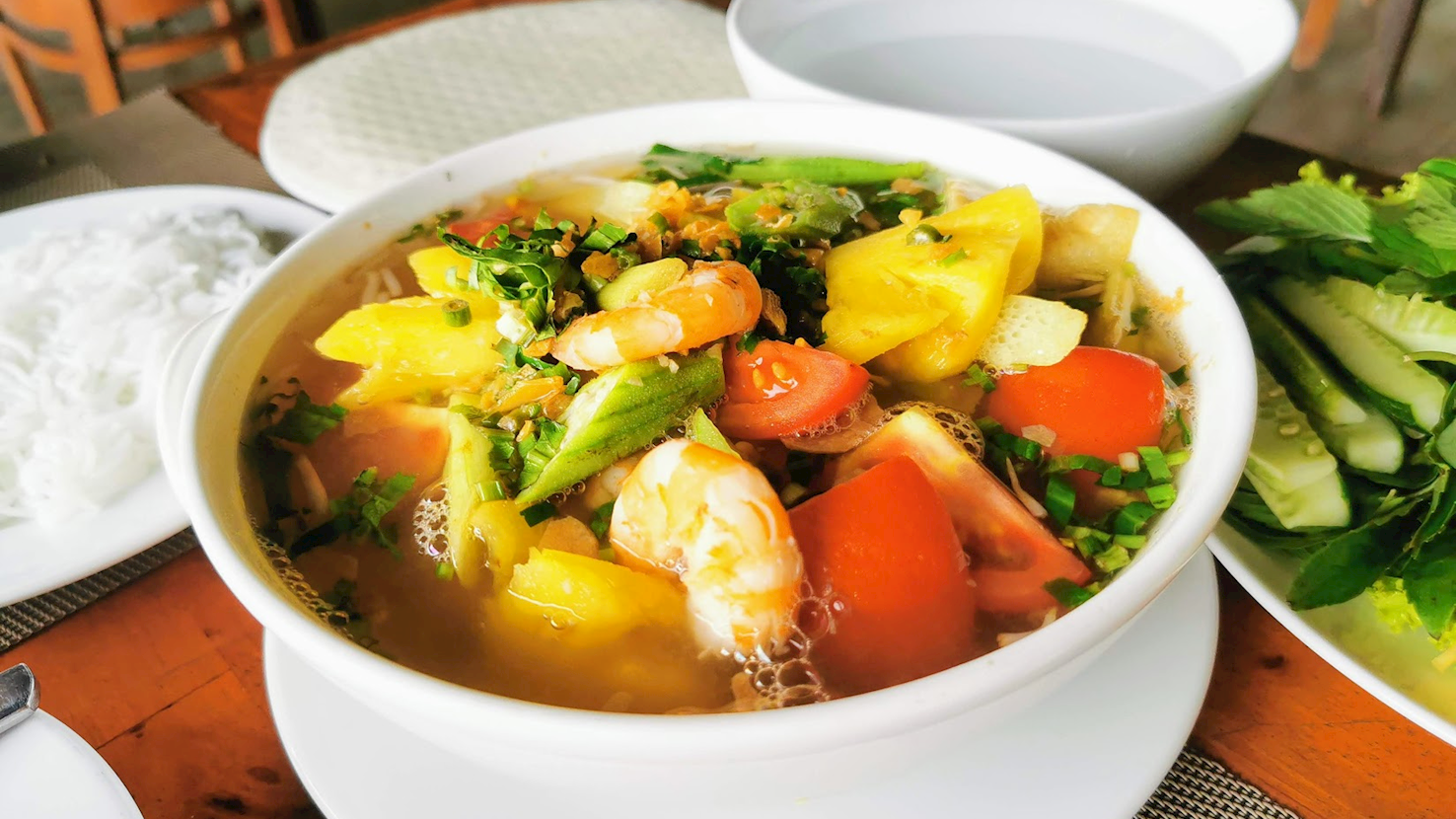
Canh chua is a popular Vietnamese soup originating from the Mekong Delta region. It's characterized by its contrasting flavors - sour, sweet, and savory. The soup incorporates ingredients such as seafood (eel, shrimp, snakehead, catfish), tomatoes, okra, pineapple, tamarind, bean sprouts, and fresh herbs with a tangy flavor. Traditionally, canh chua is served either with rice vermicelli noodles or with a side of steamed jasmine rice. There are numerous versions of the soup depending on the ingredients used in it - besides fish, it can be made with water spinach, chicken, bamboo shoots, mustard greens, pork, or beef. Due to its nutritional value, health benefits, and short cooking time, canh chua has the status of a quintessential Vietnamese meal.

04
Noodle Dish

Bún mắm (Fermented Fish Noodle Soup)

3.5 ·

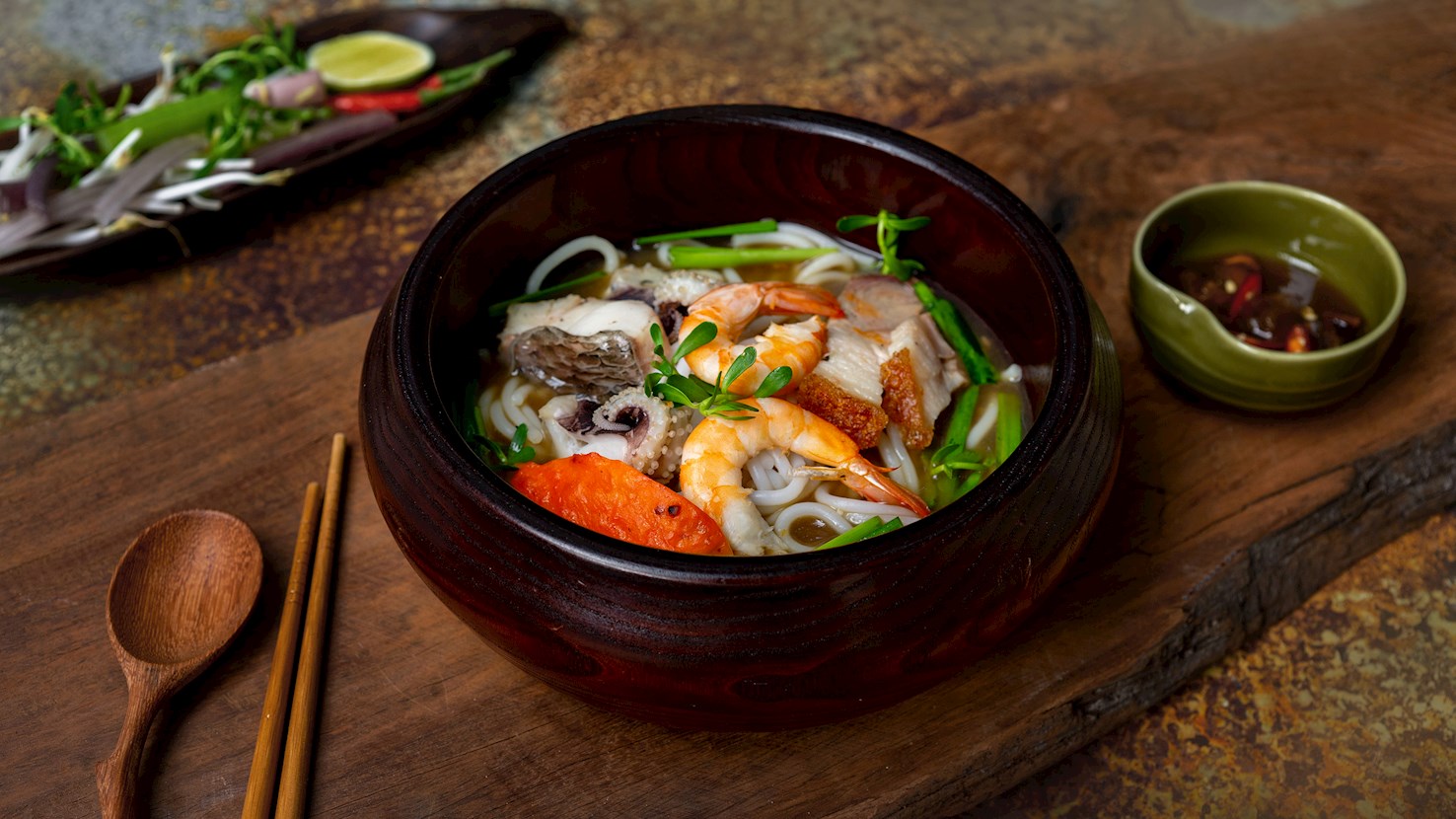
Bún mắm is a traditional dish originating from the province of Soc Trang. The dish consists of bún rice vermicelli noodles, the murky, salty, and fermented fish-flavored mắm broth, squid, shrimp, catfish, eggplant (which soaks up the broth), fish cakes, and roasted pork belly. Some of the most important ingredients include fresh herbs such as rau dang (bitter knotgrass), gia (bean sprouts), he (chives), bap chuoi (banana blossom), keo neo (yellow velvetleaf), rau nhut (water mimosa), and rau muong (morning glory). The aromas of bún mắm are very rich and often pungent. The dish is usually served with lime wedges and sliced red chili on the side.

05
Appetizer

Bông bí chiên giòn (Deep-Fried Pumpkin Flowers)

n/a ·

Bông bí or pumpkin flowers are a prized Vietnamese specialty originating from the cuisine of the Mekong Delta. They are characterized by a slightly sweet flavor and their versatility – the flowers can be used in soups and hot pots, sautéed with meat, or stuffed and deep-fried. The most common way of preparing the flowers is by deep-frying them (bông bí chiên giòn). A tempura-style batter is made with flour, cold water, salt, pepper, eggs, and a bit of yeast. They are dipped into the batter and fried in hot oil until golden brown and crispy. Once done, the pumpkin flowers are usually served as an appetizer with dipping sauces such as nuoc cham on the side, made with fish sauce, sugar, lime juice, and garlic.

06
Snack

Bánh cống (Fried Shrimp Cake)

n/a ·

Bánh cống is a traditional cake that's eaten as an afternoon or evening snack. It's made with a combination of green beans, shrimp, baking powder, onions, spices, and rice flour. Once prepared, the batter is poured into a mold called cai cống, and it's then deep-fried in hot oil until golden brown. The cake is traditionally served with sweet and sour fish sauce, and it's often served on a lettuce leaf, then garnished with herbs and pickles.

07
Soup

Lẩu mắm Châu Đốc (Fermented Fish Hot Pot)

n/a ·

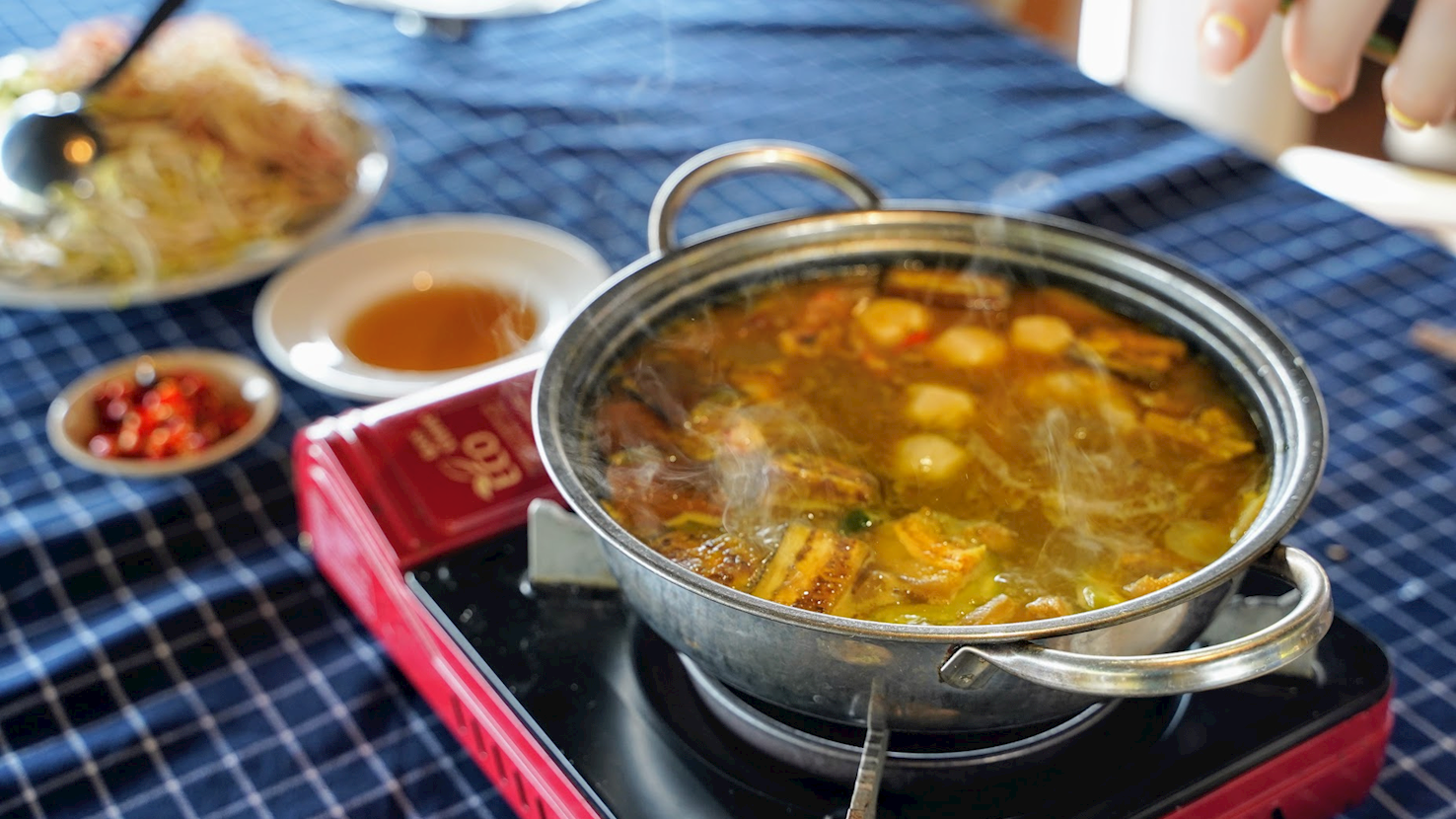
Lẩu mắm Châu Đốc is a traditional hot pot dish originating from Châu Đốc. The broth for this hot pot is made from fermented pastes such as mam sac, mam linh, and mam tren, all of them usually sweet and salty. Mam sac is an aromatic base for the hot pot, made by fermenting ca sac fish with various ingredients such as pineapple, rice wine, lemongrass, salt, and starfruit. Mam tren is used to thicken the broth and provide a sweet, salty, and savory flavor. Mam linh finishes the broth off with its tart and buttery flavors. Apart from these three, there can be additional mams in the broth, depending on the cook. What is later added to the broth is a huge amount of Mekong’s ingredients such as squid, shrimp, eel, anchovies, herbs, flowers, vegetables, and freshwater fish so you can truly taste the whole Mekong Delta in one bowl.

08
Rice Dish

Cơm dừa tép rang (Coconut Steamed Rice with Baby Shrimp)

n/a ·

Cơm dừa tép rang is a traditional dish originating from Ben Tre, famous for its coconuts. The dish consists of rice that’s steamed in a coconut and served with roasted baby shrimp on the side. The top of the coconut is cut off and the juice is taken out. The rice is soaked in the same coconut juice before it’s placed inside the coconut with coconut juice and additional ingredients such as carrots, onions, herbs, lotus seeds, peas, or pieces of squid. The lid is placed back on the coconut and it’s steamed until the ingredients inside are fully cooked and the flavors blend together. The rice should be golden and fragrant. The dish is served with shrimps that have been caramelized with coconut juice and selected seasonings.

09
Noodle Soup

Hủ tiếu Mỹ Tho (Vietnamese Noodle Soup with Pork and Shrimp)

n/a ·

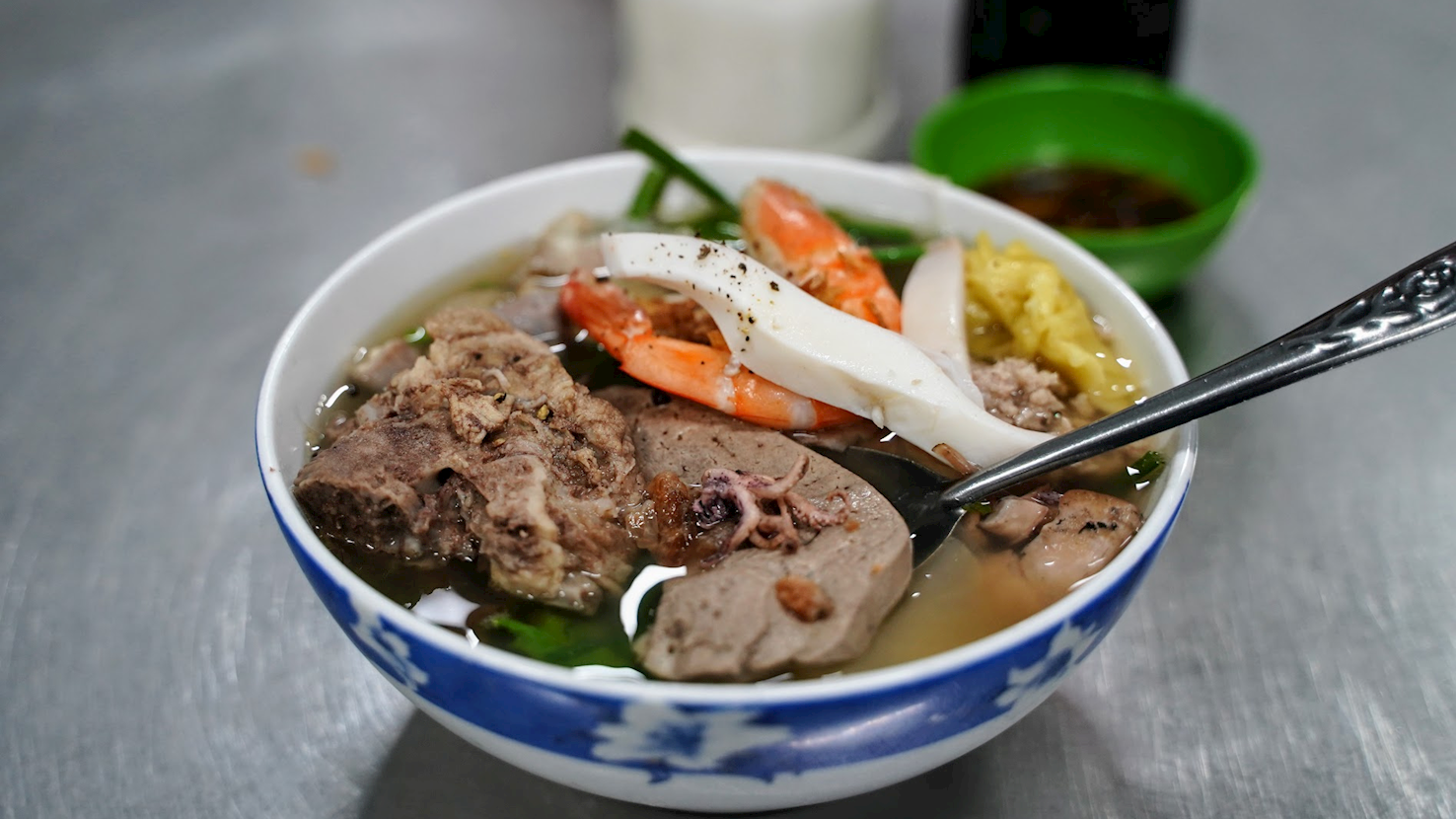
Hủ tiếu Mỹ Tho is a traditional dish originating from Mỹ Tho in the Mekong Delta. This rice noodle soup was introduced to the region as an ancient Chinese noodle soup from the 17th century, and it has been popular in Mỹ Tho since the 1960s. The components of the dish include the locally made rice noodles, the toppings, and the broth. The noodles are made from a local rice variety named Go Cat, which gives the noodles a crunchy and slightly tough consistency. The toppings usually include sautéed minced garlic, ground pork, quail eggs, shrimp, pork liver, and lime juice. The broth is made by simmering beef, pork, and chicken bones with grilled onions, caramelized pineapple, dried seafood, ginger, and various spices for up to 8 hours. The components can all be in the same bowl, but the broth can also be served separately when people enjoy the dry version of this noodle soup.

10
Noodle Soup

Bún cá Kiên Giang (Kiên Giang Fish and Shrimp Noodle Soup)

n/a ·

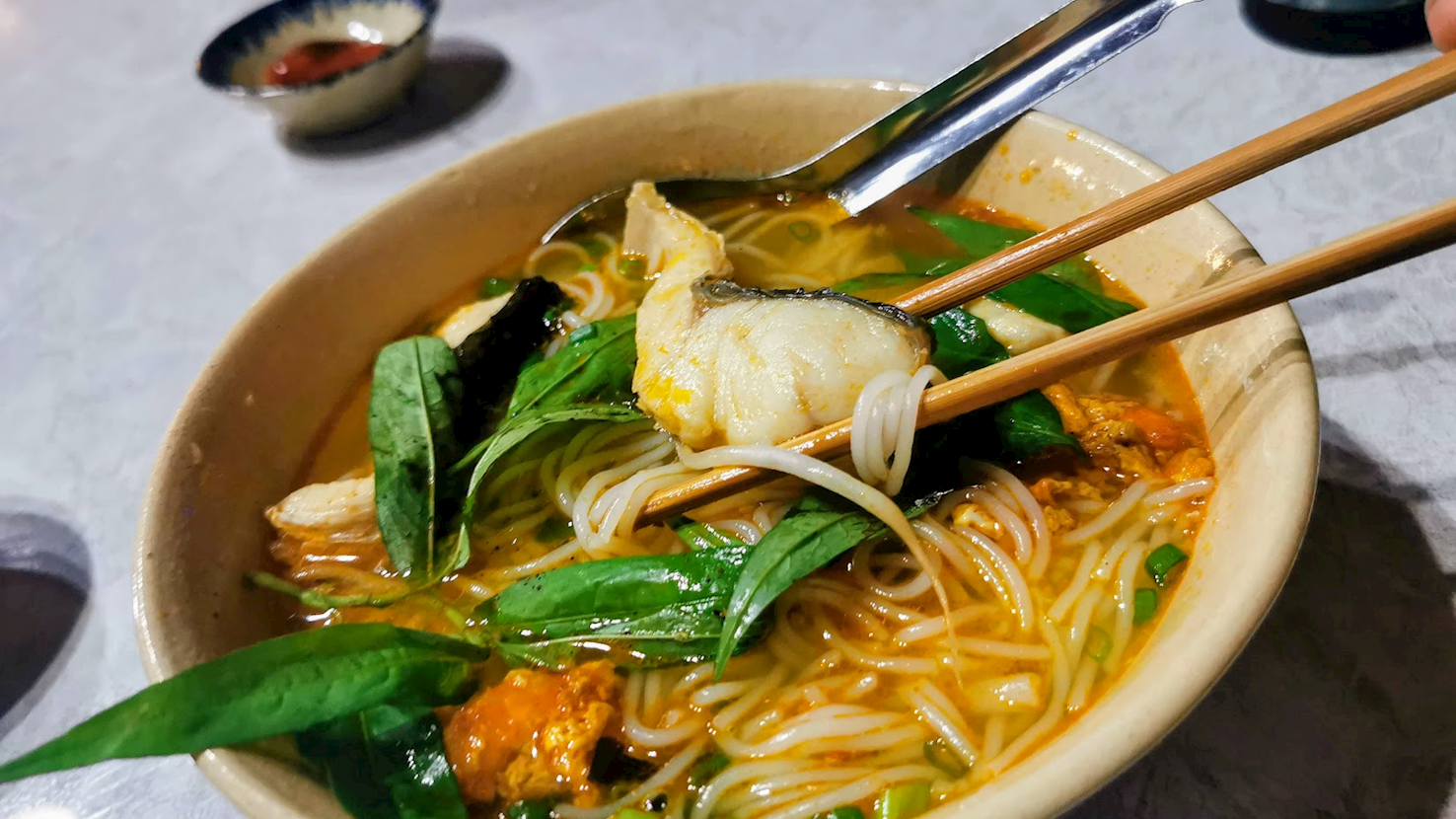
Bún cá Kiên Giang is a traditional noodle soup originating from Kiên Giang in southern Vietnam. The broth is traditionally made with a whole snakehead fish, but modern cooks opt for a rich stock made from pork bones. Although there are some variations, the dish is usually prepared with a combination of shrimps, fish sauce, oil, onions, salt, sugar, garlic, pickled leeks, hot chili peppers, eggs, paprika or annatto, rice noodles, mung bean sprouts, scallions, rau ram (Vietnamese coriander), cucumbers, and catfish or tilapia fillets. This nourishing noodle soup is typically served with mint sprigs and lime wedges on the side.

About this Ranking

TasteAtlas food rankings are based on the ratings of the TasteAtlas audience, with a series of mechanisms that recognize real users and that ignore bot, nationalist or local patriotic ratings, and give additional value to the ratings of users that the system recognizes as knowledgeable.

TasteAtlas Rankings should not be seen as the final global conclusion about food. Their purpose is to promote excellent local foods, instill pride in traditional dishes, and arouse curiosity about dishes you haven’t tried.

The initial list of top producers was compiled based on available reviews, awards, local recommendations, media and blog coverage, and consumer reviews. The list will be updated with ratings from TasteAtlas local ambassadors and TasteAtlas users.

What People Say

Similar Lists