Top 17 German Lagers

Last updated on July 01, 2026

Best German Lagers

01

Schlenkerla

5.0 ·

Schlenkerla is a legendary Bavarian tavern and an iconic symbol of beer culture, located in the heart of Bamberg’s old town, with a documented brewing tradition dating back to the year 1405. Today, under the guidance of the sixth generation of the Trum family, Schlenkerla continues to preserve the spirit of centuries past - its authentic Gothic ambiance, beer poured from wooden barrels, and unwavering dedication to traditional recipes make it a truly unique place in the world of beer.

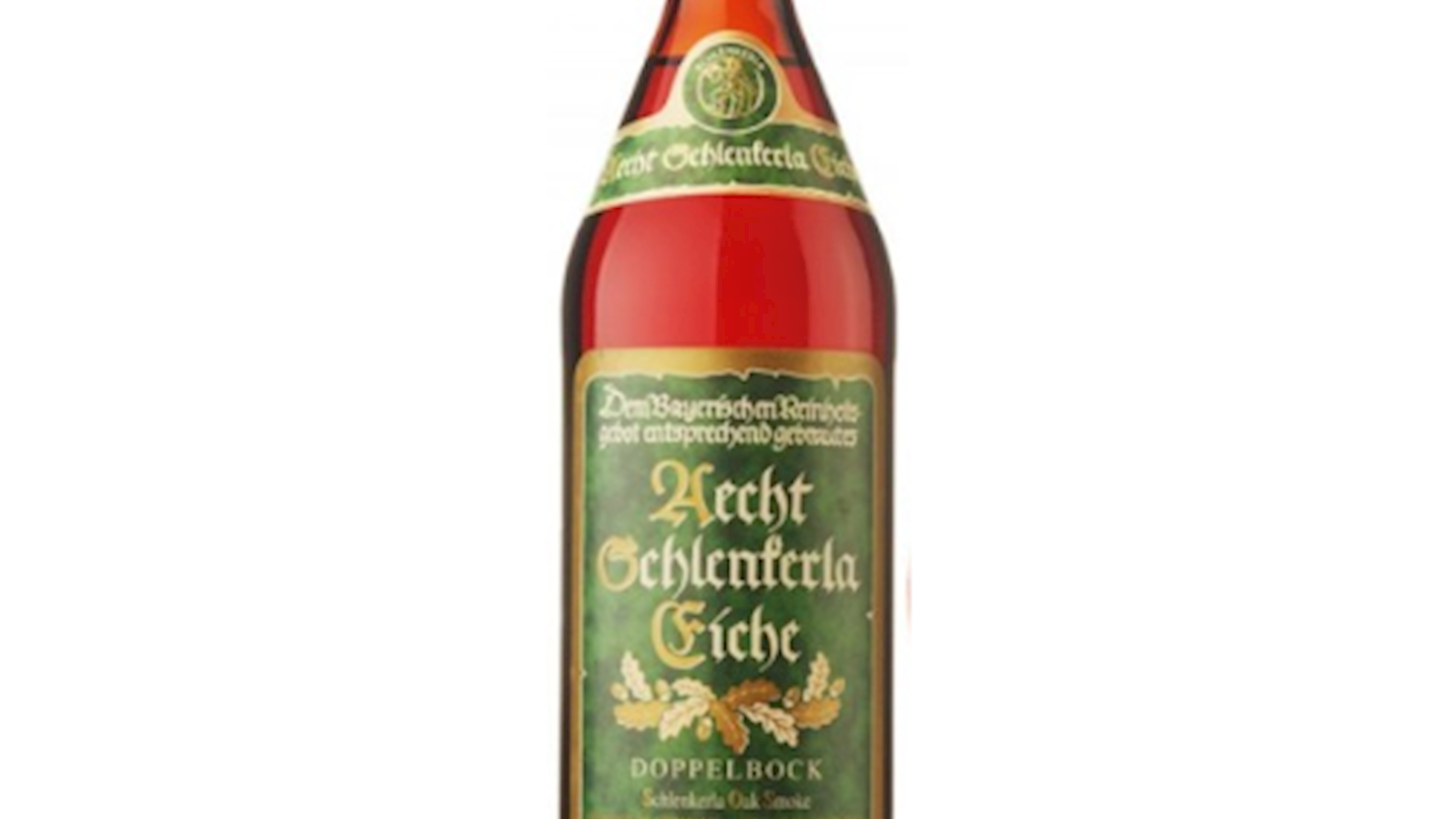
Its most famous brew, Aecht Schlenkerla Rauchbier Märzen, is a bottom-fermented dark lager with 13.5° Plato and about 5.1% alcohol, renowned for its pronounced smoky character, achieved by drying the malt over beechwood fires. In addition to the classic version, the brewery also offers a variety of other smoked beers: Rauchweizen, Urbock, Eiche and a lighter lager with subtle smoky notes.

Schlenkerla is an essential destination for all lovers of authentic beer styles and brewing heritage - many say that the true character of Rauchbier only reveals itself with the third sip.

Awards
European Beer Star - Gold (2023)
Untappd - 3.7
02

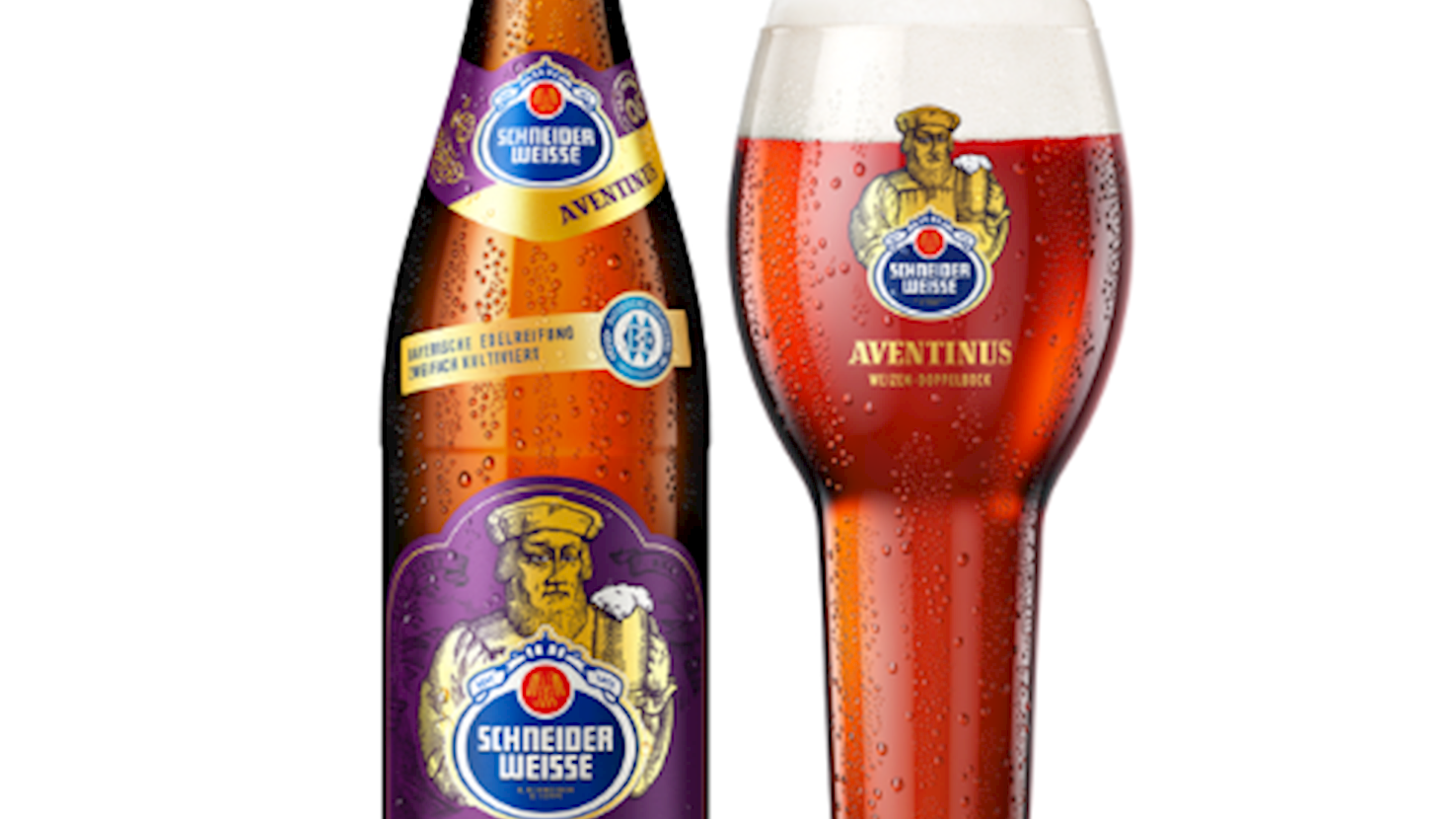
Schneider Weisse

4.9 ·

Schneider Weisse is a renowned Bavarian brewery dedicated exclusively to brewing wheat beers - Weissbier, with its headquarters in the historic town of Kelheim. It was founded in 1872, when Georg Schneider I became the first commoner granted royal permission by King Ludwig II to brew wheat beer - a privilege previously reserved only for nobility.

In 1927, the brewery relocated from Munich to the former royal “Weisses Bräuhaus” in Kelheim, where it still operates today, upholding the highest standards of Bavarian brewing tradition. Their beers are known for their rich and complex aromatic profiles, often featuring notes of banana, clove, caramel, and dark fruit.

Schneider Weisse produces between 250,000 and 300,000 hectoliters of beer annually, with about a quarter of its production exported to more than 25 countries worldwide. The brewery successfully blends generations of family tradition with a modern, innovative approach - especially through experimental styles.

Thanks to this commitment to authenticity and quality, Schneider Weisse enjoys a strong reputation among craft beer enthusiasts and stands as one of the pillars of German brewing culture.

Awards
Beer Advocate - 96 World-Class
European Beer Star - Gold (2023, 2022, 2021, 2020)
03

Bayerische Staatsbrauerei Weihenstephan
4.9 ·

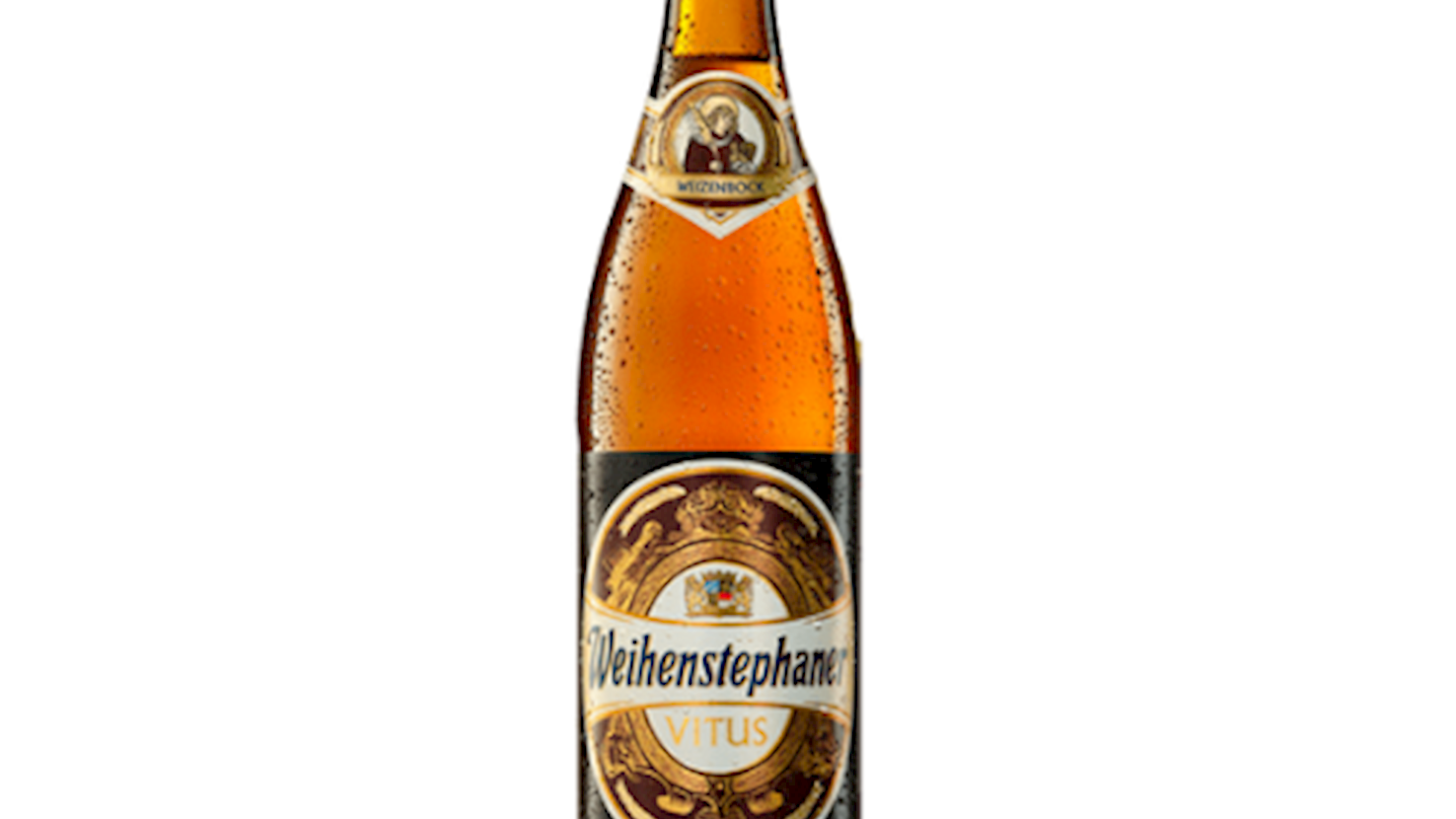
Bayerische Staatsbrauerei Weihenstephan is the oldest still-operating brewery in the world, located in the town of Freising, in the German federal state of Bavaria. Its origins date back to the year 1040, when the Benedictine monastery of Weihenstephan received official permission to brew and sell beer, although records suggest brewing activity on the site existed several centuries earlier.
Today, Weihenstephan operates as a state-owned brewery under the authority of Bavaria and is closely affiliated with the Technical University of Munich, which houses the renowned Faculty of Brewing and Fermentation Science. The brewery combines a thousand-year-old tradition with the latest brewing technology, producing high-quality beers in accordance with the German Beer Purity Law (Reinheitsgebot). Its most famous product is Weihenstephaner Hefeweissbier, an unfiltered wheat beer known for its rich aromas of banana, clove, and bread.

The brewery is situated on Weihenstephan Hill above Freising and is open to visitors, offering guided tours and tastings that showcase the intersection of science, craftsmanship, and history. As a symbol of German brewing heritage, Weihenstephan not only preserves its legacy but also sets global standards for beer quality and excellence.

Awards
Beer Advocate - 98 World-Class
Beer Advocate - 95 World-Class
04

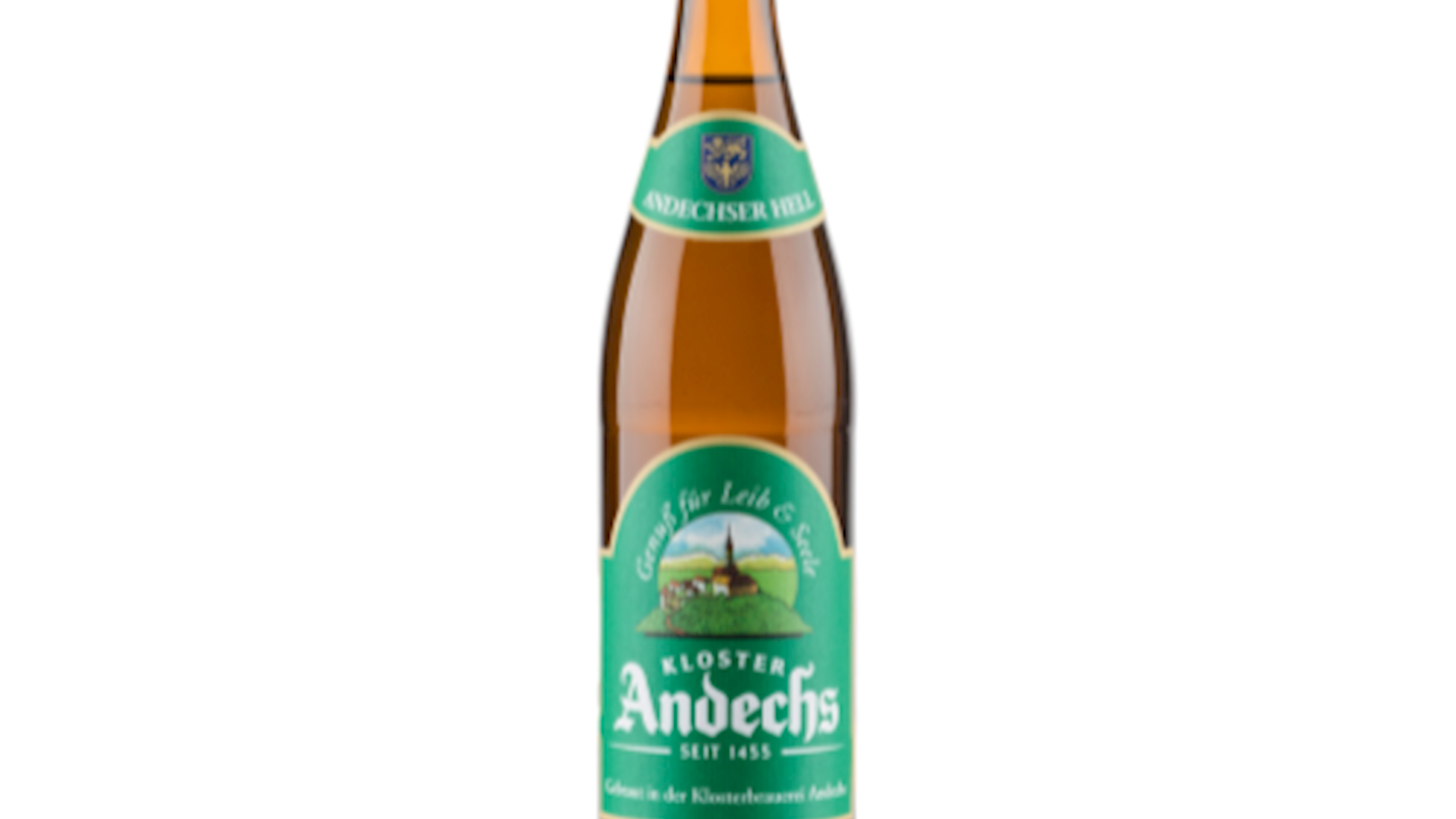
Klosterbrauerei Andechs

4.8 ·

Klosterbrauerei Andechs, the monastic brewery located on the famed Holy Mountain in Bavaria, is one of the few truly authentic monastic breweries in Germany still operated by Benedictine monks, entirely independent from any corporate ownership. Its brewing tradition officially dates back to 1455, while its spiritual and hospitable roots reach as far as 1128, when the monks began serving pilgrims visiting this sacred site.

What sets this brewery apart is the unique fusion of centuries-old Benedictine craftsmanship with state-of-the-art brewing technology. The production process includes traditional triple decoction mashing, the exclusive use of aroma hops, carefully controlled fermentation, and modern, technically advanced brewing facilities.

The result is a range of beers of exceptional quality, rich in flavor and remarkable in consistency - testament to the enduring connection between faith, labor, and devotion.

Awards
Beer Advocate - 95 World-Class
Untappd - 3.6
05

Ayinger Privatbrauerei

4.5 ·

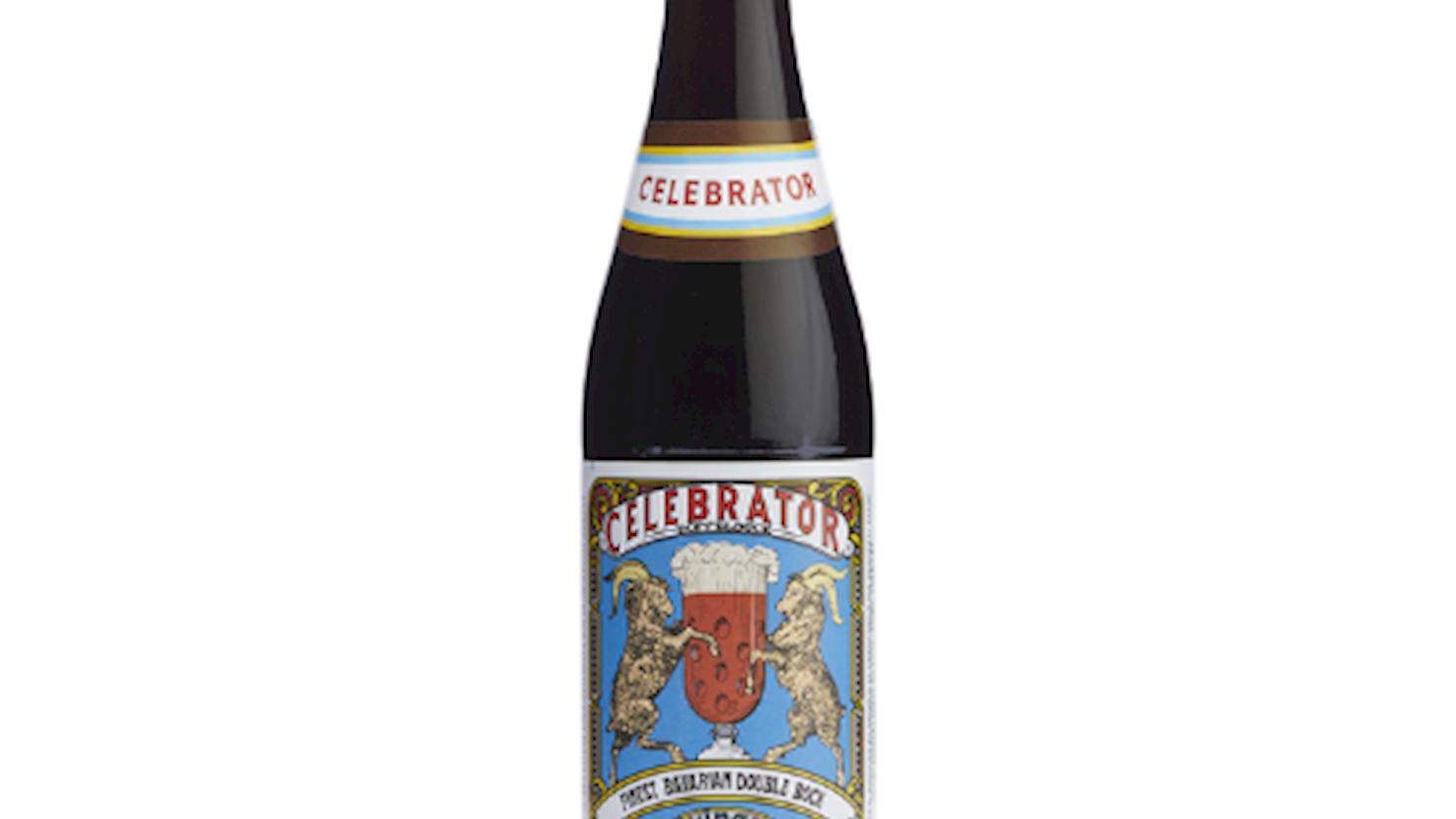
Ayinger Privatbrauerei is located in the idyllic Bavarian village of Aying, about 25 kilometers southeast of Munich, and has operated as a family-owned business since 1878. Over more than a century of brewing tradition, the brewery has built a reputation for producing authentic, high-quality beers crafted according to traditional methods and in strict adherence to the German Beer Purity Law - Reinheitsgebot.

The key to its exceptional quality lies in the use of the purest local ingredients, including water from its own St. Andreas spring, carefully selected malt, and hops from the Hallertau region. Ayinger offers a wide range of beer styles - from classic helles and dunkles lagers, to wheat beers and seasonal brews, all the way to the legendary doppelbock “Celebrator”, which enjoys international acclaim.

By combining tradition with modern technology, the brewery achieves artisanal precision while maintaining high sustainability standards. In addition to brewing, Ayinger plays an important role in the local community - with its own tavern, hotel, and guided tours that celebrate Bavarian beer culture and hospitality.

Awards
Beer Advocate - 96 World-Class
World Beer Cup - Gold (2024)
06

Augustiner-Bräu

4.5 ·

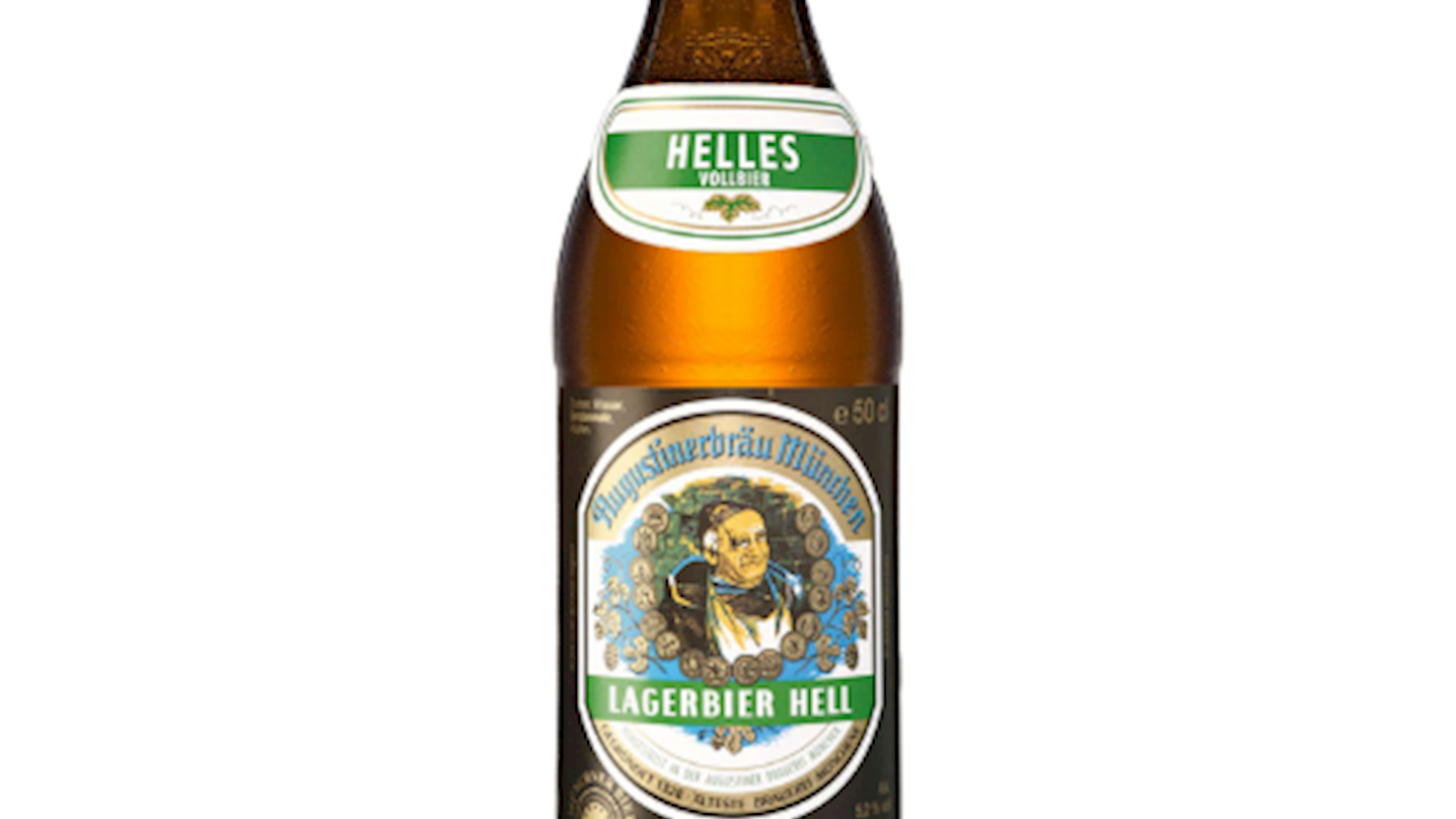
Augustiner-Bräu is the oldest independent brewery in Munich, founded in 1328 within an Augustinian monastery just outside the city’s medieval walls. Following the secularization of 1803, the brewery passed into private hands and was acquired in 1829 by Anton Wagner, marking the beginning of a family-led brewing tradition that continues to this day.

Augustiner stands as a symbol of traditional Bavarian brewing, blending centuries-old methods with modern quality standards. The brewery is renowned for still serving beer from wooden barrels, maintaining classic “Euro-style” glass bottles, and investing little to no resources in advertising - cultivating an authentic image and a loyal following. In addition to its main brewery in central Munich, Augustiner also operates the renowned Augustiner-Keller, one of Bavaria’s most iconic beer gardens, and it is the only Oktoberfest tent that still pours beer directly from wooden casks.

Augustiner remains firmly committed to its principles: regional distribution, strict adherence to the German Beer Purity Law - Reinheitsgebot, the use of high-quality water drawn from deep Munich wells, and a simple yet flawless beer recipe. Despite modern trends, Augustiner refuses to compromise on tradition, making it a beloved brand among true connoisseurs of German beer.

Awards
Untappd - 3.6
Beer Advocate - 93 Outstanding
07

Paulaner Brauerei

4.4 ·

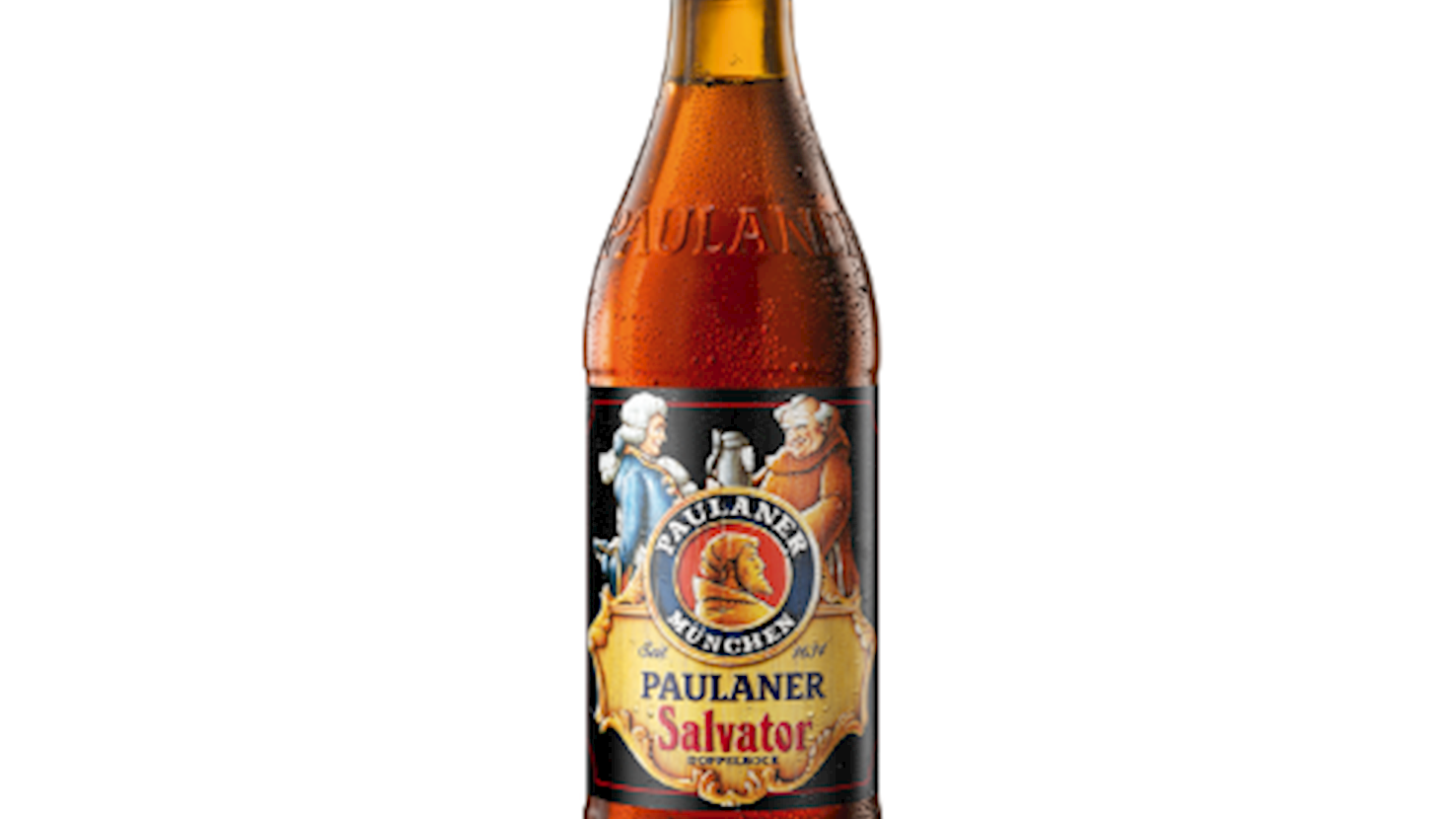
Paulaner Brauerei is one of the most renowned German breweries, based in Munich and boasting a tradition nearly four centuries long. It was founded by monks of the Order of Saint Francis of Paola, from whom the brewery takes its name.

Their first beer, the famous “Salvator”, was a strong, dark doppelbock-style beer traditionally consumed during fasting periods. Over the centuries, Paulaner has grown into a symbol of Bavarian beer culture and is one of the six Munich breweries granted exclusive rights to serve beer at Oktoberfest.

The brewery combines modern technology with classic recipes, using only high-quality ingredients in accordance with the German Beer Purity Law - Reinheitsgebot. With an annual production exceeding 2 million hectoliters and exports to more than 80 countries, Paulaner ranks among the largest exporters of German beer worldwide.

Its central brewery in Munich remains a gathering place for celebrations and beer culture, while events such as the Starkbierfest and the traditional “Derblecken” tasting further underscore Paulaner’s deep-rooted presence in the life of the Bavarian capital.

Awards
European Beer Star - Gold (2020)
Untappd - 3.6
08

Hofbräu München

4.4 ·

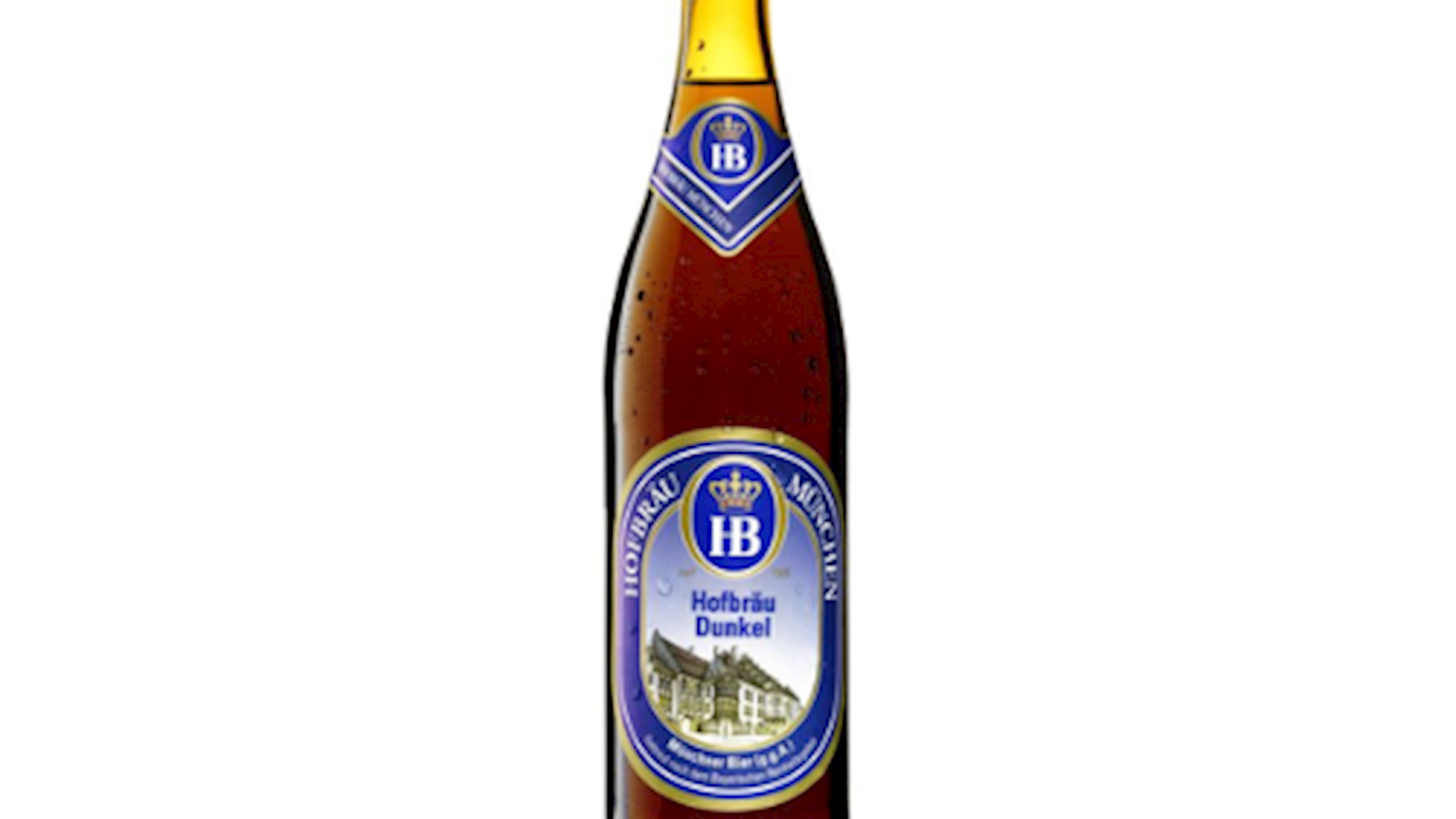
Hofbräu München is one of the most renowned Bavarian breweries, founded in 1589 as the court brewery of Duke Wilhelm V, tasked with supplying high-quality beer to the Bavarian royal household. Over the centuries, it has evolved into a symbol of Munich and one of the most recognizable names in German brewing tradition.

Today it operates as the state brewery of Bavaria, combining classical recipes with modern technology in its production facility in Riem. Hofbräu is credited with developing several historically important styles, including the dark lager Hofbräu Dunkel, the pioneering Maibock as one of the earliest strong Bavarian bock beers, as well as the well-known Helles and traditional Weißbier.

Their beers remain firmly rooted in Munich’s brewing heritage, with a clear emphasis on purity of flavor, high-quality malt, and controlled fermentation. The brand has a strong global presence - Hofbräu München exports to many countries and operates a network of Hofbräuhaus beer halls worldwide.

Their portfolio is defined by consistency, a clean flavor profile, and stylistic authenticity, making them a reference point for classic Munich beer styles. For enthusiasts of German brewing tradition, Hofbräu München represents a blend of history, quality, and cultural heritage that goes far beyond an ordinary beer.

Awards
Untappd - 3.7
Untappd - 3.5
09

Hacker-Pschorr Brewery

4.3 ·

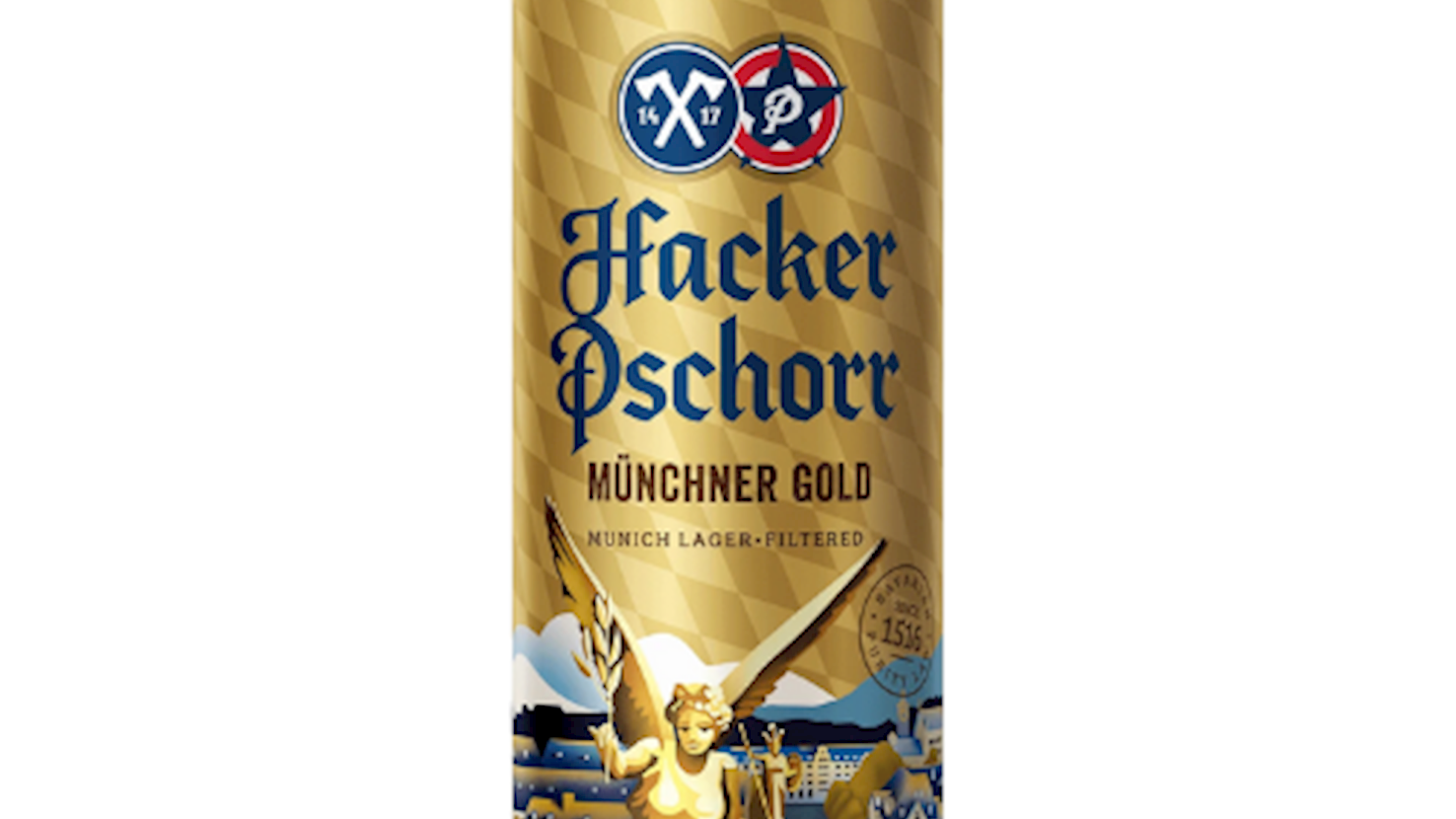
Hacker‑Pschorr is a Bavarian brewery from Munich, with origins dating back to 1417 - nearly a century before the introduction of the famous Reinheitsgebot, the German Beer Purity Law. The brewery evolved through family ties and entrepreneurial vision, taking on its modern form in the early 19th century when Joseph Pschorr married Maria Theresia Hacker, took over the Hacker brewery, and later established his own brand, which was eventually unified by their sons.

Throughout its history, Hacker‑Pschorr stood out as an innovator - most notably in 1813, when it built the largest beer cellar in Germany at the time, with a capacity of 35,000 hectoliters, enabling year-round beer availability. Today, Hacker‑Pschorr is a symbol of traditional Munich brewing, with a strong emphasis on preserving authentic methods and style.

Although it has not brewed in its own facilities since 1998, the brand remains faithful to Bavarian heritage and is one of the six official breweries represented at Oktoberfest. Its portfolio features iconic styles such as Münchner Hell, Kellerbier, and Hefe Weisse, blending history, quality, and regional identity.

Awards
Untappd - 3.6
Beer Advocate - 91 Outstanding
10

Private Landbrauerei Schönram
4.3 ·

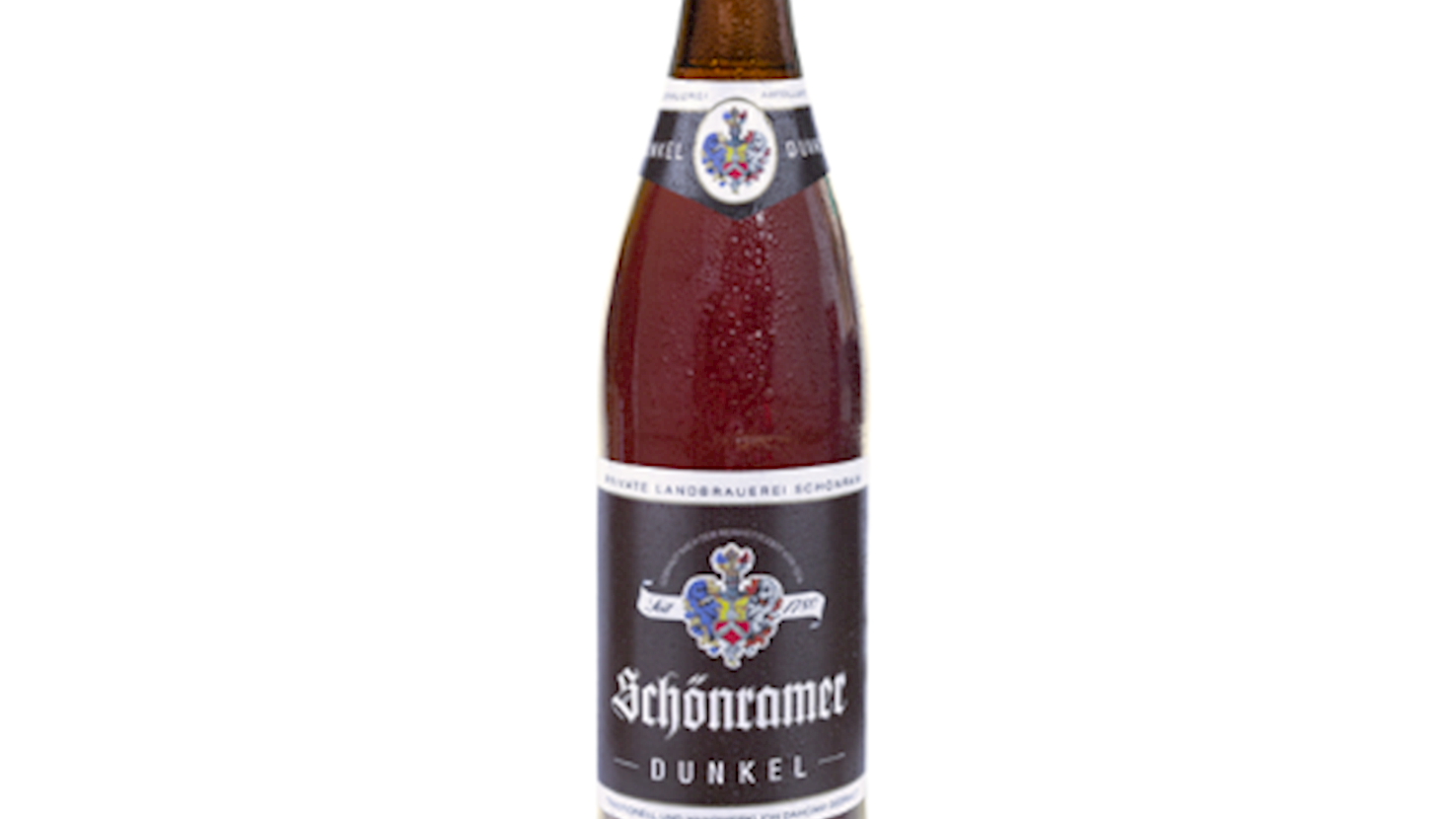
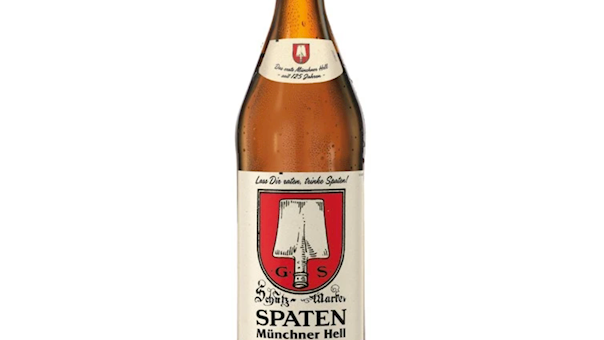
Private Landbrauerei Schönram is a traditional brewery located in the small village of Schönram, part of the municipality of Petting in Bavaria, Germany. Established in 1780, the brewery has been producing high-quality beers ever since, combining classic Bavarian brewing techniques with modern innovations.
Awards
European Beer Star - Gold (2022, 2021, 2020)
Untappd - 3.6

Best German Lager Types
01

Märzen

4.1 ·

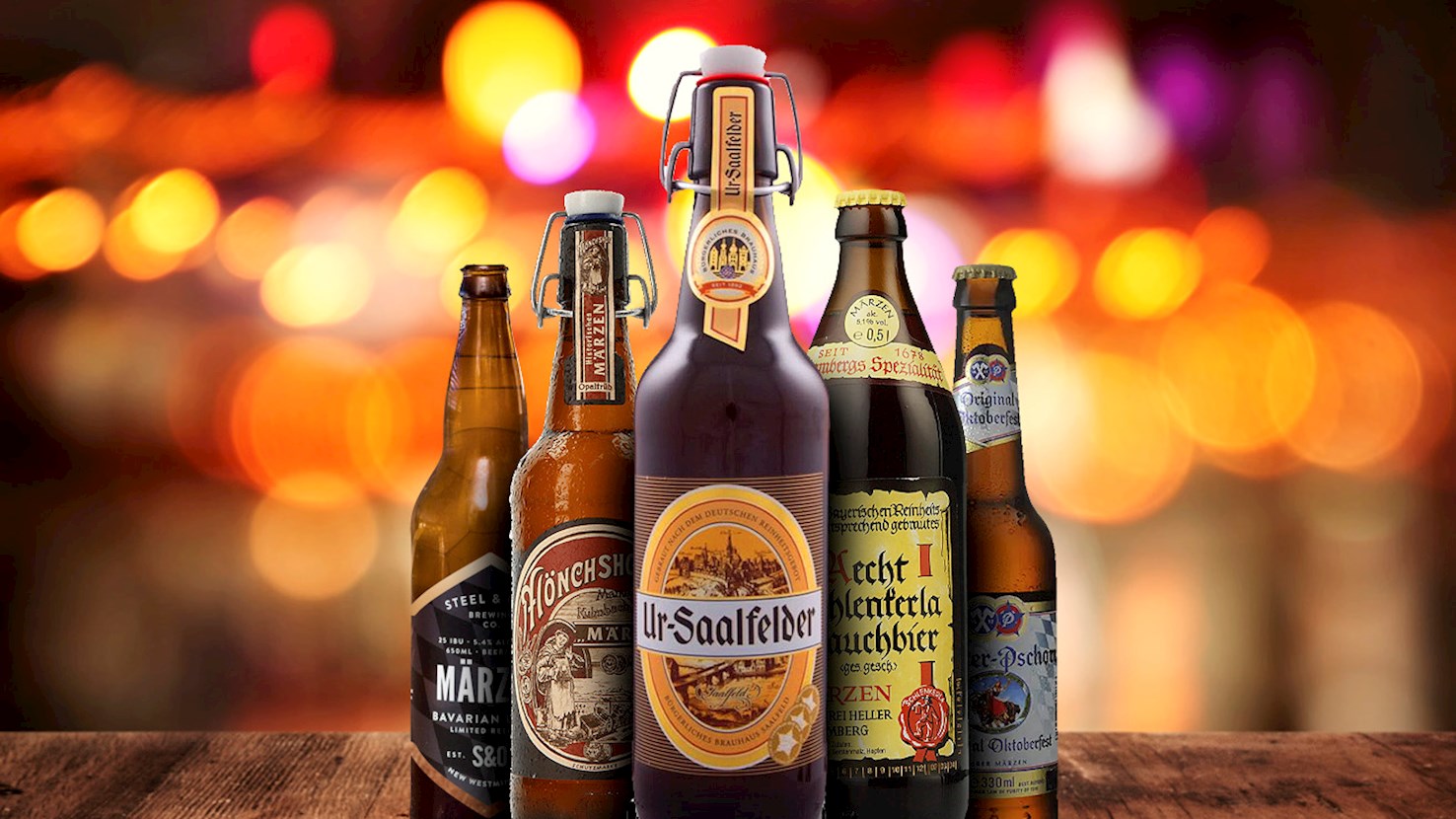
Märzen is a German beer style from Bavaria that is closely connected with Oktoberfestbier and shares some similarities with Vienna lager. This style officially appeared in 1841 when it was brewed by Spaten brewery, but a similar style existed well before that. Märzen is an amber-colored lager that has toasty malt aromas and flavors, dry finish, crisp hop bitterness, and a medium body. Original versions of these beers were somewhat darker, and as the name suggests—Märzen translates as March—they were brewed in March and then left to lager until early fall. These versions were stronger and had more body than modern styles. Since it was available in autumn, it was first served during Oktoberfest. Although Märzen and Oktoberfestbier share many similarities, nowadays only six breweries in Germany—Augustiner, Hacker-Pschorr, Hofbräuhaus, Löwenbräu, Paulaner, and Spaten—are allowed to use the designation Oktoberfestbier and serve their brews at Oktoberfest. Märzen is a food-friendly beer that works especially well with grilled, roasted, or smoked meat.

02

Helles

4.0 ·

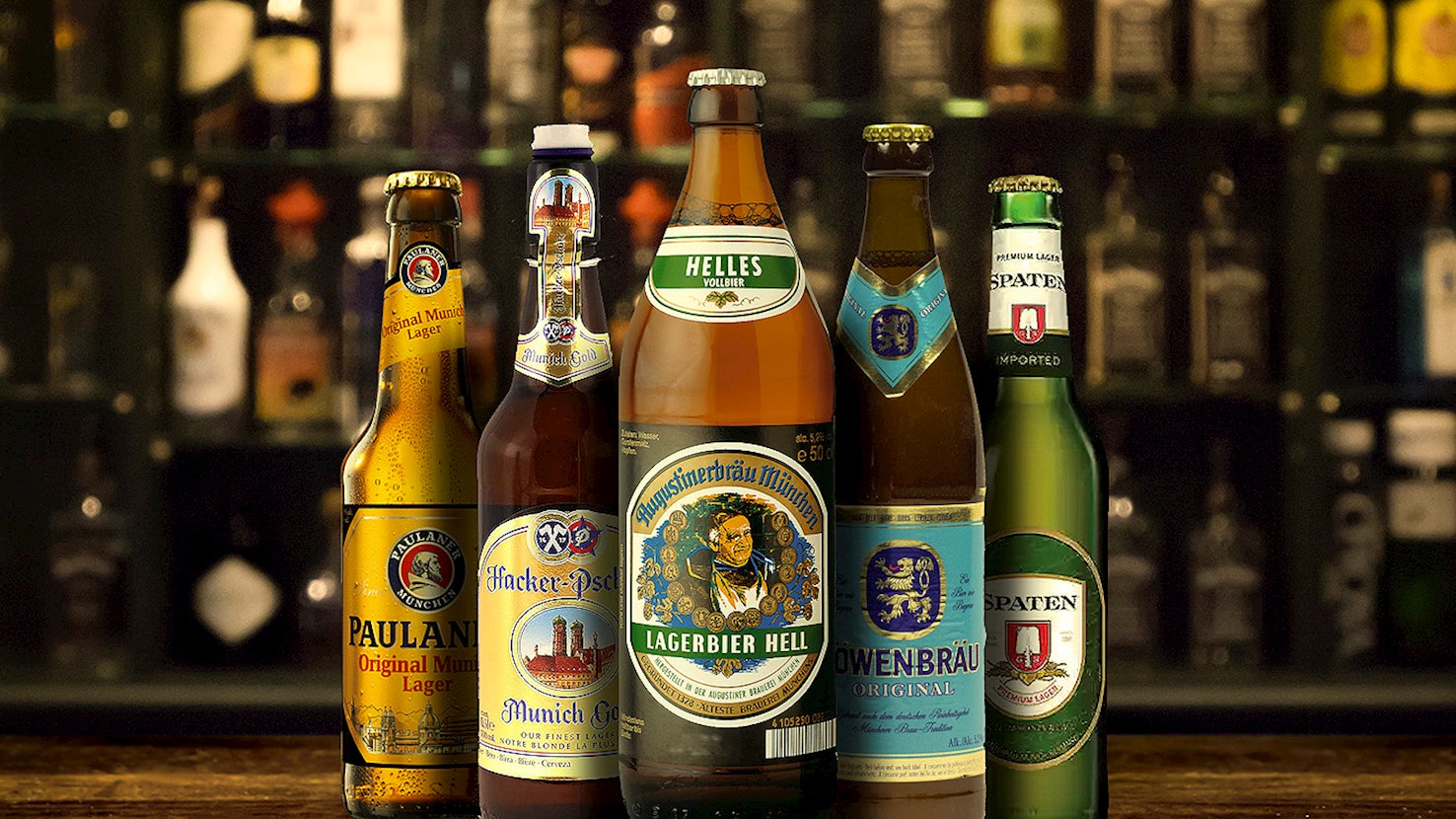
Helles is a German-style lager that first appeared in Munich in 1894. It was a Bavarian answer to light Czech pilsner. Although Bavaria heavily relied on strong and dark lagers, the popularity of crisp and golden pilsner beers influenced Bavarian brewers to start producing a similar style. Traditional Helles is typically more malt-forward and has a firmer body than pilsner and other lager styles, but still remains soft and medium-bodied. It is clean, easy-drinking, refined, fresh, and dry, with light hop bitterness and subtle malt sweetness. Helles-style beers are typically quite refreshing and usually range from 4.8 to 5.2% ABV, but those above 5% are often classified as Bavarian Export. Helles lagers would pair well with light dishes, including salads and seafood, but they can also match spicy and flavor-packed dishes, as well as traditional German fare and mild cheese varieties.

03

Doppelbock

3.9 ·

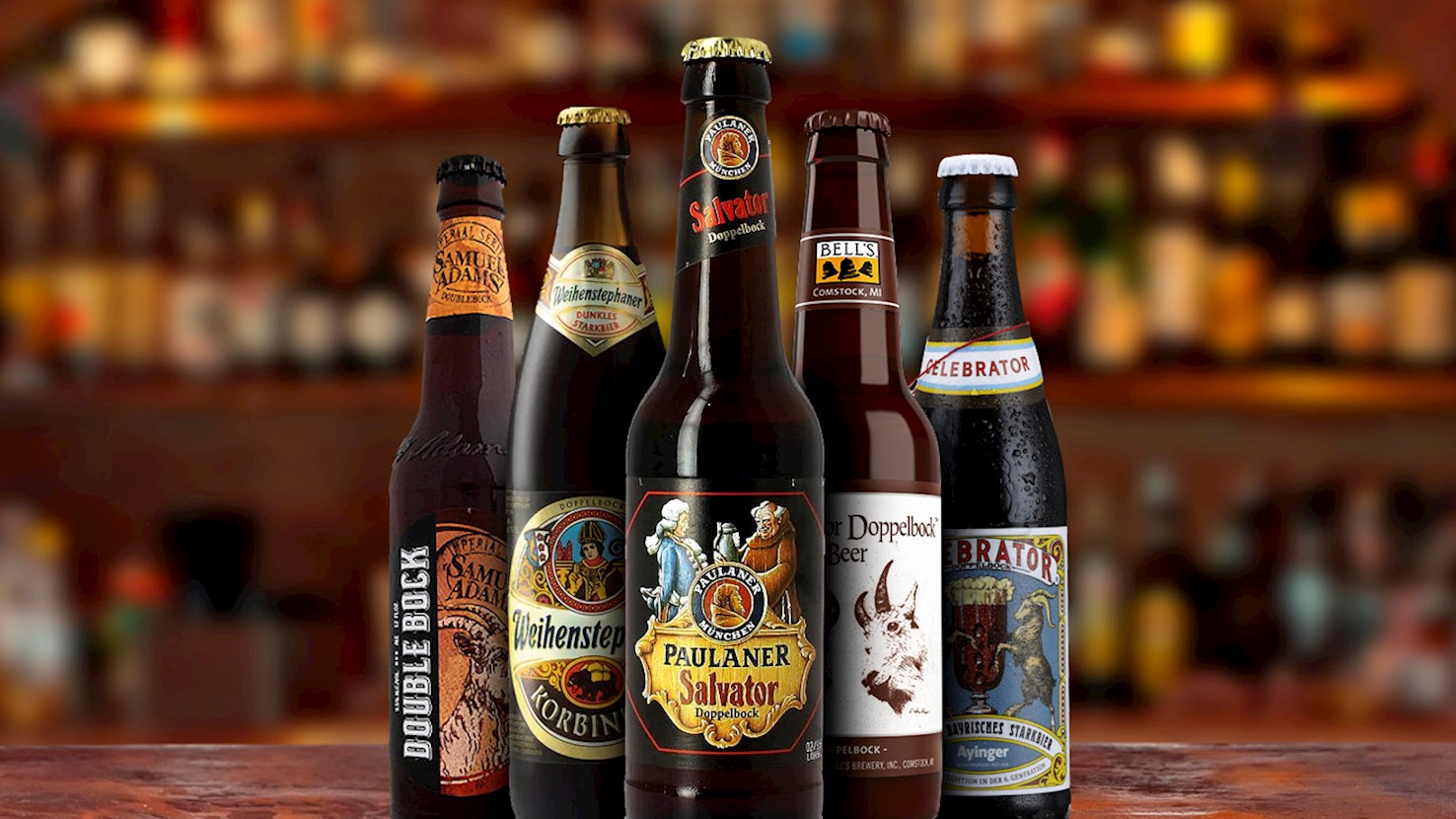
Doppelbock is a German beer style that was first brewed in Munich by Paulaner monks. As the name might suggest—doppel translates as double—this style developed as a slightly stronger version of traditional German bock style. Doppelbock beers are usually medium-bodied with a color that ranges from golden to dark brown. They are rich and smooth with a distinctive malt sweetness that is balanced with subtle hop bitterness. Typical aromas include bread and toasty notes that can be accompanied by subtle hints of caramel. These beers usually have a slightly higher alcohol content that ranges from 7 to 8% ABV, but the finish should not be harsh or overpowering. It is recommended to pair them with pork, game, aged cheese, or chocolate desserts.

04

Dunkel

3.8 ·

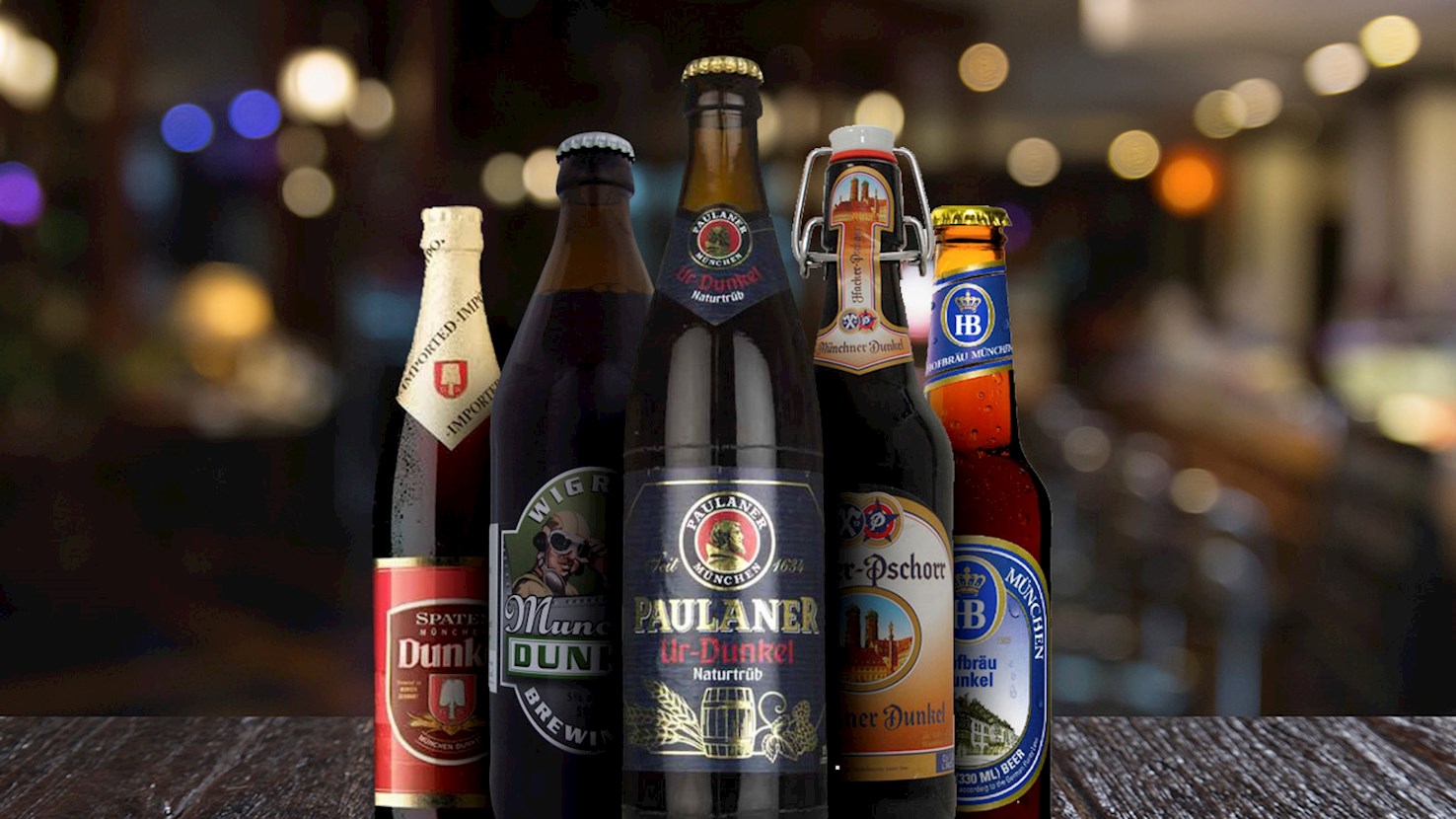
Dunkel is a German dark lager that is mostly associated with Bavaria and Munich. This dark beer, which can range from copper to dark brown, is mainly brewed from Munich malt which gives the beer its typical caramel-like and toasty character. The beers that fall under this category will typically be smooth, medium-bodied, easy-drinking, subtly sweet, and not too heavy. Typical toasty notes may be accompanied by caramel, toffee, and nut aromas, while hop character can be present but should remain subtle. Dunkel beers pair exceptionally well with classic Bavarian dishes such as sausages, fruit-based sauces, and roasted or barbecued meat.

05

Weizenbock

3.8 ·

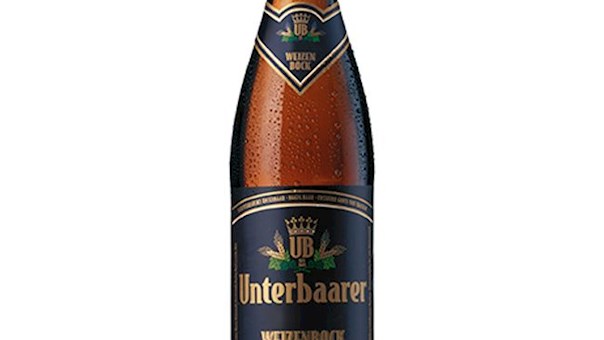
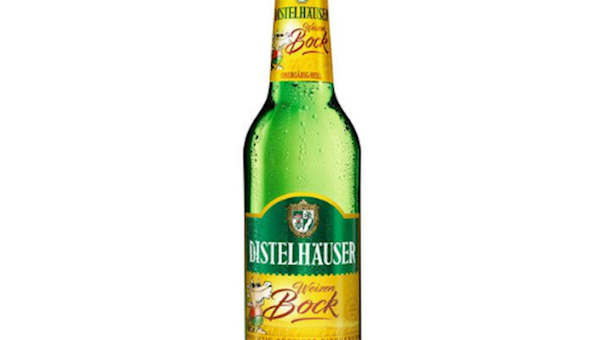
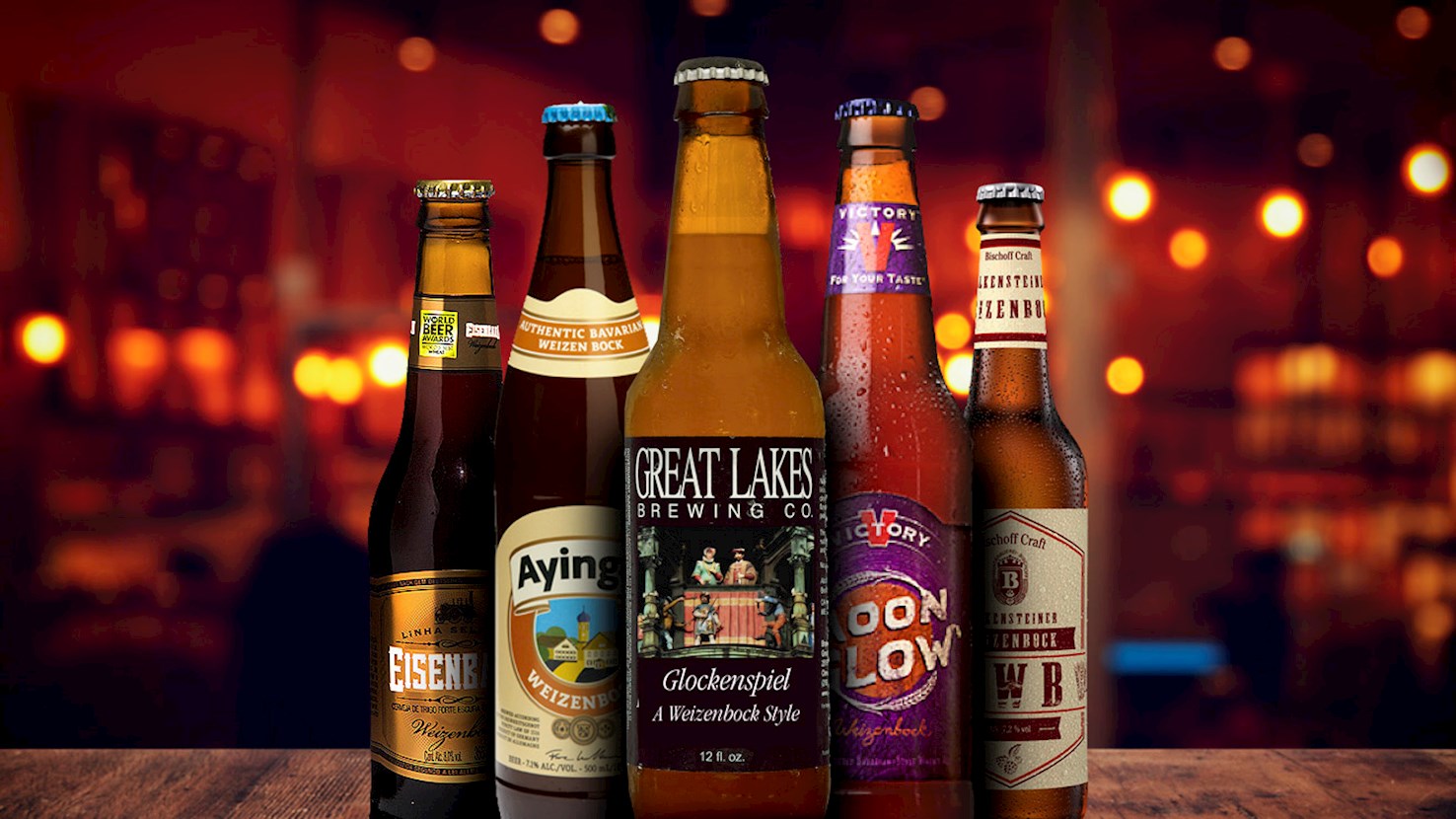
Weizenbock is a German beer style that was introduced in 1907 by the Schneider Weisse Brauhaus brewery located in Munich. Weizenbock was supposed to be a middle-ground between the rich and malty doppelbock and wheat beer (weissbier) that was popular at the time. The style comes in a pale and slightly darker version. Although both styles have a distinctive malt backbone, darker versions may have a richer malt profile and heavier toasty expressions with possible hints of caramel flavors and aromas of raisins and plums. Lighter varieties will usually have light toastiness and sweeter malt character. The style will also often display nuances of cloves and banana-like esters. Darker weizenbock beers are a better match with red meat, game, lamb, and stews, while lighter versions will better work will poultry, pork, and sausages. Both styles pair well with aged cheese and a variety of desserts.

06

Bock

3.7 ·

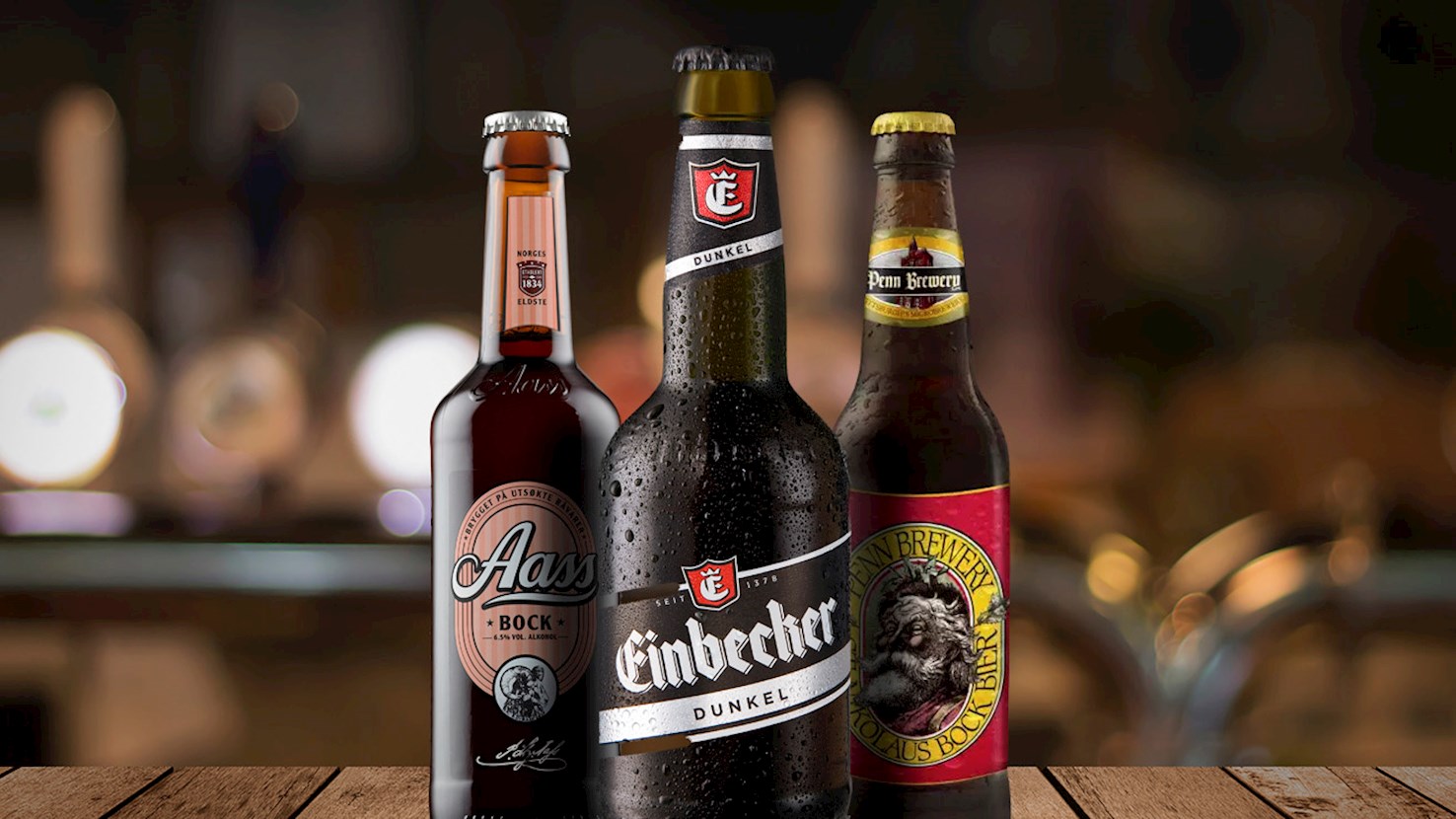
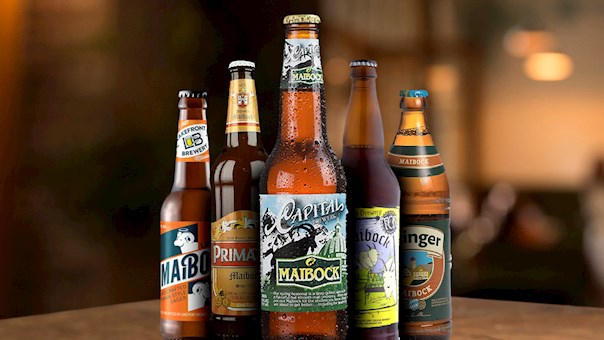
Bock beer is a German bottom fermenting lager that nowadays comes in a wide range of sub-styles. Traditional versions may range from golden to amber, and sometimes even dark brown. They are typically lightly hopped, rich, creamy, smooth, and malty, with toasty and occasionally caramel notes. Alcohol content falls within the ABV range of 6.3 to 7.6%, and the beer is traditionally served in a tulip glass. Its origin dates back to the fourteenth century and the city of Einbeck where the beer was brewed by certified master brewers who followed a unique set of quality standards which were established by the city council. By the seventeenth century, the beer gained in popularity and was especially favored in Munich, where it was originally named Ainpöckische Bier—which later led to the corruption of the name, initially as Oanpock and then as Bockbier (bock beer). Translated from German, bock stands for Billy goat, which was subsequently often used in advertisements and as a common logo for bock beer. The most common sub-styles of bock bier include Maibock, Doppelbock, Eisbock, and Weizenbock. Bock beer pairs well with hearty German dishes, soft and matured cheeses, spicy dishes, roasted or fried meat, and sausages.

07

Schwarzbier

3.6 ·

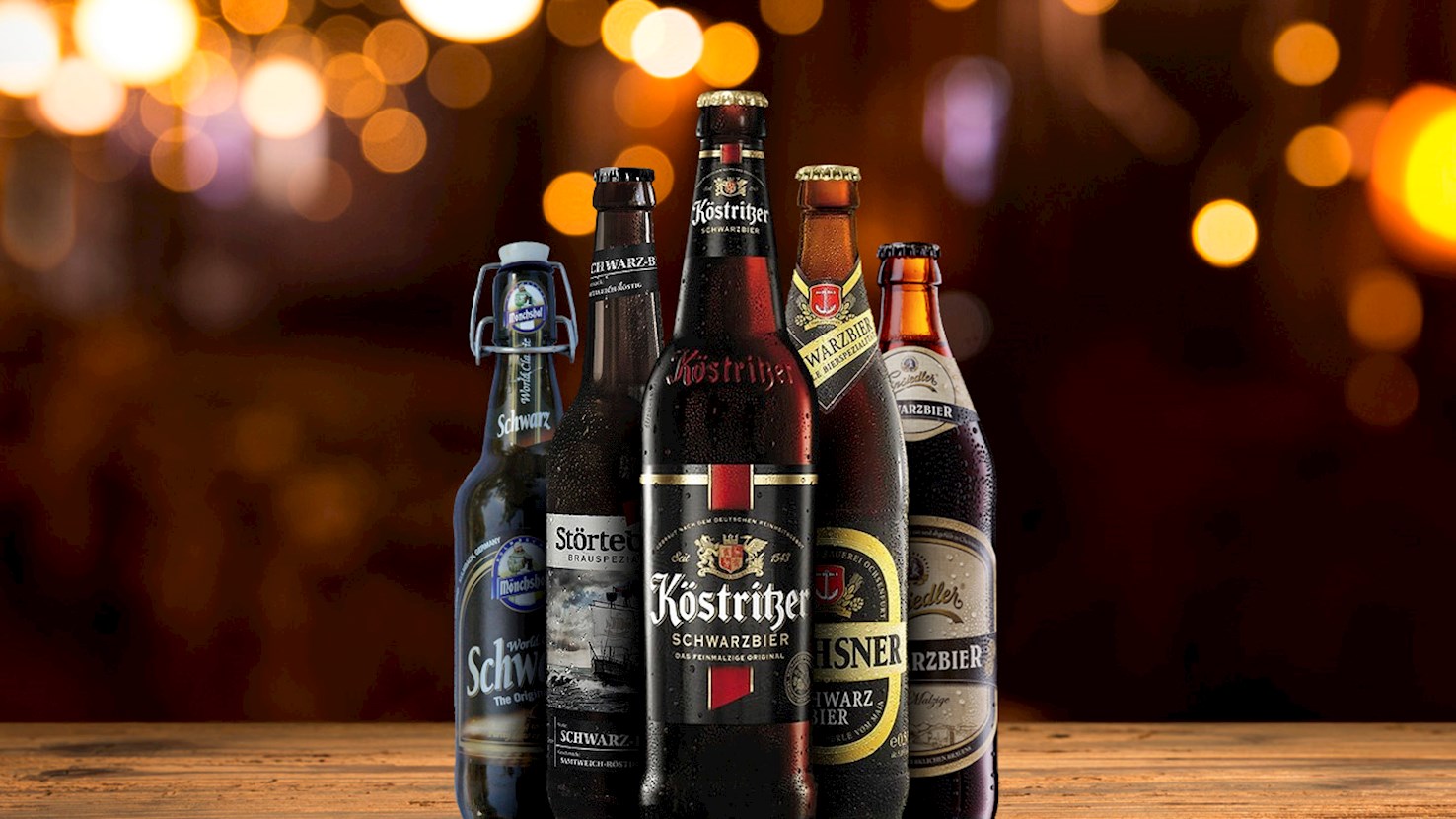
Schwarzbier is a German dark lager style. These beers are not overly powerful or harsh, and they tend to be smooth and refreshing. The use of malted barley will give them a lightly roasted malt backbone that is accompanied by hints of chocolate, nuts, toast, and caramel. The finish is dry, clean and crisp, while hop bitterness is subtle and in good balance with its malty character. These beers would pair well with sausages, roasted or barbecued meat, washed-rind cheese varieties, and chocolate or fruit desserts. Schwarzbier is often quoted as one of the oldest beer styles in the world. Though the first written reference dates to 1390 Braunschweig (Brunswick), the true origin is believed to be in southeastern Germany, namely in Kulmbach, where archeological evidence of brewing similar beer was found in Iron Age Celtic tombs which date back to 800 BC.

08

Rauchbier

3.6 ·

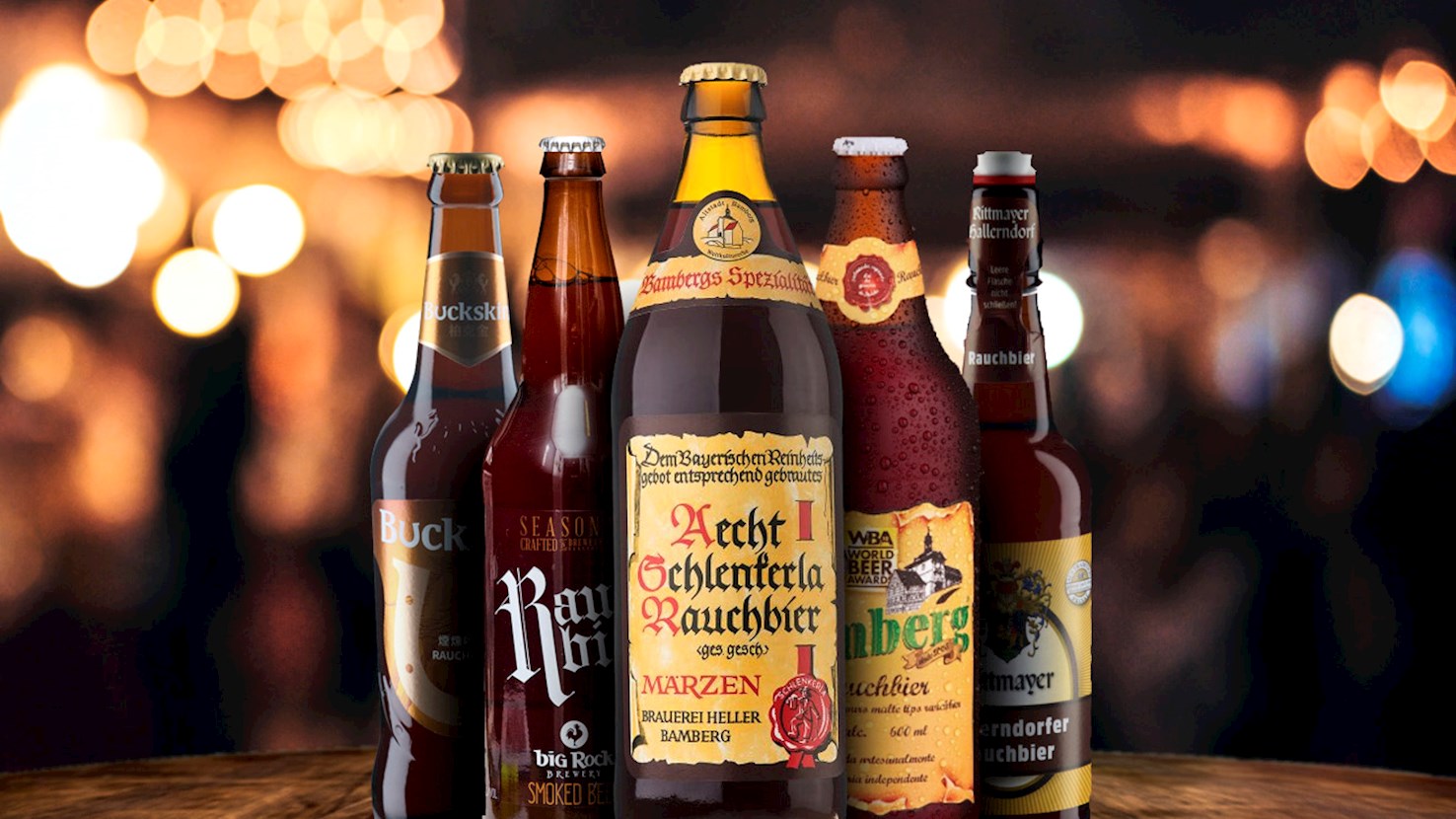
Rauchbier is a German beer style that is associated with Franconia and the city of Bamberg. Translated as smoked beer, the style is made with smoked malt, and it initially appeared in the 14th century. At the time, using smoked malt was the standard, but the invention of drum kiln, which allowed for the malt to be dried without the exposure to the open flame, became the preferred technique in the 1880s. However, the tradition remained in Bamberg, where the brewers stuck to the old tradition of producing beers with distinctive smoky elements. Nowadays, the style is almost synonymous with two Bamberg-based breweries: Schlenkerla and Spezial. These amber lagers are usually clean and clear with medium hop bitterness, while the aromas and flavors include a combination of smoke and malt. These beers are a great pairing with smoked or grilled meat, sausages, roasts, stews, flavorful cheese varieties. They can also be a good match with desserts.

09

German Pilsner

3.6 ·

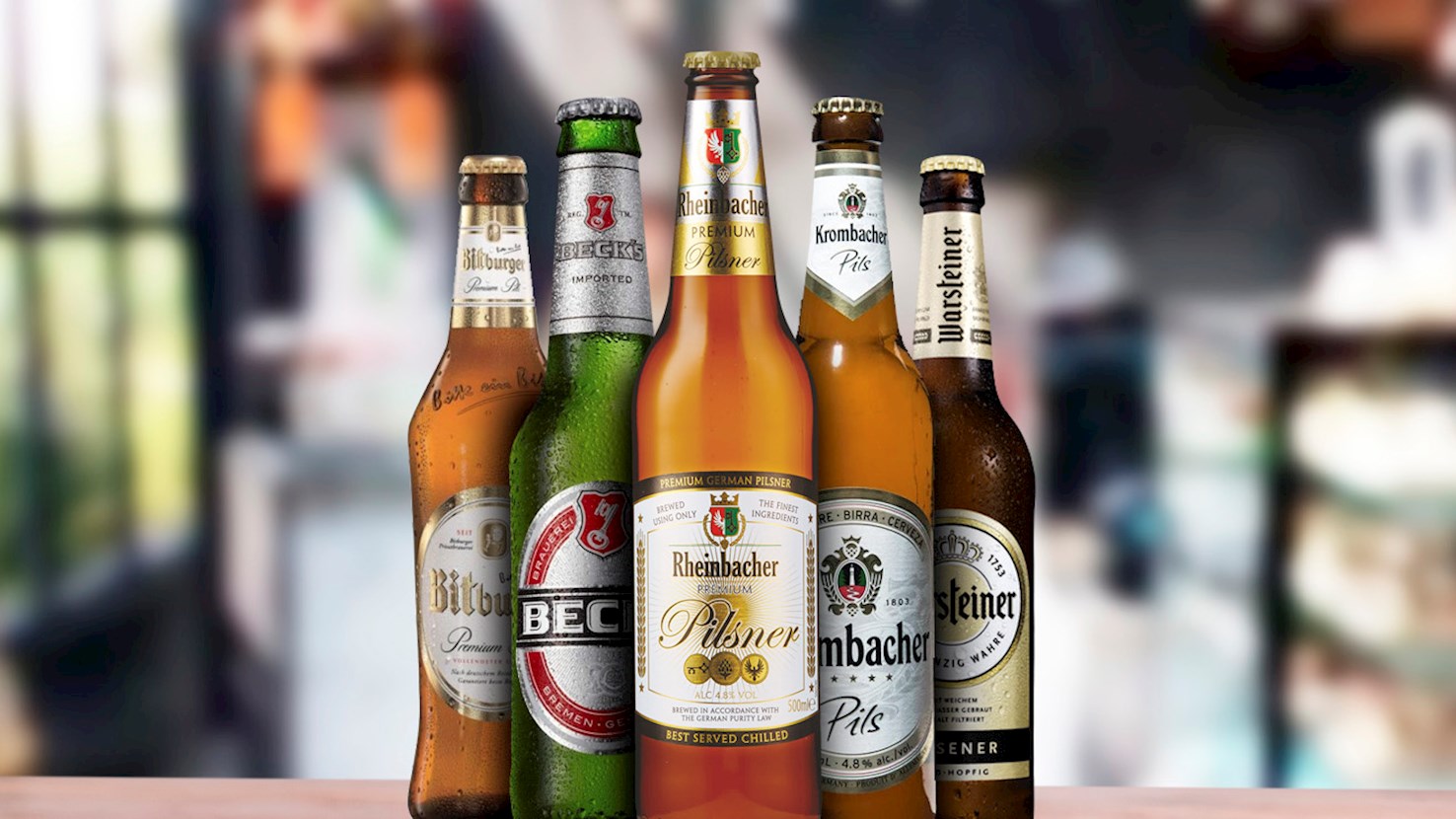
German Pilsner is a light, clean-tasting lager that was modeled on the namesake Czech variety. It is brewed from barley malt, and it typically has a flowery, herbal, and spicy hop bitterness that is balanced with a moderately malty backbone. First brews that were branded as German Pilsner were introduced in the 1870s, and though pilsner as a style first appeared in the Czech city Plzeň (Pilsen), it was created by a Bavarian Josef Groll. It is generally said that a separate German version was perfected following WWII and the introduction of modern brewing techniques as well as using local hops. When compared, German Pils is usually lighter in color, body, and hop bitterness. It also tends to be drier and crispier than Bohemian versions. This beer style is a food-friendly pairing that goes well with spicy and hearty dishes, as wells as grilled meat, sausages, hamburgers, and seafood.

10

Eisbock

3.4 ·

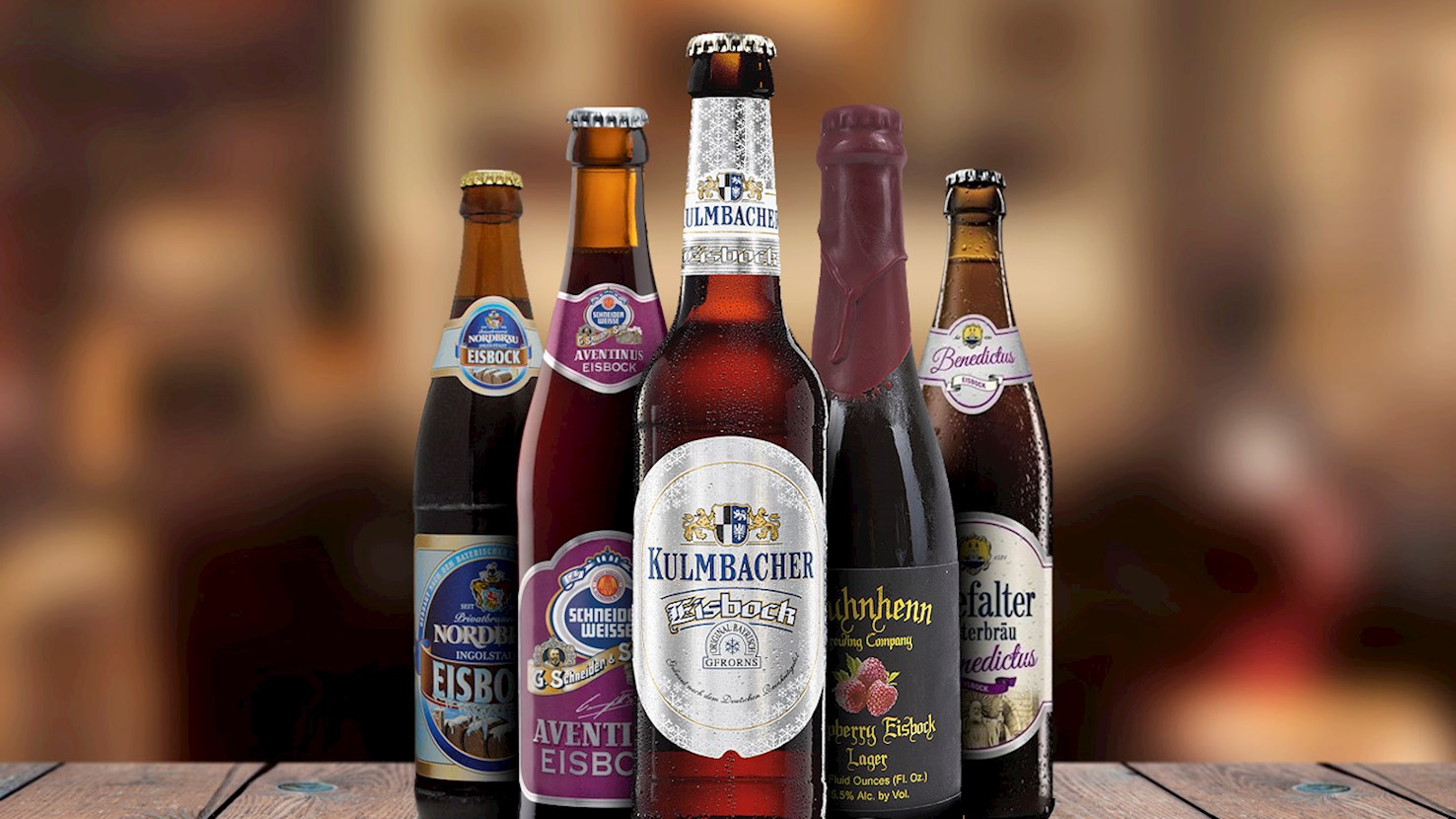
Eisbock is the strongest beer style that falls in the category of bock beers (bockbier). This beer style is primarily brewed as doppelbock, but then it undergoes freeze distillation—in which the water is partially frozen and then removed. The final result is a brew with more concentrated flavors and a higher concentration of alcohol. Most eisbock beers are clear, and they may range from red to dark brown. Although they always have high alcohol content, usually between 9 to 14% ABV, the alcohol should never be harsh or overpowering. Eisbock beers are full-bodied and intense with strong malt aromas and flavors reminiscent of toast and caramel. Nuances of dark fruit can sometimes be present. Despite its malt-forward profile, the character of eisbock beers should never be cloying or overly sweet. These beers make an excellent aperitif or a digestif, but they can also be paired with rich meat-based dishes and chocolate or caramel desserts. Although it is not certain, eisbock is said to have at the Reichelbräu brewery in 1890. The legend says that kegs of brewed bock were accidentally left on freezing temperatures, and when the ice was removed, the brewers noticed that the beer was more concentrated and potent than the original version.

Read more
View all
View map
About this ranking

TasteAtlas food rankings are based on the ratings of the TasteAtlas audience, with a series of mechanisms that recognize real users and that ignore bot, nationalist or local patriotic ratings, and give additional value to the ratings of users that the system recognizes as knowledgeable. For the “Top 17 German Lagers” list until July 01, 2026, 1,182 ratings were recorded, of which 1,052 were recognized by the system as legitimate. TasteAtlas Rankings should not be seen as the final global conclusion about food. Their purpose is to promote excellent local foods, instill pride in traditional dishes, and arouse curiosity about dishes you haven’t tried.

The initial list of top producers was compiled based on available reviews, awards, local recommendations, media and blog coverage, and consumer reviews. The list will be updated with ratings from TasteAtlas local ambassadors and TasteAtlas users.

Similar lists