shutterstock

Top 74 Malaysian Foods

Last updated on September 02, 2026

Best Malaysian Foods
01
Flatbread

Roti canai

4.4 ·

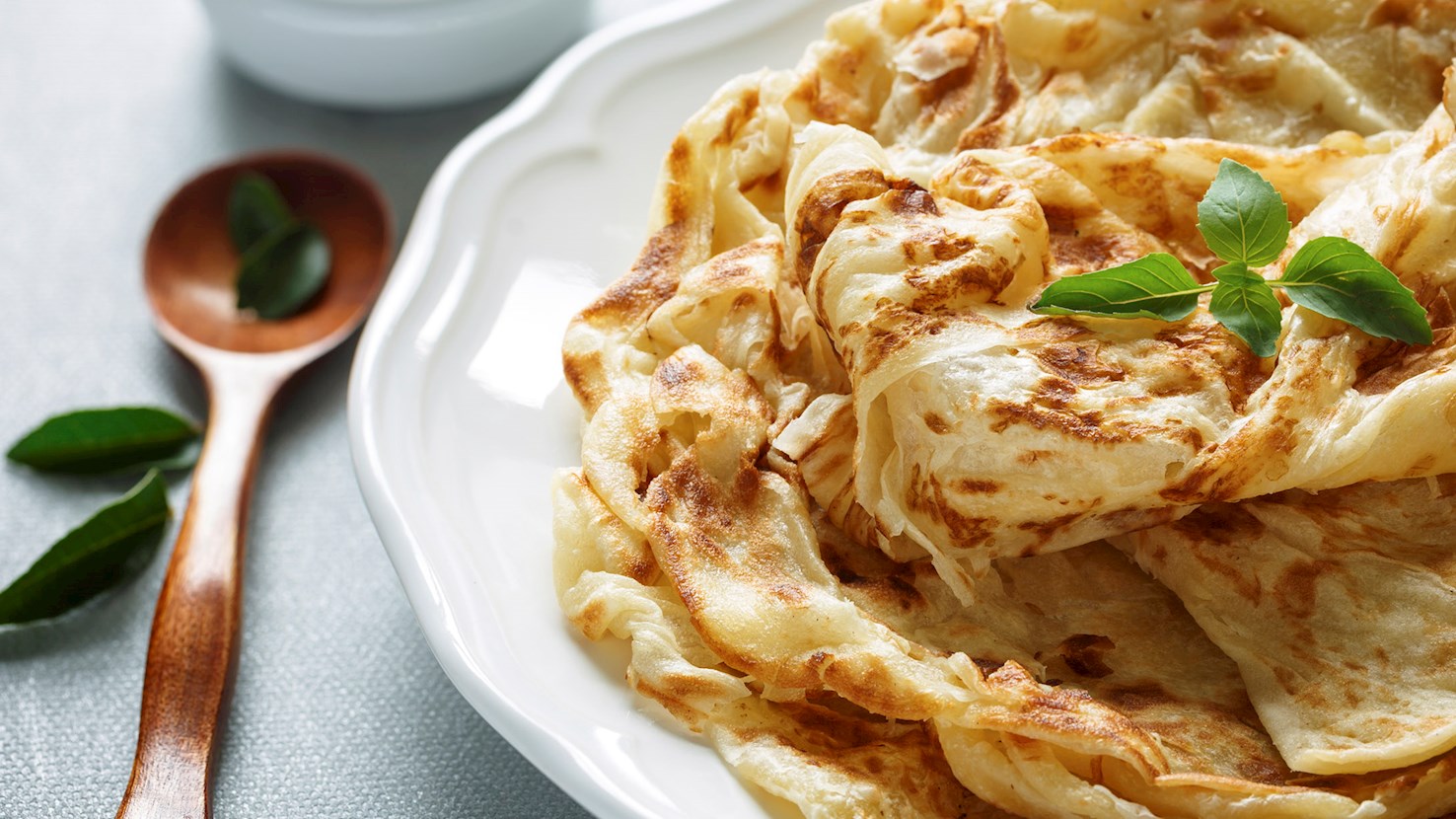
Roti canai is a traditional pan-fried flatbread made with flour, water, eggs, and fat of Indian origin, but mainly associated with Malaysia, and surrounding countries like Indonesia, Brunei, and Thailand. The dough for roti canai is repeatedly folded, so the final product has a layered texture, a soft interior, and a crispy outer layer. The most common fat used in roti canai is ghee, the traditional Indian clarified butter. It is believed that the dish originated in India when the Indian laborers who migrated to Malaysia brought the recipe and the tradition of preparing this crispy pastry to the foreign country. Usually, it is served plain in its traditional round form, as an accompaniment to curries. It can be served on the side or torn into pieces and mixed with the curry. However, roti canai is often served as the star dish, accompanied by different savory and sweet fillings and ingredients. If additional fillings are added, roti canai is usually shaped into rectangles. For example, in Malaysia, one can find various roti canai types, which are differentiated by the type of filling — egg, onion, egg and onion, banana, sardines, margarine and sugar, Maggi instant noodles, cheese, vegetable, and pork filling are some of the many available. However, roti canai doesn't have to have a filling but only a topping, such as fried eggs, curry, beans, lentils, and coffee beans. But martabak, a thick roti filled with meats, eggs, onions, and spices, is probably the best-known type of roti canai. Apart from Malaysia, it can also be found in Saudi Arabia, Yemen, and a few other countries. Other than Malaysia, a very similar type of flatbread can be found in Singapore, where it's called roti prata. This crispy bread is usually sold by street vendors called mamaks.

02
Savory Pastry

Karipap

4.4 ·

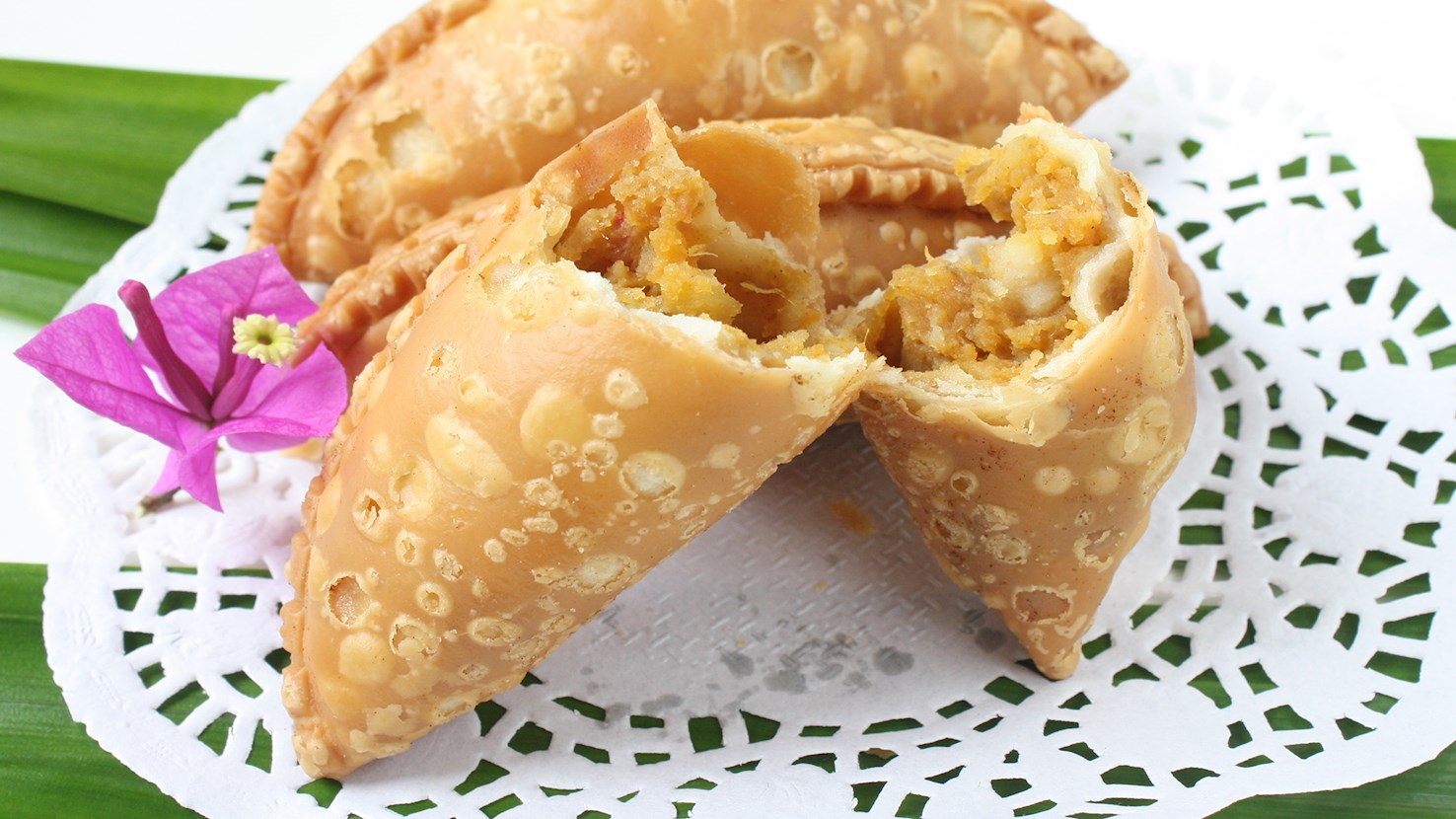
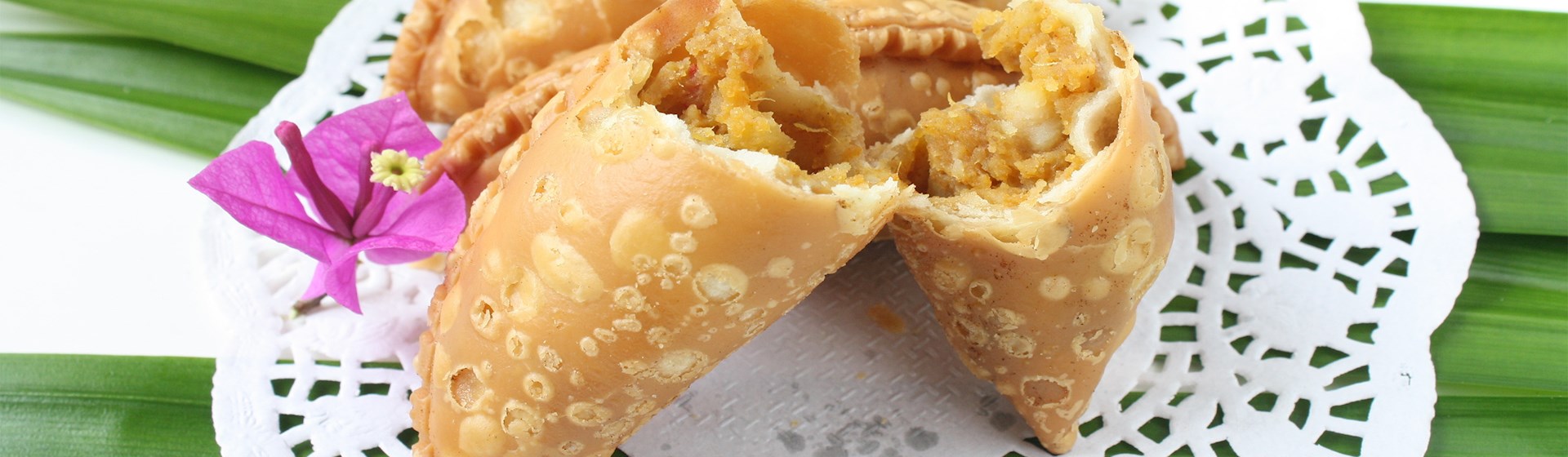
Karipap or curry puff is a small, deep-fried or baked pastry shell filled with thick chicken and potatoes curry. It is believed that the flavorful snack was invented by the Malays from the Malay Peninsula and parts of Sumatra and Borneo. It is a popular breakfast item or an afternoon snack which can be found at numerous stores, bars, and markets. Because of its simplicity and flavor, karipap quickly became popular outside Malaysia, especially in Thailand and Singapore. Today there are numerous versions of karipap, so instead of potato and chicken curry, it can be filled with various other ingredients such as tuna, sardines, and beef rendang. Crispy and flaky on the exterior, hot and soft on the interior, karipap is a snack that remains a staple of Southeast Asian cuisine.

03
Stew

Kari ayam

4.3 ·

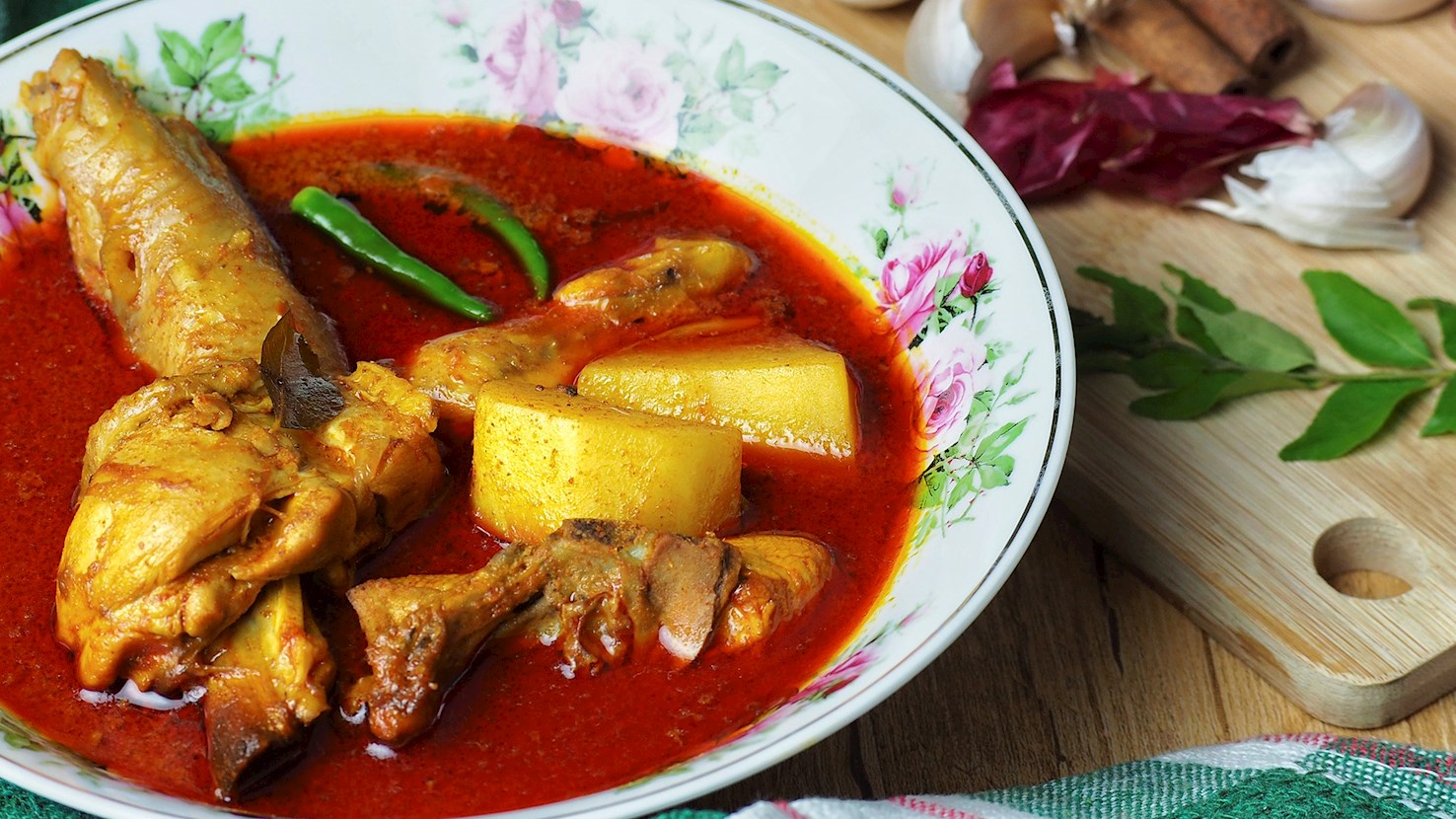
Kari ayam is a chicken curry that is popular in Malaysia and Indonesia. It is made with chicken pieces, onions, garlic, ginger, ghee, tomatoes, coconut milk, and spices such as anise, cinnamon, curry leaves, pandan leaves, lemongrass, chilis, cumin, turmeric, and fennel. In Malaysia, kari ayam is traditionally prepared in a clay pot, because it is not reactive to the spices and allows the curry to cook in its own juices. Before serving, the dish can be sprinkled with lime juice and garnished with fresh coriander. It is recommended to serve it with rice.

04
Soup

Sarawak laksa

4.3 ·

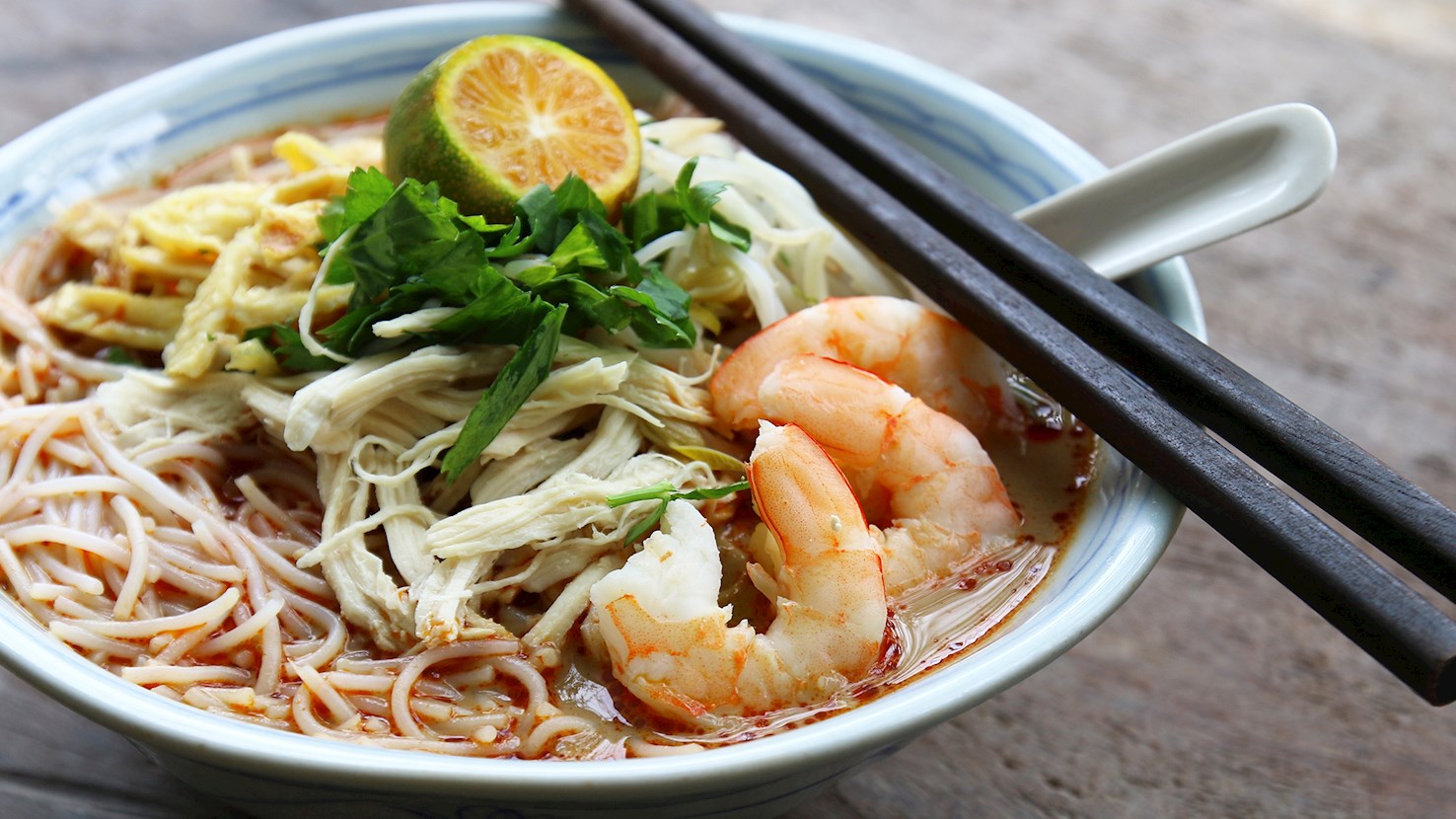
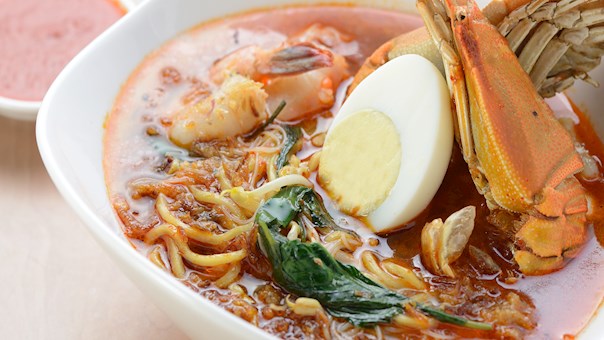
Closely related to other laksa varieties, Sarawak laksa is characterized by a subtle, mild flavor. Consisting of a flavorful chicken or shrimp-based broth that is seasoned with thick laksa paste, which sometimes includes more than twenty different ingredients, the soup is accompanied by vermicelli noodles, shredded omelet, cooked prawns, and shredded chicken. Spicy sambal and lime are traditionally served on the side. The origin of Sarawak laksa is still unclear, but it is believed that the dish appeared when Goh Lik Teck began to offer his noodle dish along Kuching’s Carpenter Street in 1945. According to popular belief, the thick paste used in the dish was popularized by the Tan family from Kuching, somewhere between the 1960s and 1970s. Tan Yong Him experimented with herbs and spices to create a basic paste, which he later distributed under the brand name Swallow. The product was soon picked up by many vendors, who then included Sarawak laksa on their menus. Today, it is a signature dish of Sarawak and the city of Kuching.

05
Noodle Dish

Char kway teow

4.2 ·

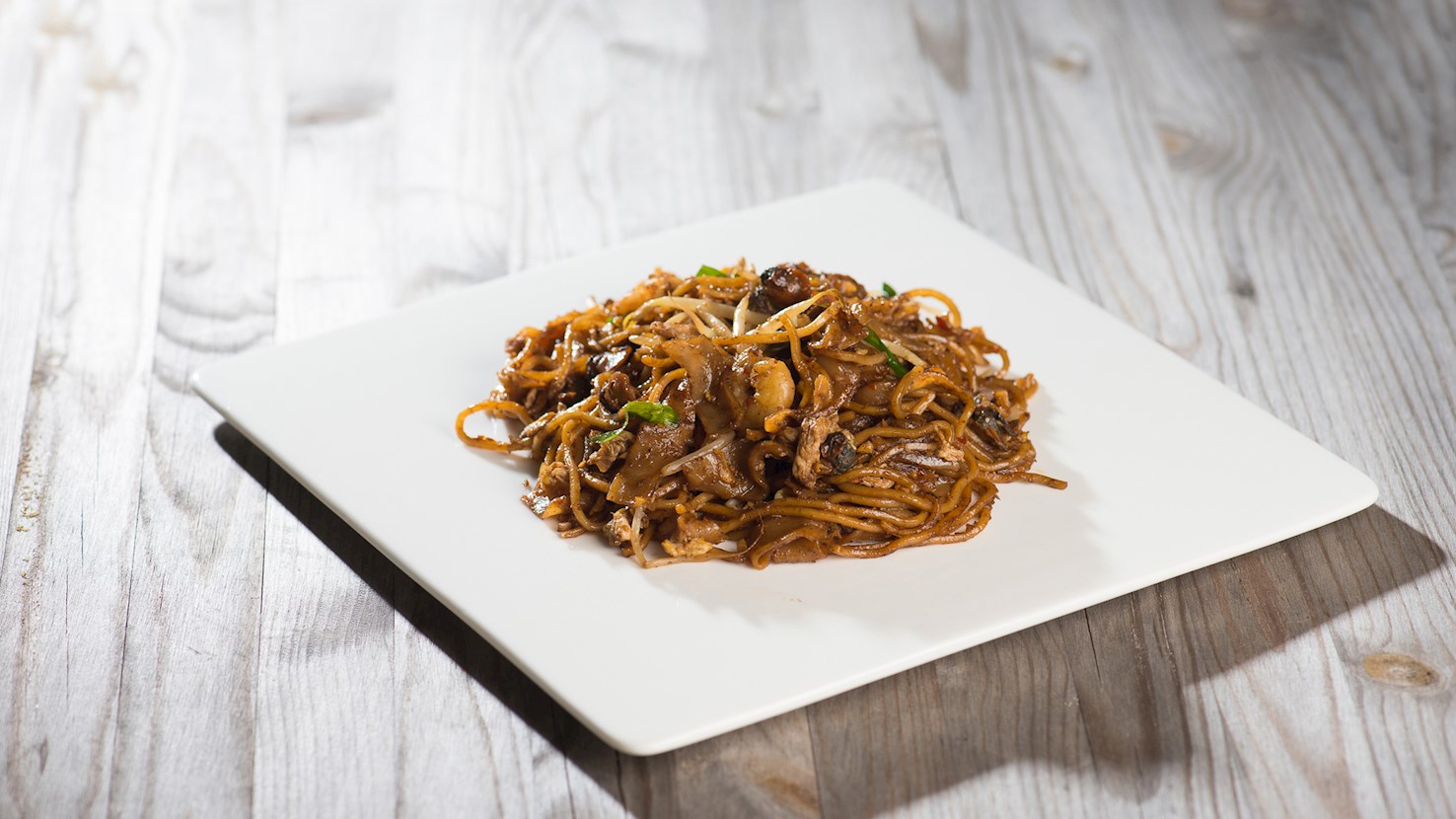
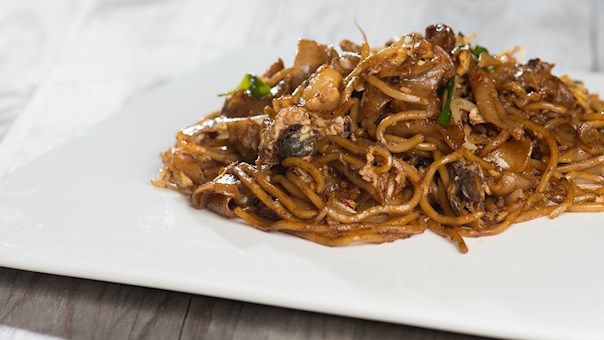
Char kway teow is one of the most popular street dishes in Malaysia and Singapore. Despite numerous regional varieties, it is usually made with flat rice noodles, shrimps, eggs, cockles, bean sprouts, chives, and Chinese sausage. All the ingredients are usually fried and coated in soy sauce, while some versions also incorporate shrimp paste, garlic, fried pork lard, and sometimes even yellow wheat noodles. Among the numerous theories about the origin of the dish, the most popular claims that it was invented in the Singaporean Teochew community by Chinese immigrants, while the name stems from Hokkien, char meaning fried and kway teow denoting flat rice noodles. Classic Teochew variety that is lighter and slightly drier than the Singaporean counterpart is especially popular in Malaysian Penang where it is considered to be a signature dish of the region. Originally, char kway teow was a poor man’s dish made by farmers and fishermen out of leftover ingredients. Realizing how delicious this combination is, they started selling it on the street, and it quickly caught on. Apart from Singapore and Malaysian Penang, a variety of char kway teow is also found in Indonesia. In Penang, some vendors still serve it on banana and palm leaves, the way it was traditionally served from its beginnings.

06
Fish Dish

Ikan bakar

4.2 ·

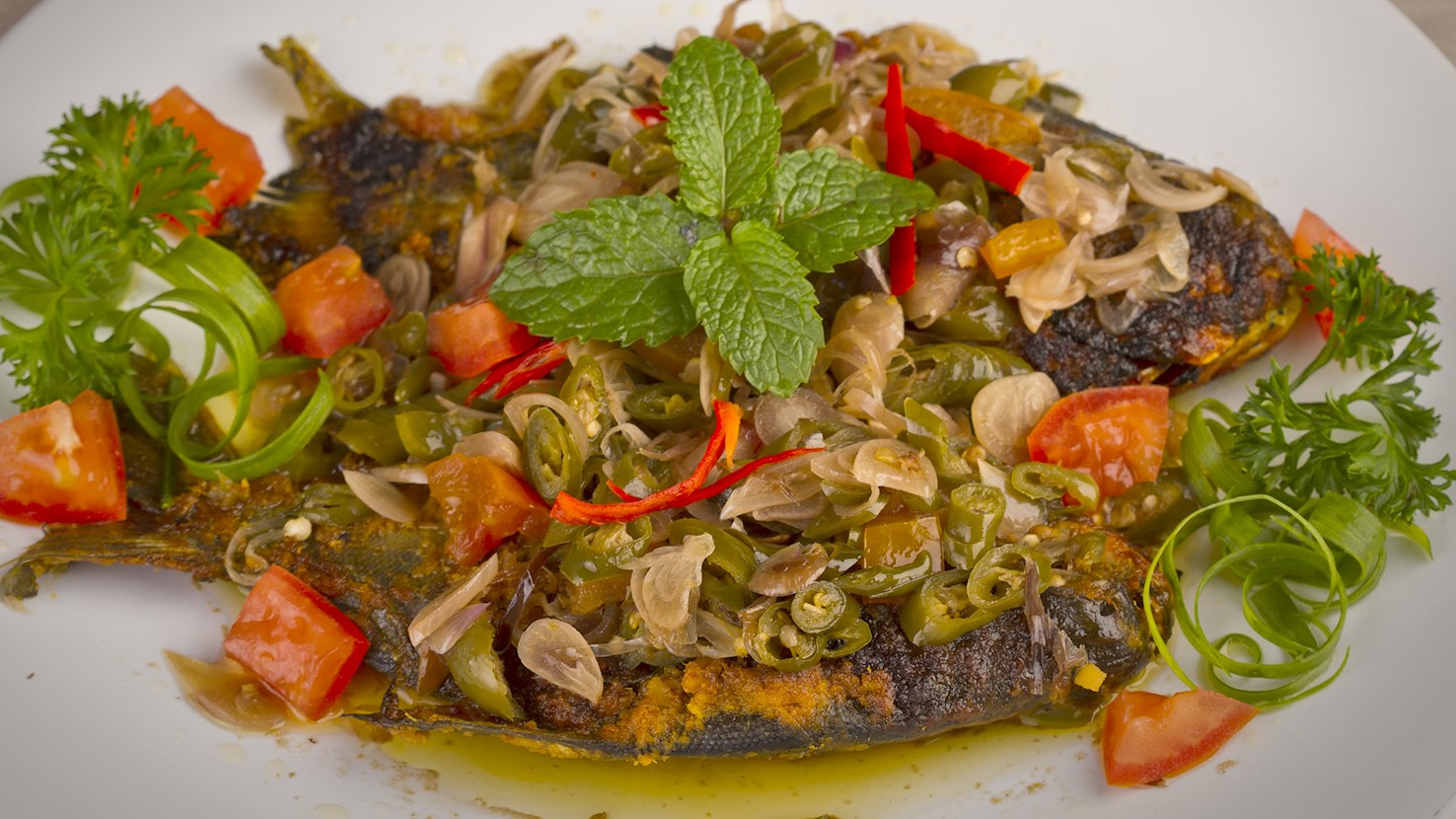
Ikan bakar is a beloved Indonesian grilled fish dish, known for its smoky aroma, bold spices, and savory-sweet glaze. The name ikan bakar literally means “grilled fish” in Indonesian and Malay (ikan = fish, bakar = grilled or roasted), and it refers more to the cooking technique than to a specific recipe. Found across Indonesia, Malaysia, and coastal Southeast Asia, ikan bakar varies by region, but always features fresh, whole fish marinated with spices and aromatics, then grilled over charcoal for deep, rich flavor. The fish—often snapper, mackerel, gourami, or catfish—is typically marinated in a mixture of shallots, garlic, turmeric, coriander, tamarind, chilies, and kecap manis (sweet soy sauce). In some regions, especially Java, the use of kecap manis creates a sweet, caramelized glaze, while in others, such as Minangkabau (West Sumatra) or Bali, the marinade is more spicy, tangy, and aromatic, often without any soy sauce. During grilling, the fish is frequently basted with the remaining marinade or a mixture of oil and spices, keeping the flesh moist and enhancing the smokiness. It’s traditionally served with steamed rice, sambal (spicy chili sauce), and lalapan (fresh vegetables) like cucumber, basil, and cabbage. Some versions are wrapped in banana leaves before grilling to infuse the fish with an earthy aroma and protect it from direct heat.

07
Sauce

Sambal belacan

4.2 ·

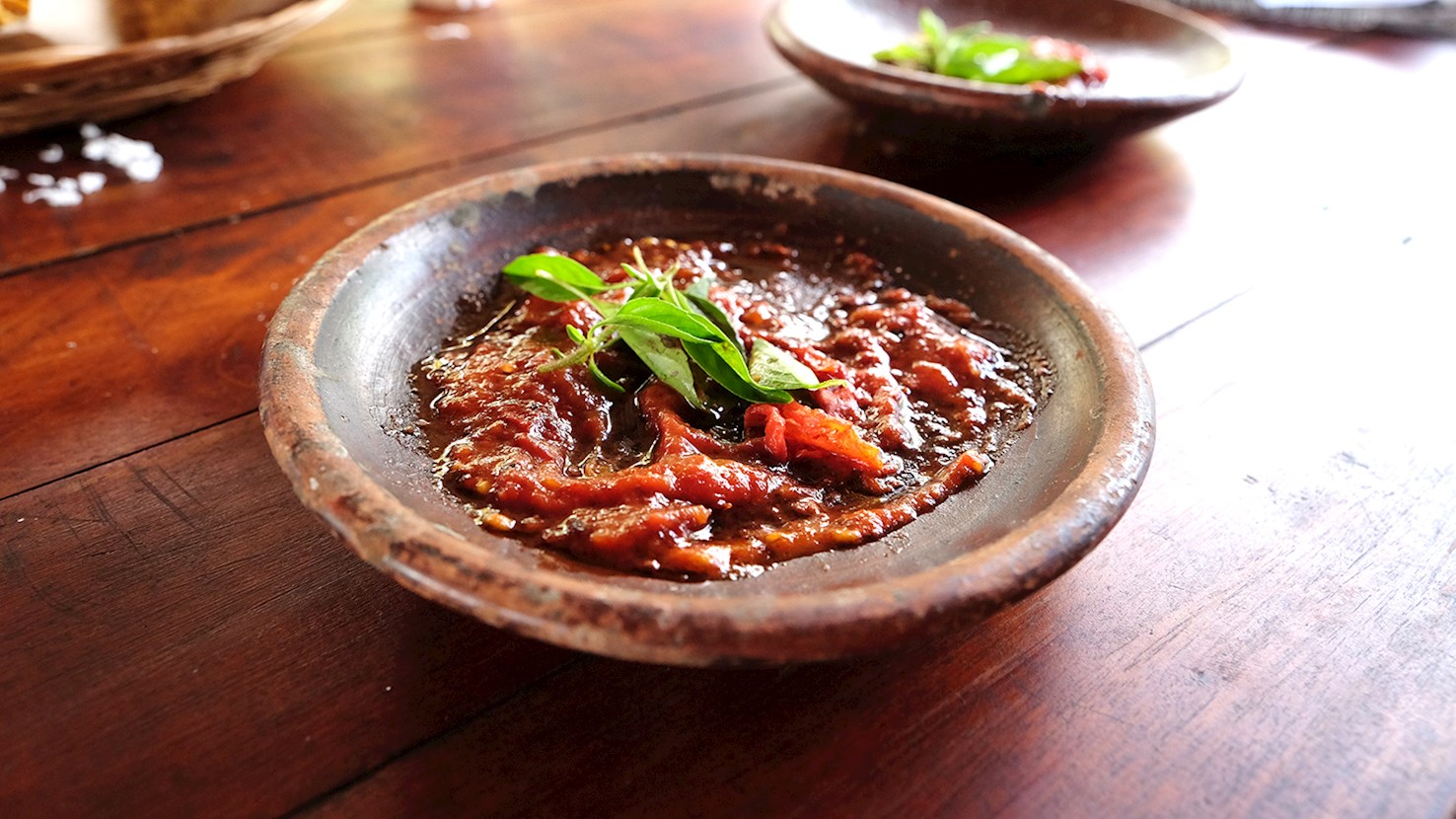
Sambal terasi is an Indonesian chili paste made primarily from fresh red chilies and fermented shrimp paste known as terasi. It is one of the most common and widely used sambals across Indonesia and serves as a versatile condiment that accompanies a variety of dishes, from fried fish and vegetables to rice and tofu. The key ingredient, terasi, is made from ground, salted, and fermented small shrimp that is sun-dried and either formed into blocks or sold loose. Before being used in sambal, terasi is typically toasted or fried to reduce its strong odor and enhance its umami flavor. The sambal is prepared by grinding red chilies, garlic, shallots, and sometimes tomatoes together with the toasted shrimp paste using a mortar and pestle, though modern versions may use a blender. Palm sugar is added to introduce sweetness, and tamarind juice or lime juice provides a sour note to balance the flavors. Salt is used for seasoning, and a small amount of oil is often added to blend everything smoothly or to fry the sambal further if a cooked version is desired. There are two main types of sambal terasi: sambal terasi mentah (raw), which uses raw chilies and ingredients and is served fresh, and sambal terasi matang (cooked), where the ingredients are sautéed to develop a deeper, more mellow flavor. Sambal terasi is an essential part of Indonesian cuisine and is found in households and restaurants throughout the country. It is known for its bold, savory taste and ability to enhance even the simplest dishes. While it can be very spicy depending on the amount and type of chilies used, it is always characterized by its complex combination of spicy, salty, sweet, and tangy notes. Because of its strong flavor and the presence of shrimp paste, sambal terasi is often made in small batches and consumed fresh, although it can be stored for several days in a sealed container in the refrigerator. In Malaysia, sambal terasi is known as sambal belacan.

08
Pancake

Apam balik

4.2 ·

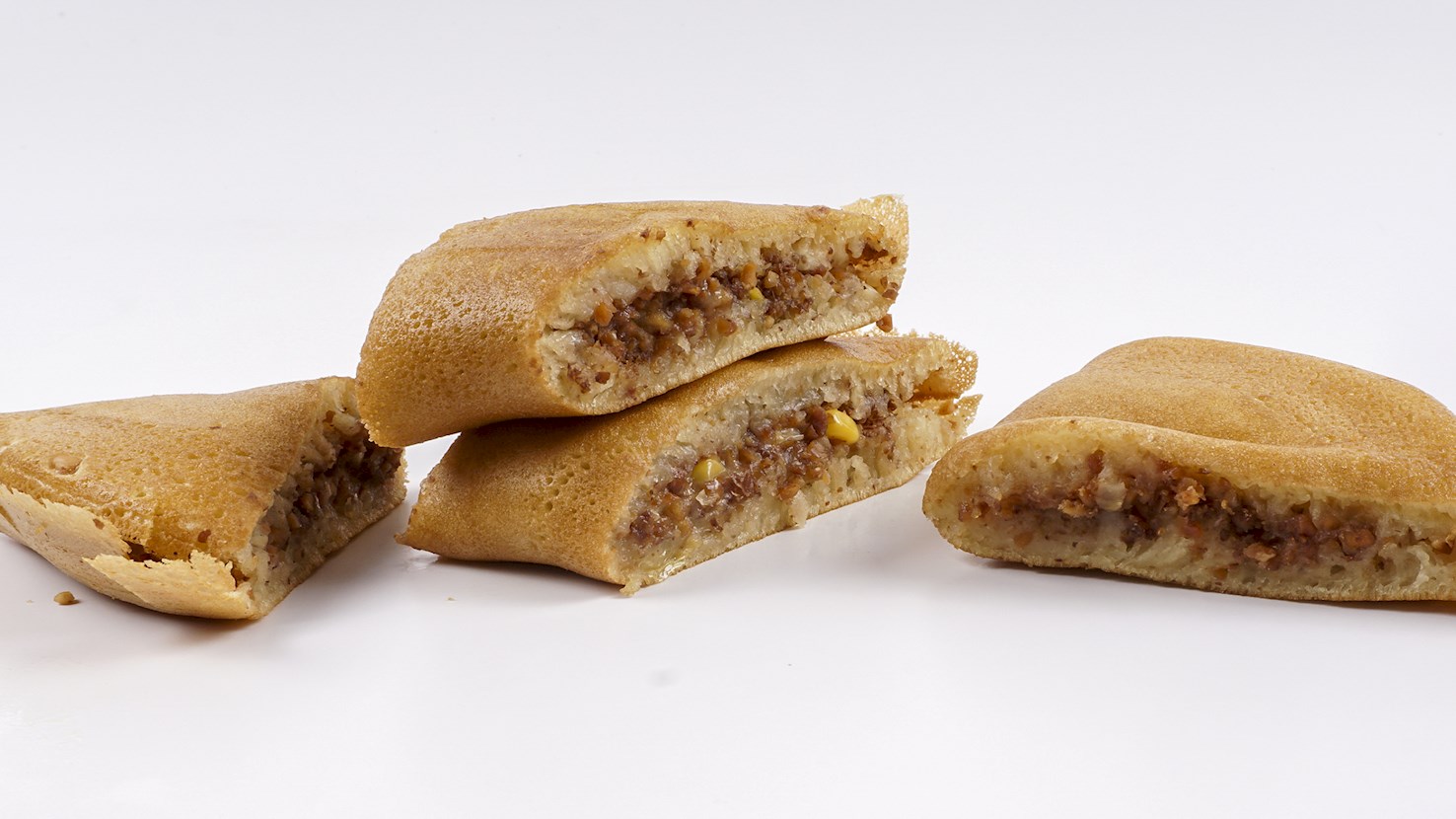
This sweet turnover pancake comes under various names throughout Malaysia, Indonesia, Brunei, and Singapore. Regardless of the location, it can be prepared either in a thin and crispy variety or as a thick and soft pancake. Traditional fillings typically include a combination of ground or roughly chopped peanuts, sugar, and butter, but the modern varieties may include anything from corn, chocolate chips, and raisins to grated cheese or condensed milk. Though not much is known about its origin, it is believed that is was first introduced in Penang by the Chinese who migrated from the province of Fujian.

09
Noodle Dish

Mee goreng mamak

4.1 ·

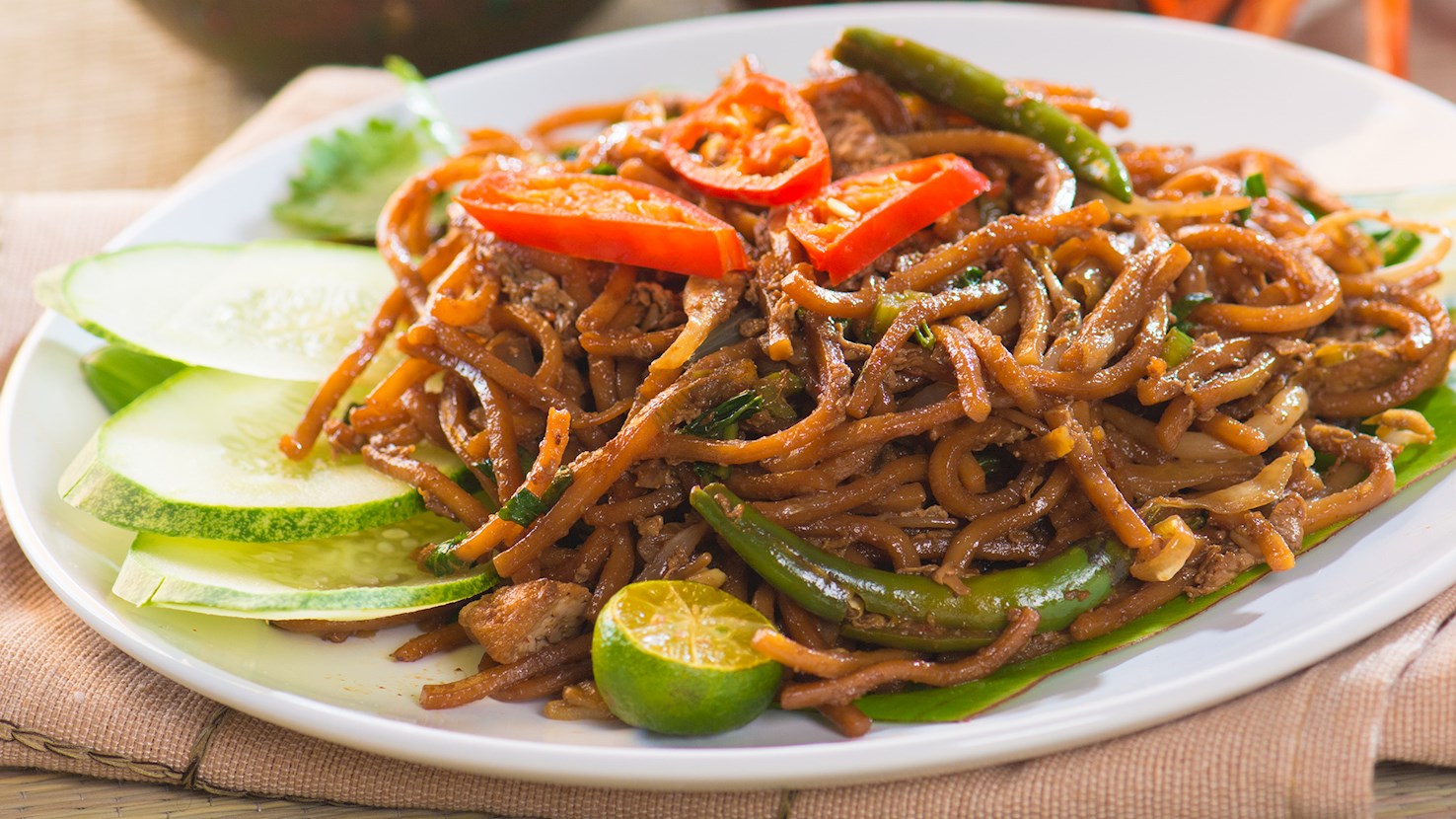
Mee goreng mamak is a versatile stir-fry noodle dish from the Maritime Southeast Asia region, initially introduced by the Indian-Muslim community. It is a spicy-savory course that pairs the noodles with a combination of fish cakes, chicken, prawns, garlic, scallions, tomato sauce, curry spice, sweet soy sauce, boiled potatoes, and eggs. For toppings, the most commonly used are red chilies, crispy fried onions, and lime juice. Traditionally, the dish is served alongside calamansi wedges - a citrus hybrid native to the region (can be substituted with lime wedges). Mee goreng mamak is a favorite in Malaysia and can be found everywhere, from street vendors to sit-down restaurants.

10
Street Food

Satay celup (Steamboat Satay)

4.1 ·

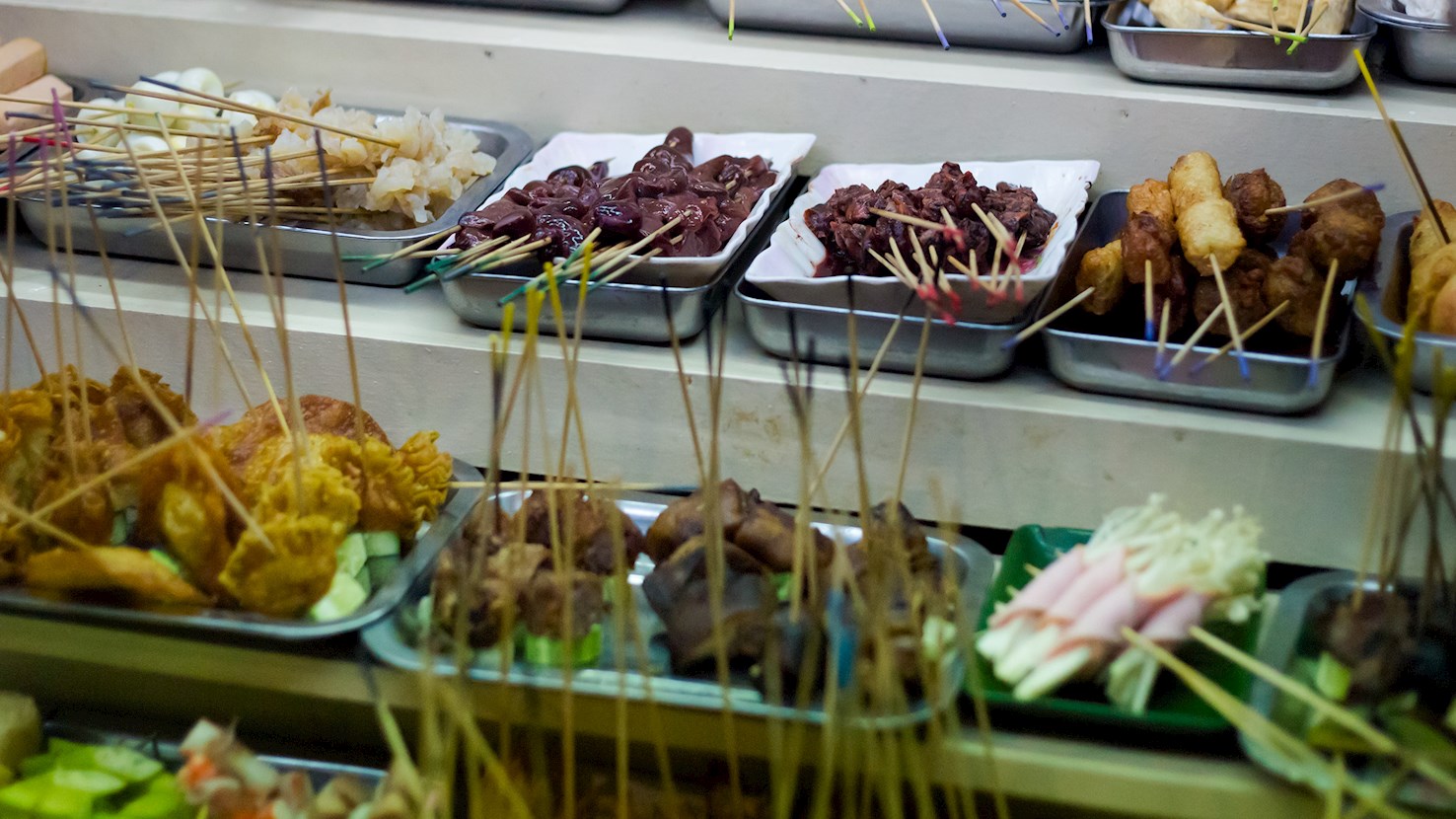
Satay celup is a traditional dish, particularly popular in the Malacca state (also known as "the historic state"), where it is considered a local favorite. It is a self-serve dish, consisting of skewers of marinated meat, raw seafood, or even vegetables that are dunked into a simmering pot of satay sauce. The sauce is primarily made with peanuts, dried chili peppers, garlic, and palm sugar, but the full recipe differs from one eatery to another. Usually, satay celup is accompanied by barley drinks, coconut water, or herbal tea in order to combat the spiciness of the sauce.

Best Malaysian Food Products
01
Spirit

P.H.Products

4.8 ·
Awards
IWSC- International wine & spirit competition - Spirit Gold (2023)
02
Spirit

Gravit8 Gin

4.8 ·
Awards
The Gin Masters - Gold (2022)
03
Spirit

JF Dominic

4.8 ·

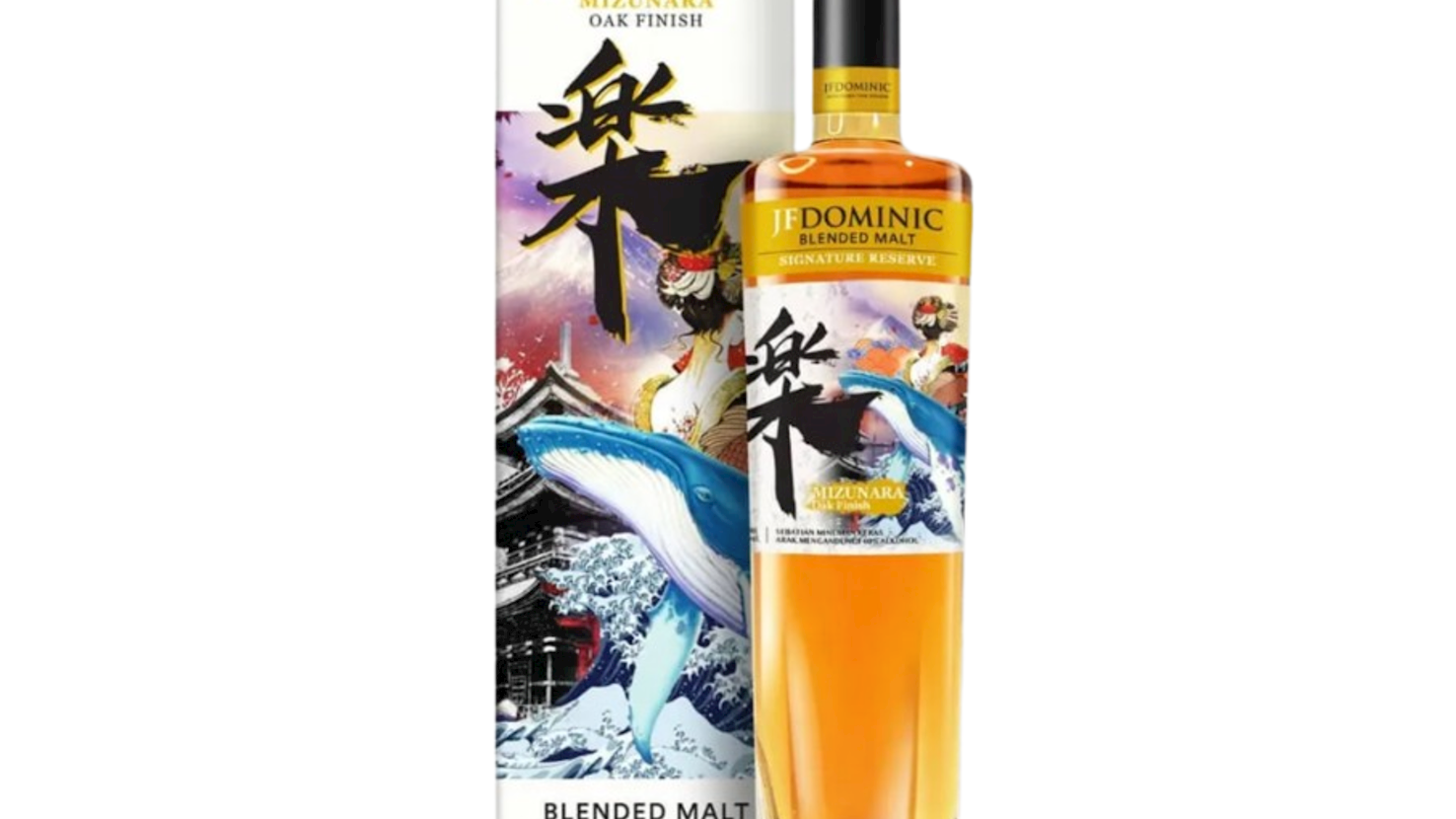
JF Dominic is a Malaysian alcoholic beverage brand owned by Actas Trading, a company based in Kuala Lumpur. The production of its locally made spirits is connected with Suenyun and its manufacturing facility in Lahat, Perak. The brand’s portfolio is divided into the Classic, Signature, and Imported series. The Classic series includes JF Dominic Original, Casks Selection, VSOP, XO Extra Gold, and XO White Coffee. The latter is a brandy flavoured with Ipoh white coffee, a beverage closely associated with this part of Malaysia. The Signature series consists of Malaysian blended malt whiskies such as Mizunara Oak Finish, Peated, Signature Release, and White Coffee. These expressions differ in their choice of casks, smoky character, and additional flavourings. JF Dominic has received several awards at international spirits competitions.

Awards
ISC-International Spirits Challenge - Gold (2024)
IWSC- International wine & spirit competition - Silver (2024)
04
Chocolate

Jaws & Claws Chocolate

4.7 ·

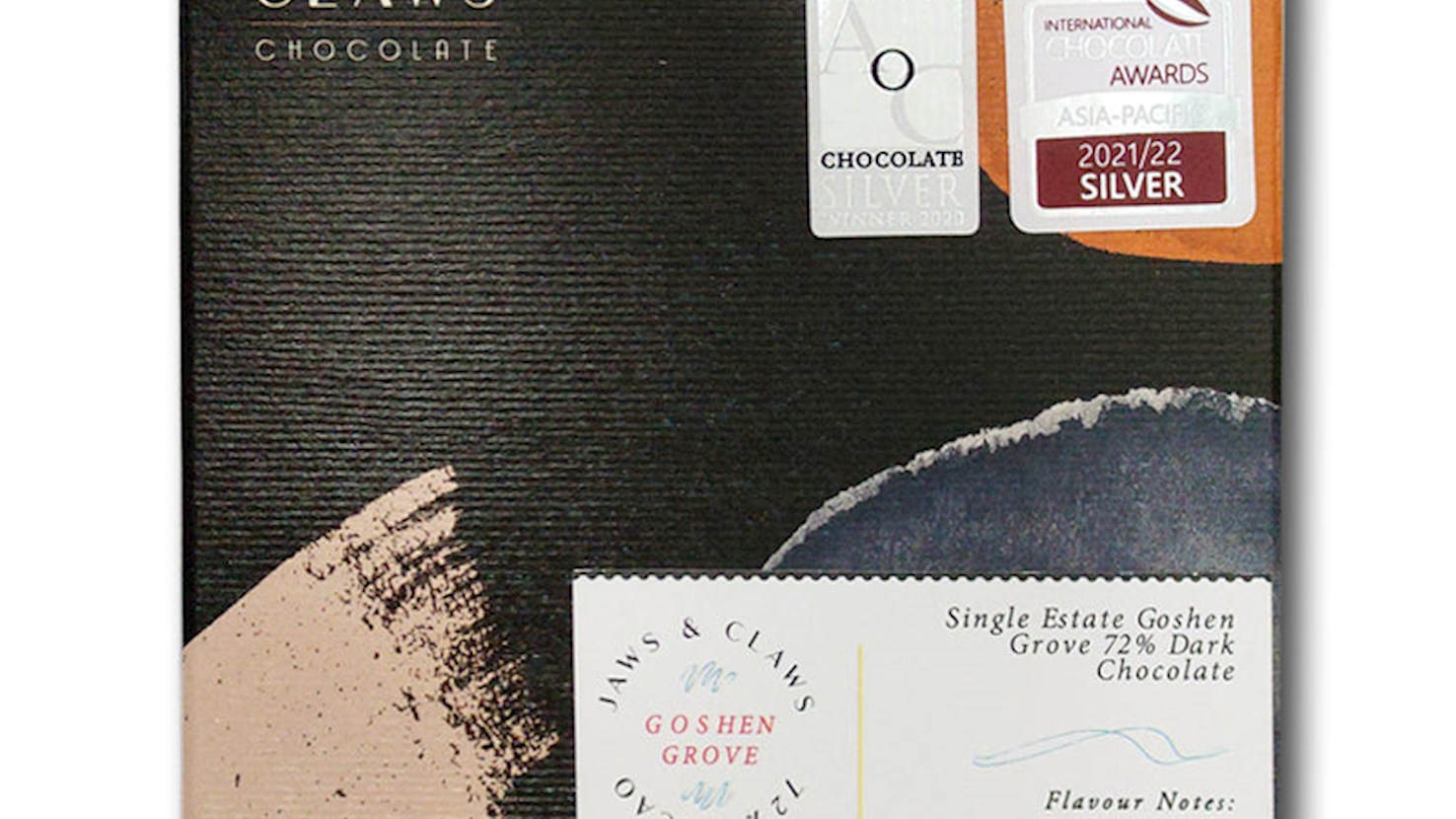
Jaws & Claws Chocolate is a chocolate producer based in the state of Sabah, Malaysia. They are known for incorporating local ingredients into their products, which highlight the unique flavors of the region.

The company focuses on sustainable and ethical sourcing practices for their cocoa beans.

Awards
Academy of Chocolate - Silver (2022, 2020)
Academy of Chocolate - Bronze (2020)
05
Coffee

OldTown White Coffee

4.7 ·

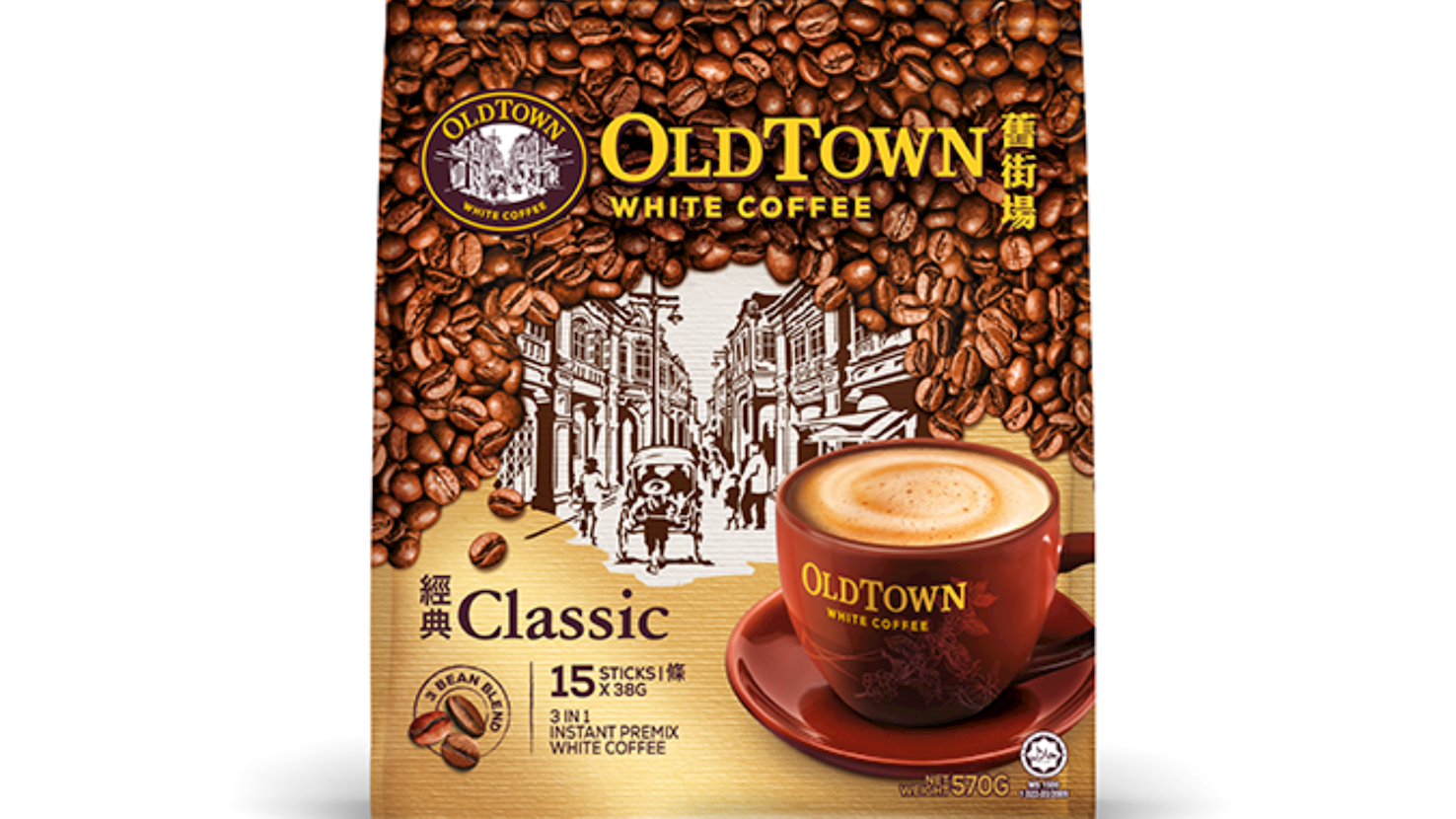
OldTown White Coffee is a Malaysian instant coffee producer and café chain founded in 1999 in Ipoh, Perak. The brand was established by Goh Ching Mun and Tan Say Yap, who initially developed their own instant white coffee blend. Its first outlet, based on a modernized version of the traditional Malaysian kopitiam, opened in 2005. OldTown continues to produce its white coffee in Ipoh, the city where this style of coffee originated. Its signature recipe combines Arabica, Robusta, and Liberica beans: Arabica contributes sweet, nutty, and aromatic notes, Robusta provides body and a deeper roasted flavor, while Liberica creates a lingering finish. Controlled roasting develops caramelized aromas and gives the coffee its characteristically smooth, creamy, and subtly sweet profile. In addition to the original White Coffee Classic, the range includes Extra Rich, Hazelnut Flavoured, 30% Less Sugar, Natural Cane Sugar, Coffee & Creamer, Salted Caramel, and Coconut Flavoured varieties, as well as Nanyang coffee, teas, and other instant beverages. OldTown is now part of the international coffee company JDE Peet’s and is one of its prominent regional brands, with packaged products available through retail channels and a network of cafés operating in Malaysia and other Asian markets.

06
Meat Product

Oloiya

4.6 ·

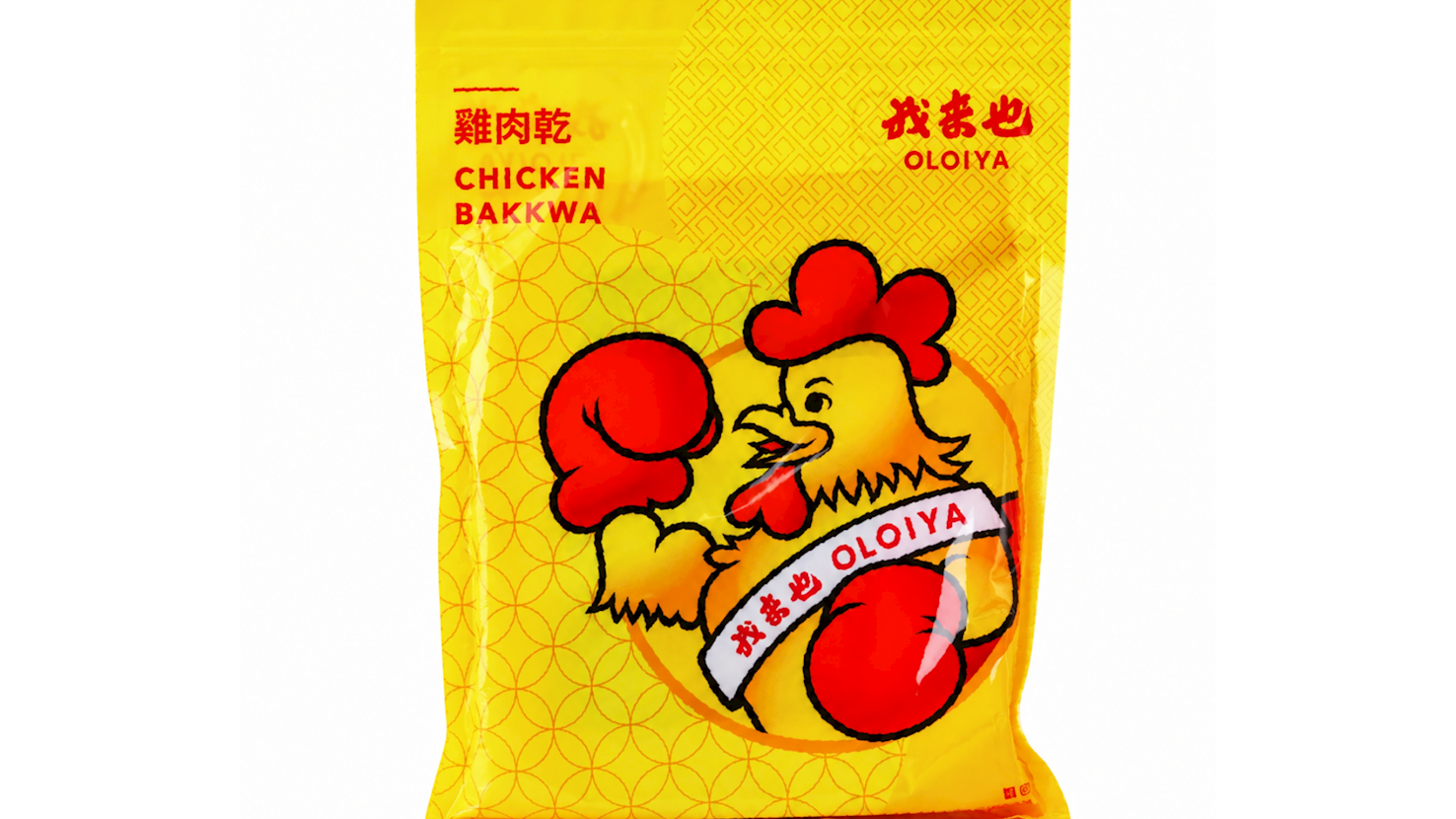
Oloiya is a Malaysian family-owned brand from Kuala Lumpur, specializing in bakkwa - marinated, dried, and grilled meat with a distinctive sweet and savory flavor. According to its official history, the brand was founded by Khue Chow Kong and Chin Keon Yock in 1970, starting with a stall on Petaling Street.

The brand’s story began with a friendship between its founder and a Taiwanese customer, who shared his family’s dried meat recipe in exchange for an orange juice recipe. Khue refined the recipe with his wife, naming the brand Oloiya after the customer’s greeting, meaning “Here I come”. The business has developed across three generations of the family, gradually modernizing and introducing semi-automated production in 2005.

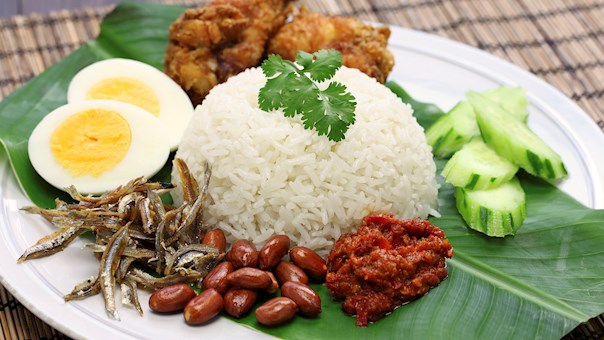
Its core range includes pork and chicken bakkwa, alongside finely shredded meat products known as meat floss. Notable developments include its minced chicken version of bakkwa and flavors inspired by Asian cuisine, such as nasi lemak, curry, sambal, and tom yam.

07
Chocolate Confectionery

Harriston Chocolatier

4.6 ·

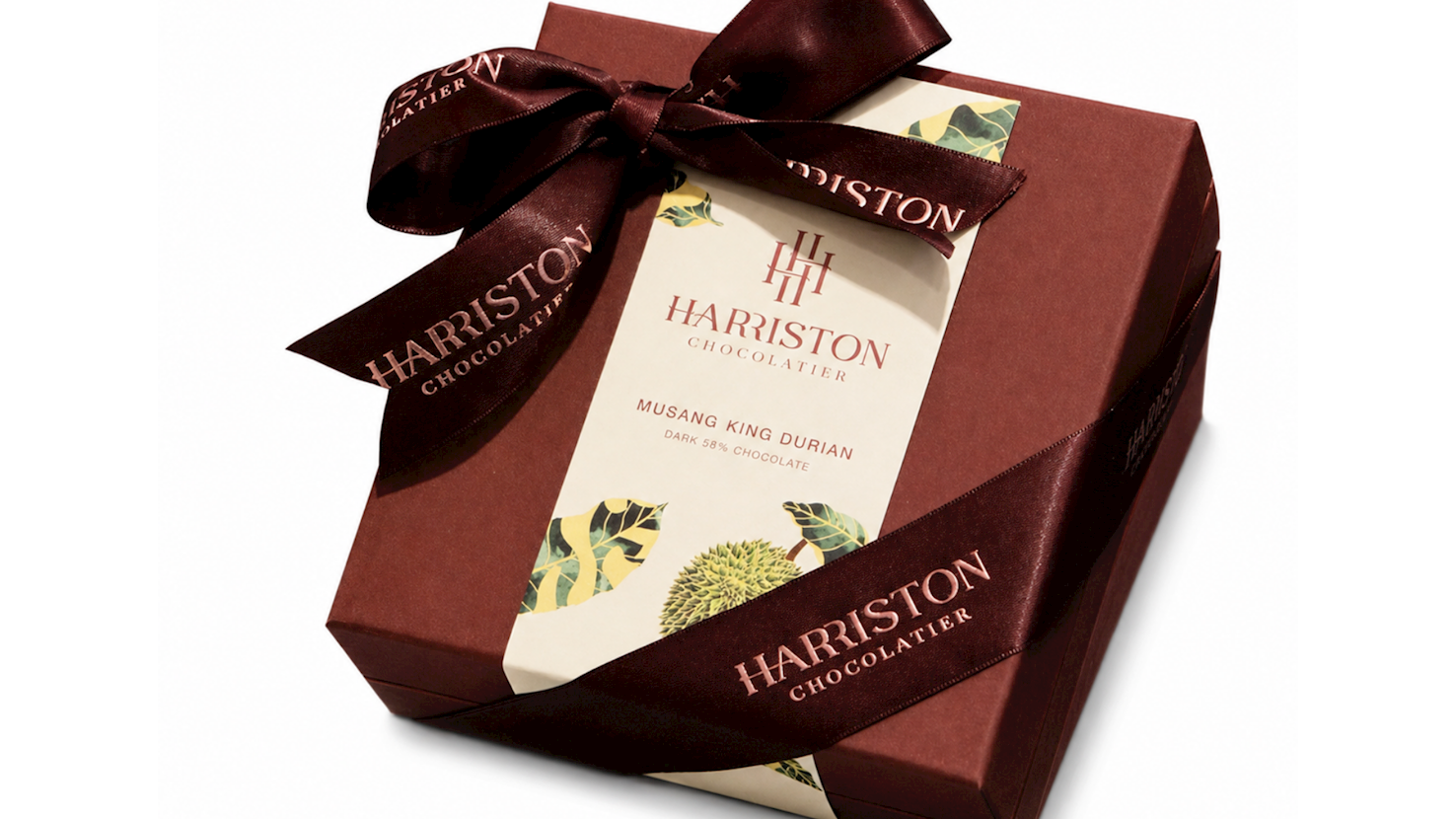
Harriston Chocolatier is a family-owned Malaysian artisan chocolate producer founded in Kuala Lumpur in 2005. The company was established by S. C. Teng under the name Cocoa Boutique, while the earlier Cocoa Boutique and Chocolate Gallery brands were consolidated under the Harriston name in 2017. Today, it operates through the Harriston Boutique and Harriston Chocolatier concepts, with retail locations in Kuala Lumpur and Penang.

The brand produces its chocolates, pralines, and other confectionery in-house, combining traditional techniques with ingredients characteristic of Malaysia. Its distinctive creations include chocolates made with real durian, including the Musang King variety, alongside products featuring coconut, Bentong ginger, chili, curry, black sesame, and tongkat ali. Its range comprises more than 150 varieties, from milk, white, and dark chocolates to pralines, chocolate-coated nuts, and bars with a high cocoa content.

Harriston is now positioned as one of Malaysia’s larger homegrown chocolate producers and specialized retail chains. According to the brand, its stores and products have served more than ten million customers from approximately 80 countries, with international visitors to Malaysia representing an important part of its customer base.

08
Condiment

Lingham's

4.5 ·

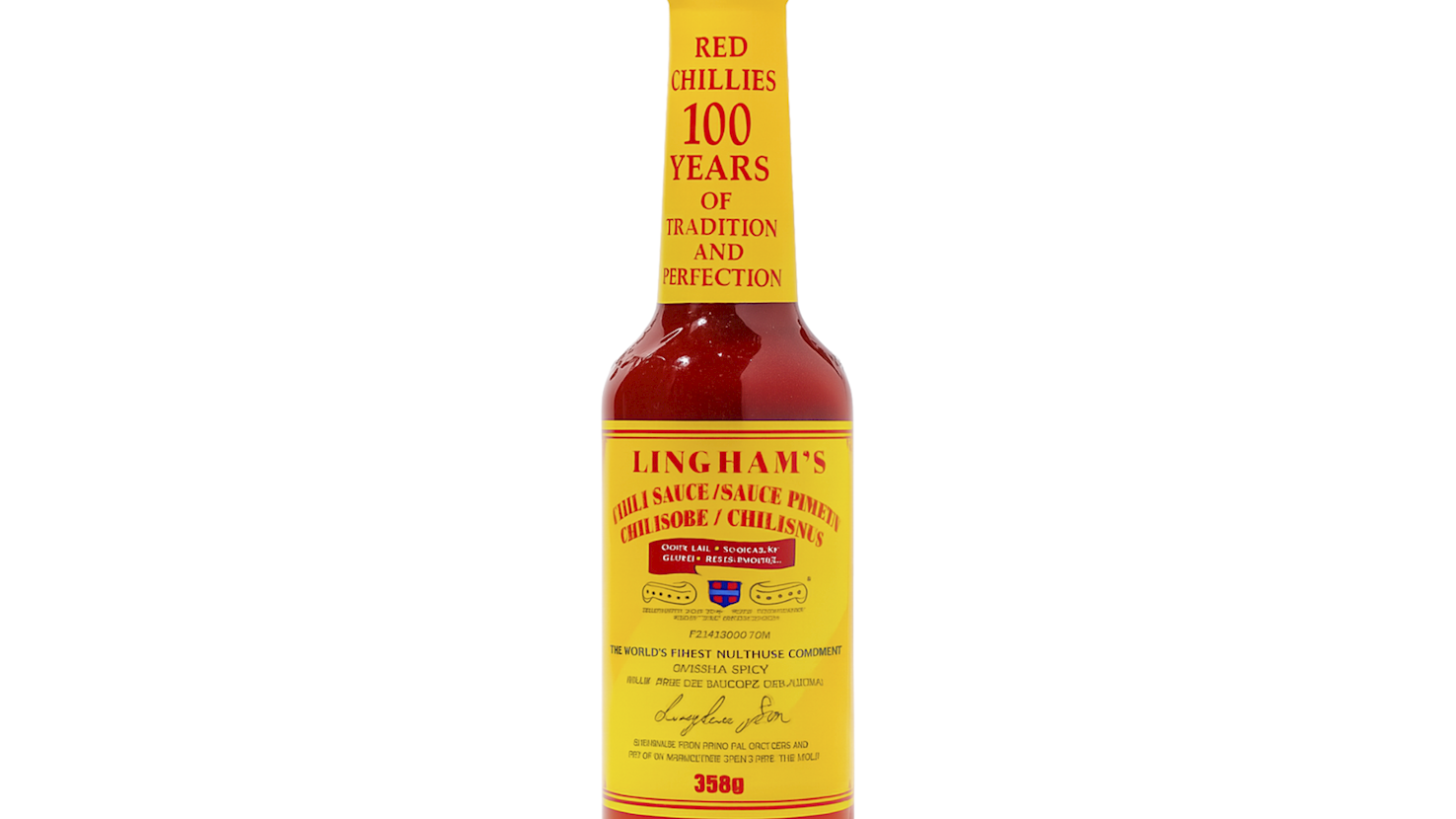
Lingham’s is a historic Malaysian hot sauce brand founded in 1908 in Butterworth, Penang. Its founder, an Indian immigrant known as Mr. Lingam, created a sweet and spicy sauce inspired by the flavours of his homeland. After the Second World War, the business was acquired by Ooi Choo Hong, while Lingham & Sons (Malaysia) has been managed by Yeoh Jin Beng and Yeoh Jin Hoe since 2012.

The original Lingham’s Chilli Sauce is still produced according to a recipe based on only four ingredients: red chilli peppers, sugar, vinegar, and salt. It contains no starch, artificial colours, flavourings, or preservatives, resulting in a naturally smooth consistency and a distinctive balance of sweetness, acidity, and moderate heat. In addition to the original sauce, the range includes Extra Hot, Garlic, Ginger, and Sriracha varieties, as well as other products adapted to specific markets.

A notable moment in the brand’s history occurred in 1972, when its sauce was presented to Queen Elizabeth II during her visit to Penang. The company subsequently received a letter of appreciation from Buckingham Palace.

Today, Lingham’s is one of Malaysia’s oldest active food brands and an important national export. Its sauces are sold in more than 27 countries, including the United Kingdom, the United States, Canada, Australia, Denmark, India, Japan, Singapore, the United Arab Emirates, and South Africa. Although its range has expanded, the company continues to base its market position and future development on preserving the original recipe, maintaining a natural composition, and adapting its flavours to different international markets.

09
Chocolate

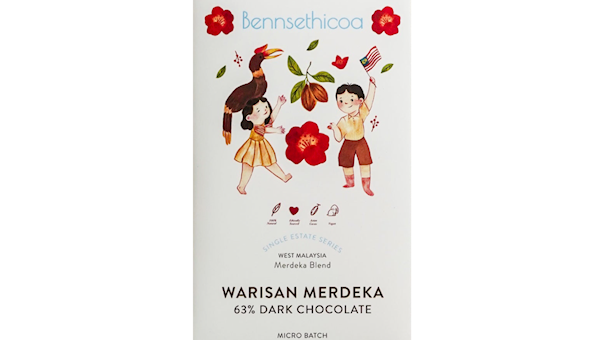
Benns Ethicoa

4.5 ·

Benns Ethicoa, based in Malaysia, operates a bean-to-bar chocolate production process aiming for ethical sourcing and sustainability. They source cacao beans directly from farmers in Asia to enhance transparency and support local agriculture.

The company utilizes a variety of cacao beans from different regions to craft unique chocolate flavors. Benns Ethicoa also focuses on minimal processing to maintain the natural flavors of the cacao.

Awards
Academy of Chocolate - Silver (2024)
International Chocolate Awards - Bronze (2020)
10
Chocolate Confectionery

Beans & Co

4.5 ·

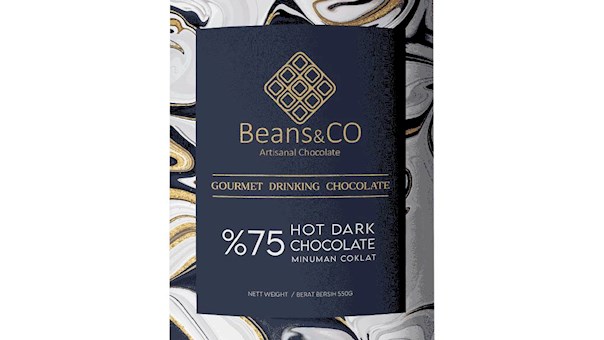
Beans & Co is a Malaysian artisanal chocolate company specializing in gourmet drinking chocolates. They offer a range of hot dark chocolate powders with varying cocoa content, including 55%, 75%, 85%, and 100%, catering to different taste preferences.

Their products are crafted to provide a rich and authentic chocolate experience, suitable for both personal enjoyment and gifting.

Awards
Crystal Taste Award - 3 stars (2023)
About this Ranking

TasteAtlas food rankings are based on the ratings of the TasteAtlas audience, with a series of mechanisms that recognize real users and that ignore bot, nationalist or local patriotic ratings, and give additional value to the ratings of users that the system recognizes as knowledgeable. For the “Top 74 Malaysian Foods” list until September 02, 2026, 4,514 ratings were recorded, of which 2,858 were recognized by the system as legitimate.

TasteAtlas Rankings should not be seen as the final global conclusion about food. Their purpose is to promote excellent local foods, instill pride in traditional dishes, and arouse curiosity about dishes you haven’t tried.

The initial list of top producers was compiled based on available reviews, awards, local recommendations, media and blog coverage, and consumer reviews. The list will be updated with ratings from TasteAtlas local ambassadors and TasteAtlas users.

What People Say

Similar Lists